Friday, July 10, 2009

John Calvin from Christianity Today

Top Story
THEOLOGY IN THE NEWS
Calvin: Man for the Mainline
Reformer's 500th birthday draws out diverse cast of admirers.


My Top 5 Books on John Calvin
By Michael Horton, editor in chief of Modern Reformation


Special Section: John Calvin

Labels: ,

Thursday, July 09, 2009

Reformed Perspectives Magazine Volume 11, Number 28

Reformed Perspectives Magazine Volume 11, Number 28 (July 12 to July 18, 2009), is now available. The following articles are featured in this issue:

I Timothy 2:15
A Sermon
By: Scott Lindsay
Webpage PDF Word

Rejoice in the Lord
An Article
By: D. Patrick Ramsey
Webpage PDF Word

The God of Love
An Article
By: Octavius Winslow
Webpage PDF Word

The Soul in the Depths of Sin
An Article
By: John Owen
Webpage PDF Word

The Perpetuity and Change of the Sabbath, Part II
An Article
By: Jonathan Edwards
Webpage PDF Word

Freedom of the Will, Part VIII
An Article
By: Jonathan Edwards
Webpage PDF Word

They Came to Life and Reigned With Christ for a Thousand Years
An Article
By: Kim Riddlebarger

Labels:

Presence of God

Earth is crammed with heaven,
and every common bush afire with God,
but only he who sees
takes off his shoes.

Elizabeth Barret Browning

Labels:

Global & American Christianity the Same?

from Christianity Today.com. Worth reading this interview

Top Story
Does Global Christianity Equal American Christianity?
Historian Mark Noll talks about how U.S. missionaries have—and have not—shaped the faith in other nations.


Labels: , , ,

Wednesday, July 08, 2009

Caritas in Veritate


The latest from Thinking Faith...


Caritas in Veritate
Pope Benedict XVI’s third encyclical, Caritas in Veritate, was released earlier today, 7th July 2009. Brendan MacPartlin SJ considers the vision delivered in this long awaited document, which picks up on the themes of Populorum Progressio to look at issues of development and social action: ‘Charity in truth drives the authentic development of all persons.’ Read >>

Labels:

John Calvin and his Politics

There have been much misconceptions about John Calvin and his politics in the governance of Geneva. Richard Hooker in Reformation: John Calvin gives us some background

Geneva had been under the rule of the House of Savoy, but the Genevans successfully overthrew the Savoys and the local bishop-prince of Geneva in the waning years of the 1520's. The Genevans, however, unlike the citizens of Zurich, Bern, Basel, and other cities that became Protestant in the 1520's, were not German-speakers but primarily French-speakers. As such, they did not have close cultural ties with the reformed churches in Germany and Switzerland. The Protestant canton of Bern, however, was determined to see Protestantism spread throughout Switzerland. In 1533, Bern sent Protestant reformers to convert Geneva into a Protestant city; after considerable conflict, Geneva officially became Protestant in 1535.

Calvin, by now a successful lawyer, was invited to Geneva to build the new Reformed church. Calvin's efforts radically changed the face of Protestantism, for he directly addressed issues that early Reformers didn't know how or didn't want to answer.

His most important work involved the organization of church governance and the social organization of the church and the city. He was, in fact, the first major political thinker to model social organization entirely on biblical principles. At first his reforms did not go over well. He addressed the issue of church governance by creating leaders within the new church; he himself developed a catechism designed to impose doctrine on all the members of the church. He and Guillaume Farel (1489-1565) imposed a strict moral code on the citizens of Geneva; this moral code was derived from a literal reading of Christian scriptures. Naturally, the people of Geneva believed that they had thrown away one church only to see it replaced by an identical twin; in particular, they saw Calvin's reforms as imposing a new form of papacy on the people, only with different names and different people.

So the Genevans tossed him out. In early 1538, Calvin and the Protestant reformers were exiled from Geneva...

In 1540 a new crop of city officials in Geneva invited Calvin back to the city. As soon as he arrived he set about revolutionizing Genevan society. His most important innovation was the incorporation of the church into city government; he immediately helped to restructure municipal government so that clergy would be involved in municipal decisions, particularly in disciplining the populace. He imposed a hierarchy on the Genevan church and began a series of statute reforms to impose a strict and uncompromising moral code on the city.


read more

Another perspective is from Dr W. Stanford Reid, Emeritus Professor University of Guelph, Canada writing in John Calvin: One of the Fathers of Modern Democracy

According to Calvin, the church has a role to play with regard to the state. The church is responsible, Calvin believed, to set forth the biblical teaching concerning the state and its function. Yet, and this is basic to Calvin’s thought, the church is not to rule the state. Calvin believed in a theocracy, not an ecclesiocracy. Both the rulers of the church and the civil magistrates are directly responsible to God for their actions, but they do not rule over each other. The church may admonish the magistrate as to what God’s law says, but cannot determine how that law is to be applied in matters of civil jurisdiction. The magistrate may advise the church concerning matters relating to civil affairs, but cannot force the church to conform to civil rules in its teachings, worship, or government. In this, Calvin laid down very clearly the principle of the separation of the functions of church and state. They are related and mutually supportive, but also independent of each other. This means, if the state attempts to interfere in the operation of the church or seeks to restrict its spiritual work, the church has the right and duty to disobey, although it will have to suffer the consequences of such disobedience.

At the same time, Calvin believed that the church’s form of government was to be fundamentally democratic. In this way it served as a pattern for the state to imitate. He did not believe that ministers and other church officials should be imposed on the church by the civil government or by a small group of wealthy or aristocratic individuals. Instead, he believed that ministers, elders, and deacons should be appointed by the people of the church as a whole.

read more

Reid regards John Calvin as one of influential founders of modern democracy.

What do you think?

.

Labels: ,

Tuesday, July 07, 2009

The Movie Doubt


Set in 1964 at a Catholic church in the Bronx, New York, the movie Doubt (2008) is a powerful statement of what harm can occur even when seeking to do good. In one of the opening lines, the message of the movie was proclaimed, "in the pursuit of wrong doing, one steps away from God." The movie is based on a stageplay, Doubt: A Parable by John Patrick Shanley. Written and directed by Shanley and produced by Scott Rudin, the film stars Meryl Streep, Philip Seymour Hoffman, Amy Adams, and Viola Davis.

Sister Aloysius (Meryl Streep) is the principal of the school attached to the church and rules the school with an iron hand. Inside her disciplinarian self, she has a heart for the children. However she is unhappy with the assistant pastor,Father Flynn (Phillip Seymour Hoffman) who is very good and friendly with the children especially with Donald Miller, the school's first Afro-American boy and an altar boy. Sister Aloysius suspects that Father Flynn is behaving inappropriately with the boy. Sister James (Amy Adams), a young and naive teacher, feeds her with observations which seems to support her suspicions.

Sister Aloysius then launches into a campaign to discredit Father Flynn. The actresses and actors gave such a superb performance that there were doubts all around. Is Father Flynn sexually abusing the altar boy, Donald Miller? There are lots of circumstantial evidence but Father Flynn denied the accusation. How far will Sister Aloysius go to confirm her suspicions. When does suspicions become facts?

While paced as a who-done-it thriller, this non-violent drama plays out our inner demons of suspicion of others, and a tendency for us to pre-judge others. For many of us, the other person is guilty unless proven otherwise.

This is a great movie with a good religious theme and excellent actresses and actors. Easily one of the better and must-watch film of 2008.

"in the pursuit of wrong doing, one steps away from God."


PS I love the way Father Flynn preaches his sermons. That itself is a lesson in homiletics.

Labels:

George Tyrrell and Catholic Modernism


The latest from Thinking Faith...


George Tyrrell and Catholic Modernism
This month sees the 100th anniversary of the death of the controversial Jesuit, George Tyrrell. Oliver Rafferty SJ begins Thinking Faith’s series on Tyrrell’s life and work by introducing us to the Catholic modernist whose views eventually resulted in his expulsion from the Society of Jesus and his excommunication. Who was George Tyrrell? Read >>

.

Labels: , , ,

Monday, July 06, 2009

Moltmann on Double Predestination

ESSAY:
Double Predestination: The Elected Ones and the Crowd of the Condemned
By Jürgen Moltmann
Professor of Systematic Theology at Eberhard Karls Universität, Tübingen, Germany

The strong points of Reformed Theology are at the same time her weaknesses. In order to become fit for the 21st century in the common house of ecumenical theology and in the universal house of humankind and the earth, it seems necessary to reformulate the strength of the Reformed Tradition. This cannot mean adapting our tradition to the others or integrating our originality into what is common to all, but to find our own profile in new communities of Christianity and humankind. “If two are saying the same, one is superfluous,” says an old Russian proverb. It is not the intention of ecumenical community and interreligious dialogue to make each other superfluous. The difference is interesting.

Since John Calvin and Theodore of Beza, the founder of the reformed orthodoxy in the 17th century, “Calvinism” is famous on the one hand and notoriously accused on the other hand for the doctrine of double predestination: Humanity is divided into the elected here and the rejected there. God is totally free to choose whomever he wants and to reject whomever he doesn’t want. Both serve the glorification of his majesty, and who can argue with the sublimity of the infinite God?

The belief in divine election was and is indeed the strength of Reformed faith. It gave believers an invincible certainty in their faith to know that one is not only loved by God, and not only justified by the grace of Christ and sanctified by the inspiration of the holy Spirit of God, but also elected by the will of God. From this belief in the divine election follows the trust in the divine perseverance through the ups and downs of personal life until the final redemption: I shall not fall and nobody and nothing can tear me out of the hands of God. God is faithful to his election, Christ has prayed for me “that my faith shall not fail" (Luke 22:32), the divine seed of the Holy Spirit in my heart will not die. This belief was the power of resistance in persecutions, i.e. of the Huguenots in France and Reformed Christians in the Netherlands. Marie Durand was incarcerated in the Tour de la Constance in Aigues-Mortes in Southern France for thirty-eight years, sustaining and exhorting her companions in captivity for the sake of their faith, and here she made her famous inscription in the stone “Register.”

But does this strength of belief in one's divine election mean that the rest of humankind is lost and damned to eternity as the crowd of corruption, the massa perditionis as Augustine called them? Must we tell the rest of the world: “According to the Bible and our belief those who do not believe in Christ will perish?” as the president of the World Alliance of Reformed Churches Choan-Seng Sonq from Taiwan asked? There are always two different explanations of the simple fact that one and the same Gospel provokes belief in one, and disbelief in others. It is either due to the will of God or of human beings. Because believers confess that they owe their faith to the grace of God, they see in unbelief the disgrace of God. Since they feel in their faith “elected,” they can see in unbelievers only “rejected” people. The other explanation refers to the free choice of human will: Those who decided for Christ see heaven as their eternal future, and for those who decide against Christ they see only hell as their future—or more recently “total nonbeing.” The result of the view believers have of unbelievers is the same, whether one follows Augustine and Calvin in their doctrine of double predestination, or Pelagius and Erasmus in their doctrine of the double end of human free choice.

I think it is not characteristic of the Christian Gospel to confront people with the statement, “You belong to the crowd of the condemned and your future is hell.” It was terrible to see in the movie “Breaking the Waves” a Calvinistic pastor burying a person having lost faith with the words, “We now hand you over to hell.” It is certainly not in the Spirit of God the creator of everything to condemn 95 percent of the people he has created in his image, and it is not in accordance with Christ to limit salvation to 144,000 elected only, for whom he died. We need no theological explanation for the existence of unbelievers or people of another faith. Our only answer to the rejection of the Gospel is preaching and explaining the Gospel to unbelievers and people of other faiths.

Faith is not only human trust in God, but also and in the first place God's faithfulness. It is in this sense that I take every unbeliever as a person in whom God is trusting, in whom God is present and for whom God is waiting. God believes in every human person. This can be called “objective faith” (Christoph Blumhardt).

It was Karl Barth who—following Blumhardt—gave us an ingenious christological reformulation of the Reformed doctrine of double predestination (Church Dogmatics II/2). The sequence of his argument is this: 1. Before God elects or rejects anybody, God determines himself to be the God of the people: “I shall be your God and you shall be my people,” is the covenant-formula of Israel. This can be called the self-election of God. 2. In the passion and Crucifixion of Christ, God has put his righteous condemnation of sin, evil and death on his own Son. Between Gethsemene and Golgatha Jesus suffered hell and eternal death for all of us, when he cried out: “My God, why have you forsaken me?” 3. With Jesus Christ's resurrection from the dead, hell and eternal death are therefore overcome. The election of grace is revealed: “Hell, where is your victory!” (1 Cor. 15:55). Grace flowing out of the resurrected Christ is pure grace and as such unconditional and also universal, all-embracing and excluding no one. This is the content of the Gospel and there is no terror in the doctrine of double predestination anymore.

“The doctrine of election is the sum of the Gospel because of all words that can be said or heard it is the best: that God elects man; that God is for man too the One who loves in freedom,” said Karl Barth in § 32 of his Church Dogmatics (trans. is from Bromiley ed.). Why is this so? Because “God took upon himself the condemnation of sinful men with all consequences, and elected man to participate in his eternal glory (§ 33).” Is Barth teaching “double predestination?” Yes! But in a new dialectical form: God took the condemnation upon himself in order to embrace all in his election of grace. This is the new dialectical form of the old doctrine of “double predestination.”

Of course, this new formulation is not an explanation of the fact that some believe in the Gospel and others not. But do we really need a theological explanation of this fact, or can we best answer the fact that there are unbelievers with a new and better witness to the Gospel that God loves them with grace and is carrying all their sins and sufferings for them? Another question is whether universalism is the result of this reformulation. The answer is “No,” because we are witnesses of the Gospel not judges in the final judgment of God. Whether God will in the end embrace all with his transforming grace is His sake, ours is the witness of the Gospel to everybody. But if somebody dies in unbelief, is he then out, or is there hope also for him? The answer is: Our means of preaching and praying come to an end with death, but not Christ's power, because he was resurrected and has his possibilities with the dead, preaching the Gospel in the world of the dead. There is, therefore, no reason and no right for us to condemn and exclude anyone, living or dead. We are not the judges of faith, but the servants of joy.

PUBLISHED IN THE BULLETIN OF THE INSTITUTE FOR REFORMED THEOLOGY, SPRING/SUMMER 2001, VOL. 2, #2.

Labels: , , , ,

Spirituality of John Calvin

BOOK REVIEW:
Spirituality and Social Ethics in John Calvin: A Pneumatological Perspective. By Paul Chung (Sueng Hoon). Lanham, MD: University Press of America, 2000. 232pp. ISBN 0761817425.

In an age when “spirituality” is the watchword of the day, Paul Chung’s book offers a helpful study of the place of the spirit in John Calvin’s theology. In it, he not only corrects some of the most glaring misconceptions of Calvin’s thought, he also recovers a notion of the spiritual life that is a refreshing alternative to the anemic spirituality so prevalent today. John Calvin is often associated with legalism, individualism, and dogmatism: Chung offers an altogether different portrait. Tracing the doctrine of the Spirit throughout Calvin’s writings, he draws attention to the social nature and dynamic character of Calvin’s vision of God, world, and humanity.

Calvin’s understanding of God is fundamentally social and socializing. Within the trinity, the Spirit is the relational bond that unites the Father and Son. It is also the ordering and vivifying power within the creation. Chung writes, “The Spirit, which Calvin stressed in trinitarian context, is the fountain and source of all creature’s lives. God poured life into creatures and sustains their lives through divine power. All living things are in the power of the Spirit” (18). The same relationality that the Spirit manifests within the Godhead overflows into the Spirit’s role in the creation.

In human beings, the Spirit is not only the source of life, but also the communicator of new life. The Spirit engrafts Christians into Christ. According to Dr. Chung, Calvin understands “union with Christ pneumatologically” (44). Without the work of the Spirit, Christ’s benefits would not be available to human beings. The spirit effectuates both justification and sanctification, pressing humanity back toward the order and vitality of the creation they had abandoned and betrayed.

The relational and dynamic nature of Calvin’s theology is most apparent in Chung’s discussion of the relationship of the Spirit to the law and the church. The law provides the basic structure of the cosmos. It communicates the natural law, setting out our obligations toward both God and our fellow creatures. Yet, as scripture is barren without the inspiration of the Spirit, so the law is powerless without it. The Spirit illumines the dynamic purpose and provides the inner meaning of the law, which may be summarized simply as love. Revealing the connection between Calvin’s understanding of law and Spirit, Chung shows that, for Calvin, the law is dynamic and relational rather than static and legalistic.

The church, also, exists only by power of the Spirit. According to Calvin, it is the Spirit that knits the church into the body of Christ, and in the Lord’s Supper it is the Spirit that brings Christians into the presence of Christ. Moreover, connecting the work of the Spirit in creation with the role of the Spirit in the church, Chung argues that, for Calvin, “the church has the task to constitute a new society, i.e., to regenerate society” (106). Therefore, in the chapter on the church, Chung also examines economic and political ethics. In each case, he presents Calvin as an advocate of solidarity and community. Economic and political life are spiritually significant in the sense that they move us toward or away from proper relationship with God and one another.

In the end, this volume not only presents a sympathetic and enlightening view of Calvin’s thought seen through the lens of pneumatology, it also recovers an understanding of spirituality that is prone to neither individualism nor sentimentality. Chung notes that, when dealing with Calvin’s thought, “it is necessary to recognize and to investigate spiritual experience, not only in terms of the individual, religious dimension, i.e., the so-called interior life, but also in terms of its integration with the historical, social, and political realms of human life, i.e., outward life” (3). From this perspective, spirituality and social ethics cannot be divorced because the Spirit is the dynamic, ordering force at the heart of the creation and the transformative, humanizing power in the heart of the believer.

Dr. Chung offers a timely book that contributes to our understanding of the relationship between spirituality and social ethics through a close reading of Calvin’s theology. The book is difficult to read, partly because English is the author’s second language. It is probably not accessible to the average undergraduate or even seminarian. The effort, however, will reward the persistent reader.

Timothy Beach-Verhey
Adjunct Professor of Religion, Davidson College
Davidson, NC

PUBLISHED IN THE BULLETIN OF THE INSTITUTE FOR REFORMED THEOLOGY, SPRING/SUMMER 2003, VOL. 3, #2.

Labels: , ,

John Calvin

This biography is from Calvin College website

A brief biography

John Calvin

Born July 10, 1509 in Noyon, France, Jean Calvin was raised in a staunch Roman Catholic family. The local bishop employed Calvin's father as an administrator in the town's cathedral. The father, in turn, wanted John to become a priest. Because of close ties with the bishop and his noble family, John's playmates and classmates in Noyon (and later in Paris) were aristocratic and culturally influential in his early life.

At the age of 14 Calvin went to Paris to study at the College de Marche in preparation for university study. His studies consisted of seven subjects: grammar, rhetoric, logic, arithmetic, geometry, astronomy, and music. Toward the end of 1523 Calvin transferred to the more famous College Montaigu. While in Paris he changed his name to its Latin form, Ioannis Calvinus, which in French became Jean Calvin. During this time, Calvin's education was paid for in part by income from a couple of small parishes. So although the new theological teachings of individuals like Luther and Jacques Lefevre d'Etaples were spreading throughout Paris, Calvin was closely tied to the Roman Church. However, by 1527 Calvin had developed friendships with individuals who were reform-minded. These contacts set the stage for Calvin's eventual switch to the Reformed faith. Also, at this time Calvin's father advised him to study law rather than theology.

John CalvinBy 1528 Calvin moved to Orleans to study civil law. The following years found Calvin studying in various places and under various scholars, as he received a humanist education. By 1532 Calvin finished his law studies and also published his first book, a commentary on De Clementia by the Roman philosopher, Seneca. The following year Calvin fled Paris because of contacts with individuals who through lectures and writings opposed the Roman Catholic Church. It is thought that in 1533 Calvin experienced the sudden and unexpected conversion that he writes about in his foreword to his commentary on the Psalms.

For the next three years, Calvin lived in various places outside of France under various names. He studied on his own, preached, and began work on his first edition of the Institutes—an instant best seller. By 1536 Calvin had disengaged himself from the Roman Catholic Church and made plans to permanently leave France and go to Strasbourg. However, war had broken out between Francis I and Charles V, so Calvin decided to make a one-night detour to Geneva.

But Calvin's fame in Geneva preceded him. Farel, a local reformer, invited him to stay in Geneva and threatened him with God's anger if he did not. Thus began a long, difficult, yet ultimately fruitful relationship with that city. He began as a lecturer and preacher, but by 1538 was asked to leave because of theological conflicts. He went to Strasbourg until 1541. His stay there as a pastor to French refugees was so peaceful and happy that when in 1541 the Council of Geneva requested that he return to Geneva, he was emotionally torn. He wanted to stay in Strasbourg but felt a responsibility to return to Geneva. He did so and remained in Geneva until his death May 27, 1564. Those years were filled with lecturing, preaching, and the writing of commentaries, treatises, and various editions of the Institutes of the Christian Religion.

Additional reading

The Unaccommodated Calvin: Studies in the Foundation of a Theological Tradition
By Richard A. Muller.
New York, NY: Oxford University Press, 2000

Calvin: an Introduction to His Thought
By T.H.L. Parker
Louisville, KY: Westminster/ John Knox Press, 1995

The Writings of John Calvin — an Introductory Guide
By W. de Greef
Grand Rapids: Baker, 1994

Calvin: Origins and Development of His Religious Thought
By Francois Wendel
Grand Rapids: Baker, 1997, c1963

John Calvin — a Biography
By T.H.L. Parker
Philadelphia: Westminster Press, 1975. [out-of-print]

Labels: ,

Sunday, July 05, 2009

Biography of John Calvin

These are my recommended readings on the life and times of John Calvin


Labels: , ,

Saturday, July 04, 2009

Man of His Time for All Times


W. Robert Godfrey paints popular portrait of Calvin as pilgrim and pastor on Christianity Today.com May 2009


The occasion of John Calvin's 500th birthday has spawned several books on the much discussed, less understood pillar of the Protestant Reformation. Interest in the Genevan pastor and theologian has surged of late, yet even many of his devoted followers are more familiar with caricatures than history. Westminster Seminary California president and professor of church history W. Robert Godfrey seeks to counter this problem with a new popular-level biography, John Calvin: Pilgrim and Pastor. He was interviewed by CT editor at large Collin Hansen.

Why did you organize your biography around the themes of "pilgrim" and "pastor"?

Many approach Calvin first of all as a theologian, and he certainly was a great theologian. But his theology emerged out of his own spiritual journey and struggles. In the first part of the book I focus on that spiritual pilgrimage of Calvin, because his experience and his reading of the Bible are critical to understanding his vision of Christianity. In the second part of the book, I follow his pastoral career because he regarded his calling as primarily that of pastor. His work as theologian and biblical commentator really served his work as pastor. Organizing the book as I did also allowed me to try to integrate Calvin's life with his thought more than most books do. We have biographies of Calvin that contain little theology and we have introductions to his theology that have little of his life. I have tried to provide an introduction to both and to show how interrelated they are.

read more

Labels: , ,

Did David Kill Goliath?

Was Goliath really nine-and-a-half feet tall? Did David actually kill Goliath? A new interactive article from BibleStudyMagazine.com has the answers.

A Man of Vast Bulk: Goliath's Height

A Man of Vast Bulk: Goliath's Height


In “Clash of the Manuscripts: Goliath and the Hebrew text of the Old Testament,” which appeared on pages 33–35 of the May–June issue of Bible Study Magazine, Dr. Michael Heiser discusses two textual problems that have bearing on the height and death of Goliath. Looking at all of the data, Dr. Heiser shows how to reconcile the conflicting sources. To read article click below


Goliath & the Hebrew Text of the Old Testament -- at BibleStudyMagazine.com

Labels: ,

Friday, July 03, 2009

The Swine Flu Hysteria

My blog post Much Ado about Nothing: Influenza A H1N1, elicited some positive and negative responses in the blog, Facebook, email and indirect references in other blogs. Patrick Di Justo writes in Apocalypse Not: Behind the Swine Flu Hysteria, Wired magazine 17.07

At the height of the swine flu pandemic this spring, when the US Centers for Disease Control and Prevention was recommending that schools with cases of H1N1 be closed for 14 days and Mexico was still on lockdown, the epidemiology community already suspected the world wasn't ending. Why? The numbers came in: case fatality rate (how many infected people are dying) and replication rate (how many others an infected person will transmit the illness to — "R-zero," in disease-speak). H1N1 had an RØ of about 1.3, high enough to spread the virus but low enough that a strong isolation program could break its back. Its case fatality rate was a wussy 1.9 percent in Mexico and 0.1 percent worldwide. By comparison, the 1918 Spanish flu had an RØ of 2.7 and a case fatality rate of up to 5 percent, making it far more deadly. A real apocalypse, like the killer flu in The Stand — Stephen King's opus of epidemiologic eschatology — would be off the chart, with an RØ of 5 to 6 and a case fatality rate of 99 percent. So, don't panic ... unless H1N1 surges this fall. Where did we leave that hand sanitizer, again?


read more for the wonderful and informative graphs.

One good thing that come out of this pandemic is that it reveals the effectiveness of our governments and health authorities in their ability to respond to a pandemic. This report from Trust for America's Health (TAfT) give 10 early lessons learned from the H1N1 outbreak makes for interesting reading. While the pandemic is not over yet and we are watching for the infection rates in the southern hemisphere, it may be time for us to take stock of our preparedness and appropriateness of our responses to pandemics.

Labels: , ,

Spartacus: Christian liberator or terrorist?


I have enjoyed the now classic movie, Spartacus staring a very youthful Kirk Douglas and has always been curious about the historical man. Was he a Christian? Was he advocating for the abolition of slavery or just leading a revolt against Rome.

The military historian Barry Strauss has taught for many years at Cornell University, where he directs the Program on Freedom and Free Societies. Among his recent books are The Trojan War: A New History and The Battle of Salamis. (He's also written a memoir, Rowing Against the Current: Learning to Scull at Forty.) Don Yerxa talked with Strauss about his new book, The Spartacus War, published in March by Simon & Schuster.

Gladiator in Books & Culture explores the life of Spartacus.
A conversation with historian Barry Strauss, author of a new book on Spartacus.
Interview by Donald A. Yerxa | posted 6/25/2009
read the interview here


Labels: , ,

Thursday, July 02, 2009

Why are essential drugs so expensive in poor countries?


One of the issue I face as a doctor in private practice is the high price of drugs or medications. While I recognize that the pharmaceutical companies need to recoup their R & D costs, yet somehow I feel that it has become a convenient excuse to price their medications high. Why are propriety medications so expensive in poor countries? In this interesting article by Brook Baker in the magazine Virtual Mentor (American Medical Association Journal of Ehics), July 2009 offers some perspectives on the issue Medicines in Developing Countries

Of the 12 million people living with HIV/AIDS in developing countries who will die within 3 years without immediate access to affordable antiretroviral medicines, only 4 million were receiving treatment at the end of 2008. Access to a much broader list of essential medicines (those defined as essential for health by national governments or the World Health Organization, or WHO) is equally dismal. Recent WHO studies found that public pharmacies in developing countries had only one-third of essential medicines available onsite, and the private pharmacies had only two-thirds of medicines available. End prices were 2.5 and 6.5 times international reference prices at public and private pharmacies, respectively

he continues,

Many factors contribute to a lack of access to existing medicines in developing countries: tattered health systems, insufficient numbers of health workers, weak regulatory regimes, and poor procurement and distribution systems. Other conditions—import duties and taxes, mark-ups throughout the distribution chain, and even corruption and product diversion—coalesce to produce high drug prices. Weak research and development (R&D) capacity and limited investment in R&D combine to restrict research on neglected diseases in developing countries. But clearly one of the factors most implicated in unavailability (and unaffordability) of medicines in developing countries is the current intellectual property regime—a regime that allows proprietary drug companies with intellectual property monopolies to charge high prices and maximize profit by the sale of medicines that only rich and well-insured people can afford while simultaneously deprioritizing R&D into products that poor people need.


read more

Is there anything we who live the the poorer countries can do? Any help from those living in developed countries?

picture source

Labels: , ,

Wednesday, July 01, 2009

How to tame our sins

Somehow we seen to teach less and less about sin and more and more about self-fulfillment in churches nowadays. So it is heartening to read an article about sin from John Ortberg, pastor of Menlo Park Presbyterian Church.


The Sin Tamer
Do we ever get to stop fighting against the evil within?
John Ortberg | posted 6/29/2009


The Sin Tamer

How much sin should we expect in the church? We have gauges for other elements of church life. We generally monitor attendance. We know how many people are in small groups. Somebody counts the offerings. And often we don't just measure what we're interested in—we set goals.

Anybody hear of a church that set a goal for a 5-percent sin reduction next year?

I don't mean to be glib about this. Sin is, somehow, at the root of all human misery. Sin is what keeps us from God and from life. It is in the face of every battered woman, the cry of every neglected child, the despair of every addict, the death of every victim of every war.

Pastors have historically understood their primary battle to be not the battle to build a big church, but the battle against the power of sin. "We wrestle not against flesh and blood … ." Christians have measured the seriousness of the battle by the suffering and bleeding of Calvary.

And sin doesn't seem to be going away, either outside or inside the church. So how should we be thinking about sin, in our congregations and in ourselves?


read more

Labels: , , ,

Tuesday, June 30, 2009

St Paul and his bones

My good friend, the Reverend Dr Lim Kar Yong, our local St. Paul expert went to Rome a few days ago and then the Paul announced that St.Pauls remains are found. Coincidence?

From
June 29, 2009

Basilica bones are St Paul's, Pope declares after carbon dating tests

Pope Benedict XVI said last night that bone fragments found inside the tomb of St Paul in Rome had been carbon dated for the first time, "confirming the unanimous and uncontested tradition that they are the mortal remains of the Apostle Paul".

He said that archaeologists had inserted a probe into the white marble sarcophagus under the Basilica of St Paul's Outside the Walls which has been revered for centuries as the tomb of St Paul.

The pontiff said: "Small fragments of bone were carbon dated by experts who knew nothing about their provenance and results showed they were from someone who lived between the 1st and 2nd century. This seems to confirm the unanimous and uncontested tradition that these are the mortal remains of Paul the Apostle."

The Pope, who said the discovery "fills our souls with great emotion", made the unexpected announcement during Vespers at St Paul's Basilica last night, marking the end of the Pauline year held in honour of the apostle. He said that as well as bone fragments, archaeologists had found grains of red incense, a piece of purple linen with gold sequins and a blue fabric with linen filaments in the tomb.

read more

Labels: , , ,

Sunday, June 28, 2009

Wright, Piper and Justification

From Christianity Today.com. Worth reading about N.T. Wright, John Piper and the Justification dialogue.

Top Story
Illustration by Polly Becker
The Justification Debate: A Primer
Two of the world's most prominent pastor-theologians on justification—and what difference it makes.

Download a PDF

Not an Academic Question
Pastors tell how the justification debate has changed their ministry.

Labels: ,

Saturday, June 27, 2009

Teaching Module on Certificate Child Health


An enjoyable time of teaching a module for the Certificate of Child Studies for the Malaysia Baptist Theological Seminary at their Johor Bahru centre.

May God bless their ministries with children.

.

Labels: , ,

Friday, June 26, 2009

Michael Jackson_Earth Song


Michael Jackson - Earth Song

Lyric:

What about sunrise?
What about rain?
What about all the things,
That you said we were to gain?
What about killing fields?
Is there a time?
What about all the things,
That you said was yours and mine?

Did you ever stop to notice,
All the blood we've shed before?
Did you ever stop to notice,
The crying Earth the weeping shores?

Aah............... Oo...........

What have we done to the world?
Look what we've done.
What about all the peace,
That you pledge your only son?
What about flowering fields?
Is there a time?
What about all the dreams,
That you said was yours and mine?

Did you ever stop to notice,
All the children dead from war?
Did you ever stop to notice,
The crying Earth the weeping shores?

Aah............... Oo...........

I used to dream.
I used to glance beyond the stars.
Now I don't know where we are.
Although I know we've drifted far.

Aah............... Oo...........

Hey-yea!
What about yesterday?
What about the seas?
The heavens are falling down.
I can't even breathe!
What about apathy?
I can feel its wounds.
What about nature's worth?
It's our planet's womb!

What about animals?
We've turned kingdoms to dust,
What about elephants?
Have we lost their trust?
What about crying whales?
Ravaging the seas.
What about forest trails?
Burnt despite our pleas!

What about the holy land?
Torn apart by creed.
What about the common man?
Can't we set him free?
What about children dying?
Can't you hear them cry?
Where did we go wrong?
Someone tell me why!

What about baby boy?
What about the days?
What about all their joy?
What about the man?
What about the crying man?
What about Abraham?
What about death again?
Do we give a damn?!

Labels:

Thursday, June 25, 2009

People who Attend Megachurches in USA

Linda Stanley serves as Director of Life Stage Leadership Communities and provides leadership for the Next Generation Pastors Leadership Community groups. She writes in the Learnings @Leadership Network the following report about a study on megachurches.

A Little Megachurch Myth Bustin’

If you are a Leadership Network follower - #leadnet for all you twitter devotees – you’ve heard about the newly released mega church research study and report - Not Who You Think They Are: The Real Story of People Who Attend America's Megachurches, If you haven’t read the report, here are a few quick facts:

Prominent Findings of Megachurch Study

  • Young, single adults are more likely to be in megachurches than in smaller churches.
  • Nearly two-thirds of attenders have been at these churches 5 years or less.
  • Nearly a quarter of attenders hadn't been in any church for a long time before coming to a megachurch.
  • Newcomers almost always attend a megachurch because family, friends or co-workers invited them.
  • New attenders were first attracted by the worship style, the senior pastor and the church's reputation.
  • These same factors influenced long-term attendance, as did the music/arts, social and community outreach and adult-oriented programs.

And here’s a graphic illustration of some of the points included in the report:

Not just a Boomer Phenomenon –
Megachurches Draw Twice as Many Under 45
6_23 graph

On June 23, 2009 the topic of Leadership Network’s THE SHOW focused on the findings from this report. Scott Thumma, one of the primary researchers, was our guest. If you missed it, here’s a link:

6_23 DJ and Scott
June 23, 2009 - Megachurch Attender Research Findings
with Dr. Scott Thumma

Here’s a link to the June 23, 2009 issue of Leadership Network’s Advance, with cover story entitled Major Study: Younger Crowds Flocking to U.S. Megachurches.

And if you still haven’t had enough, here’s a link to our beloved Warren Bird’s previous Leadership Network Learnings blog post on the report – Not True: "Megachurch attenders volunteer less than other churches" - June 12, 2009.


Now that's some food for thought.


Labels: ,

Wednesday, June 24, 2009

Much ado about nothing? Influenza A (H1N1)


PANDEMIC! PLAGUES AND PESTILENCES! END OF THE WORLD!

These are scary words and since April 2009 the world has been truly and thoroughly scared. The Centers of Disease Control and Prevention (CDC) in the United States noted

On June 11, 2009, the World Health Organization (WHO) raised the worldwide pandemic alert level to Phase 6 in response to the ongoing global spread of the novel influenza A (H1N1) virus. A Phase 6 designation indicates that a global pandemic is underway.

More than 70 countries are now reporting cases of human infection with novel H1N1 flu. This number has been increasing over the past few weeks, but many of the cases reportedly had links to travel or were localized outbreaks without community spread. The WHO designation of a pandemic alert Phase 6 reflects the fact that there are now ongoing community level outbreaks in multiple parts of world.

WHO’s decision to raise the pandemic alert level to Phase 6 is a reflection of the spread of the virus, not the severity of illness caused by the virus.

The World Health Organisation (WHO) latest update June 24 states that there are 55,867 cases and 238 deaths. The first death in Asia occurred last week.


MANILA, June 23 (Reuters) - The Philippines closed down the lower house of Congress for five days on Tuesday and sent about 3,000 workers home after cases of influenza A (H1N1) were reported in the offices, officials said.

A 49-year-old woman who died last week from symptoms exacerbated by the flu was a staff member on a congressional committee, said Ramon, a doctor and deputy secretary-general of the House of Representatives.


The mode of transmission is by coughing and sneezing and contact of articles touched by infected people.

So Malaysia, as is the rest of the world is closing down schools and starting to quarantine travelers.

I want to raise two questions here:

(1) For a pandemic, aside from being a good traveler, it does not seem to be extra virulent or particularly dangerous. Most people infected by the virus recovered. If we take the number of confirmed cases and the number of deaths, we have a mortality rate of 0.4%. That is not exactly a killer like SARS.

(2) The spread is by contact, sneezing and coughing which is extremely difficult to control. Often many others would have been exposed long before the infected are traced by health officers and quarantined.

To the first question, should we panic? Or is there a need to panic? Apparently the panic is driven more by the media hype and the health authorities than what the plain facts warrant.

The second question addresses our present health measures. Trying to contain this infection is like trying to catch the wind. It is obvious that quarantines and closing of schools, factories or congress will do nothing to stop the spread. So why are so many countries and health authorities, not to mention a certain health minister and a deputy prime minister spending so much money and effort to catch the wind? Wearing face masks and giving influenza vaccine is known to be not effective prevention against influenza A (H1N1).

I will suggest that instead of instilling panic in our populations and wasting valuable resources in isolation and quarantine, we should

(1) allow the infection to spread. People over time will develop immunity to it. We call this herd immunity.

(2) focus our resources on treating those who became really sick due to this virus. There are anti-viral agents which are effective against the virus.

(3) educate the population about personal hygiene, especially hand-washing.

Following the news about the pandemic of Influenza A (H1N1), I wonder if the response is more political, emotional and knee-jerk rather than evidence-based medicine. It did take our mind off the world wide financial crisis.

.

Labels: , , ,

Tuesday, June 23, 2009

Jesus, the Universe and Red Cliff


The latest from Thinking Faith...


The Letter to the Colossians: Jesus and the Universe
As we conclude the Year of St Paul, Brian Purfield looks at Paul’s Letter to the Colossians, in which the primacy of Christ is highlighted. The apostle tells the Christians at Colossae that Christ is the ‘the first-born of all creation’ – why was this such an important message for Paul to teach, and how do we let this shape our faith? Read >>

http://www.thinkingfaith.org/articles/20090623_1.htm


Film Review: Red Cliff
Reviewed by Nathan Koblintz
Red Cliff depicts the battle between the end of the Han dynasty and the beginning of the Three Kingdoms that sits as a myth at the centre of popular Chinese history. It is beautifully put together, the battle scenes played out at every perspective and speed imaginable, interspersed with long descriptive shots of weapons, feathers, mountains, facial features. Perhaps we can find something challenging in the film’s depiction of heroism... Read more >>

http://www.thinkingfaith.org/articles/FILM_20090623_1.htm

Labels: , ,

Transformers: The Veiled Threat

what I am reading now...


...to prepare for the new Transformer movie, Revenge of the Fallen.

.

Labels:

Monday, June 22, 2009

Anthony Yeo

Learned from Sherman Quek's blog that Anthony Yeo passed away on Saturday. Anthony was my lecturer who inspired me in developing my counseling and spiritual direction skills. I used to challenged his counseling model which he responded to by helping me develop my P.A.D.I. model. I have hoped that one day we shall collaborate to develop a spiritual direction model for Asians. It seems that the Lord has other plans. Thank you, Anthony for your encouragement and modeling.

Labels:

Cloud of Unknowing

http://lists.christianitytoday.com/t/14508780/7887288/171477/0/
A No-Name Monk of Prayer and Love
The Cloud of Unknowing teaches us the peace that comes from learning to love.


Sometime during the last half of the 14th century, somewhere in England's East Midland area, some anonymous Carthusian monk (or priest) created one of the most enduring how-to books on prayer—The Cloud of Unknowing. His intentional anonymity illustrates his main message: Christ must become more visible as his followers grow kinder and humbler. Anonymous wants readers "sincere in their intentions to follow Christ" in love.

Finish this article from ChristianHistory.net.

Labels: , , ,

Sunday, June 21, 2009

"Thou Shalt Commit Adultery"


In 1631, someone discovered an omission in the hot-off- the-press King James Version of the Bible. The omission has to do with one word in the seventh Commandment. The 1631 King James Version of Exodus 20:14 read ‘Thou shalt commit adultery.’ The little word ‘not’ had been omitted! Archbishop Laud, leader of the Church of England was so enraged by this mistake that he fined the printers £300, which was a lifetime’s income then. From that time onwards, the 1631 edition of the King James Version of the Bible became known as ‘The Wicked Bible.’

read more of my sermon

picture source

Labels: , , ,

Saturday, June 20, 2009

Shout to the World

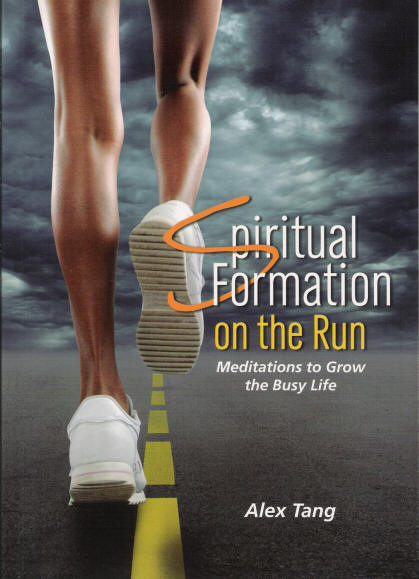
Pastor Paul Long from Paul Long's Ramblings has been using my book, Spiritual Formation on the Run for his reflections. Here is his latest, reposted here with his consent.

Tuesday, June 16, 2009

SHOUT TO THE WORLD (Spiritual formation on the Run)

Been a while since I last posted my reflections of my Lectio Divina exercises using Alex's "Spiritual formation on the run". Been extra busy as my wife is still in Malaysia. Not too busy to do my contemplation as it is after all being done ... "on the run". :-) If you didn't get that, that's the whole beauty of this concept. You do not have to be disappear for hours in a quiet secluded place to get close to God and "practice the presence of God". But busy I have been as all the cooking and cleaning duties are now my domain so time to type is rather limited ... but more on that as it is related to this blog's reflection and ramblings. Ah ... Brother Lawrence would be smiling in heaven at hearing this .... :-)

Ok, first this is from chapter 16 entitled:
SHOUT TO THE WORLD

Elie Wiesel writes: One of the Just Men came to Sodom, determined to save its inhabitants from sin and punishment. Night and day he walked the streets and markets protesting against greed and theft, falsehood and indifference. In the beginning, people listened and smiled ironically. Then they stopped listening: he no longer amused them. The killers went on killing, the wise men kept silent, as if there were no Just Man in their midst. One day, a child, moved by the compassion for the unfortunate teacher, approached him with these words: "Poor stranger, you shout, you scream, don't you see that it is hopeless?" "Yes, I see;' answered the Just Man. "Then why do you go on?" "I'll tell you why. In the beginning, I thought I could change man. Today, I know I cannot. If I still shout today, if I still scream, it is to prevent man from ultimately changing me."

This short story from Wiesel has a powerful message for us as we struggle to live a Christian life or a life pleasing to God in the world. The world has a powerful and seductive influence on us. It knows the right buttons to push. Get this mobile phone and it will make you look sophisticated, techno-savvy and well connected. Drive this brand of car and the world will recognise you as a successful man. Do not leave home without this credit card because you are a well-travelled jetsetter. It takes a lot of effort and wisdom to resist the temptations of this world. Satan tempted our Lord Jesus with the satisfaction of fleshy desires (bread from stones), security from harm (angel's protection), and power and wealth (all the kingdoms on earth). And Satan is still tempting Jesus' disciples in these areas. Jesus taught that we, His disciples, are not of this world but are destined for another.


As new Christians, many of us were full of fire, shouting and screaming, as we tried to make people understand the danger they were in. We were like people standing at the edge of a cliff and shouting to others, "Do not walk over there. There is a cliff. You will fall over to your doom. Turn back:' And, to our astonishment and dismay, we discovered that nobody was listening to us. Nobody paid attention to our message. Nobody believed us. The people kept on walking and fell off the cliff. Soon we stopped shouting and screaming. Maybe we whispered a bit here and there. But as we stopped fighting the world, we became like the world. We were like someone swimming against a current. The moment we stopped swimming, we were swept back by the current.

I wonder how many of us have stopped swimming against the current and are even now swimming with the current. It is so easy to stop shouting and be with the crowd. Just relax a little here and there. A small white lie; a little stealing and cheating here and there. Nobody will know. We become insensitive to the needs of others. We eat, drink and are merry to excess.


The Christian life is a life of constant struggle. We struggle against our flesh, the world and Satan. We know that we cannot change man; only God can do that. However, we must always be on guard that the world does not change us. That will happen if we let down our guard and stop struggling against the world. So, brothers and sisters, let us continually encourage one another in our struggle. We cannot go at it alone; a piece of coal that falls out of the fire cools down very fast. Do not let the world change us.


-----
I really like Wiesel's story. And I like Alex's reflections in this chapter. I like the story as I can truly identify with it. And I like Alex's reflections especially that on materialism as this is one (of many many many many .... reason why I felt I should leave Malaysia and come to New Zealand.

Living in PJ and serving in a middle class (dare I say upper middle class?) church was killing my family. The pressure of finding the money to join in basic activities of the majority was just too hard. Too many heart breaking incidents ... like having my then 9 year old son close to tears because he was afraid that his friends would laugh at his RM 30 shoes (not cool and branded like the what others wore) was difficult for me. It was so hard not to capitulate and go for the RM 60 shoes that was more presentable (let's not even go near the RM 100 - 200 shoes) . But how could I live with myself if I bought my 9 year old shoes (in which he would outgrow in a year) that cost more than my working shoes?

In times like this (and I best not give any more example lest I be misinterpreted) I would shout (in my head and heart or else I might end up being committed to a mental institution) the values that I believe I should hold and ray my heart listens to my head. And every now and then when I cannot take it anymore I make myself unpopular by speaking to some parents or youth and tell them things like ... "Please don't buy your child a new car when he / she gets his . her driver's license." Or "Is it justifiable for you (a teenager who is not working) to pay RM 10 for a cup of coffee at coffee bean?"

Of course "nobody" goes to coffee bean anymore ... (it was that long ago :-)) and being the dummy that I am, I forgot that RM 10 was for the cheapest cup of coffee and only cheapskates like me would drink that. Yes, I went but someone paid as they wanted to chat with me over coffee and I bought the cheapest.
And of course there were times when a few youth would listen to me and refrain from certain things but most of this handful soon caved in under pressure.

And yes I knew after a few years that "nobody" is listening to me. They are just tolerating me BUT like the man in the story, every now and then I needed to "shout out" not so much for the sake of others but for my own sake.

Ok, better make it clear that I am not totally against going for buying branded goods, buying nice stuff for your children, taking fancy holidays and going to StarBucks (or is that place also not cool anymore - I don't know ...) etc. Just that have seen too many Christians being so used to such things that their spending and lifestyles I feel are way to excessive in comparison to other important things. As the world's lifestyle influences them, their walk with God clearly suffers (if not them, then their children).

But "nobody" listens to me anyway, right? LOL So I am "shouting" out extra loud for myself so that I will be forced to read what I blog one day should I go astray :-)

Side note:
End of this year I am taking my family when my mum comes for a visit for a nice holiday. Jennifer and I have saved up since coming and we are going to spend $2,000 holidaying. Of course there may be some who may be rolling on the floor laughing (ROTFL) because $2,000 may not seem much especially since prices of tourist holiday activities are so expensive. But for me it is a huge amount and in my spare time I have been working on the budget so I think we will manage. :-) And it has taken me a long time to get to this stage to spend money like this but I think we all deserve a good holiday as a family. I have learned from the example of some families here. They work hard, live simply, serve God and save up for family holidays. I think that is a good example of discipline and good stewardship.


So what have I been shouting about lately?
Basic disciplines! My children must really resent me for this but I need to shout (and often literally!) even if they do not seem to be listening.
The floor is not the place to toss their stuff, clothes (clean or dirty) nor rubbish! So hang up your clothes and keep your rooms tidy.
The dining table must be wiped clean after meals

When you have finished your drink, wash your cup, don't leave it in the sink and soak it with water! (What an irritating habit!)
Do your chores first before going off to play!

Let me know your schedules early and not inform me at the last minute.
That should suffice, right? :-)

And of course I tell them whether they seem to be listening or not that these are basic disciplines that will help them later in life. Because not to do them is just being plain lazy! Obvious my "shouting" is also for my benefit because the most embarrassing thing would be if I be lazy and my children get the opportunity to point a finger at me and say,
"Hypocrite!" :-)

One more side note ...
My church's former pastor, (a wise man in my eyes) commented on Sunday that there were some difficult things in the passage he was going to preach on that needed to be heard. That was the difficulty of preaching through a book of the Bible. You can't just only preach the nice encouraging stuff and avoid the tough stuff. I wonder too in my preaching.

Very few people like to listen to the rebukes and challenges in Scripture. But I must also shout these things if I wish to be a faithful preacher of God's Word. BTW, note that the famous verses of 2 Timothy 3:16-17 says the following:
All Scripture is God-breathed and is useful for teaching, rebuking, correcting and training in righteousness, so that the man of God may be thoroughly equipped for every good work. Notice that of the four uses of Scripture mentioned, rebuking and correcting are two of them? Food for thought?

A final note for now ... "shouting our loud" truths (as hard as it may be to do or hear) is not totally hopeless. I see changes in people's lives. For example, my eldest now that he has a part time job faithfully tithes and has decided to do it anonymously. My heart overflows with joy and thanksgiving to God. All my "shouting for years" on financial giving, responsibility, the importance of being generous, blessing others etc has reaped benefits.

So let us indeed keep shouting to the world (and ourselves) what needs to be heard for the glory of God.


Paul's other reflections from Spiritual Formation on the Run:

the Silence in the Noise
Omission and Commission
A Burning Bush

Labels: , ,

Friday, June 19, 2009

A 'Quiet' Day in STM (5)


Closing devotion

In our short journey together, we seek to know more about ourselves and about God. The important lesson to learn for your future ministry is that IT'S NOT ABOUT YOU. It's about drawing close to God and doing what He has assigned for you.


In the Joseph’s narrative in Genesis 37-49

  • Joseph’s dreams
  • Joseph sold by his brothers
  • Joseph and Potiphar’s wife
  • Joseph in jail (cupbearer and baker)
  • Pharaoh’s dream
  • Joseph in charge of Egypt
  • The famine
  • The Jacob family Egypt

This is a powerful narrative of jealousy, good and bad. It also ensures the survival of the Jacob family, the family that will become ancient Israel nation.

Who do you think is a vital link in this narrative?

  • Joseph
  • His brothers
  • Potiphar
  • Jacob
  • The Pharoah

An unnamed man in Shechem (Gen.37:14-15)

14 So he said to him, “Go and see if all is well with your brothers and with the flocks, and bring word back to me.” Then he sent him off from the Valley of Hebron.

When Joseph arrived at Shechem, 15 a man found him wandering around in the fields and asked him, “What are you looking for?”

16 He replied, “I’m looking for my brothers. Can you tell me where they are grazing their flocks?”

17 “They have moved on from here,” the man answered. “I heard them say, ‘Let’s go to Dothan.’”

So Joseph went after his brothers and found them near Dothan.


This unnamed man is the link. If he has not been helpful, if you have not told Joseph where his brothers are things will have been different.


God has a plan. This plan is unfolding with and without our help. God is sovereign. Actually he does not need us but he loves us enough to allow us to take part. Sometimes we actually get in the way.


When I was about six, my father was clearing his overflowing bookshelves. He piled all the books he wanted in one pile and books to be burnt in the other. Helpful number one son come along and want to help. Take this pile of books outside for your mother to burn, said my father. Guess which pile did number one son took?


Sometimes we are a hindrance to God’s plan. This is especially when we ran ahead of him with our own plans. God is a sovereign God. God is larger that what we can imagine him to be.


Today we have learned something about ourselves and about God. I hope we have learnt enough to stay close to him.


Soli Deo Gloria

Labels: , , ,

Thursday, June 18, 2009

A 'Quiet' Day in STM (4)

The Three Amigos


spiritual theology bridging the gap between New Testament and Old Testament?

Labels: , ,

Wednesday, June 17, 2009

A 'Quiet' Day at STM (3)


Knowing God

‘Who is your God?’
Read 1 Kings 19:8-18

• Wind
• Earth
• Fire
• ?water
• “a gentle whisper”

Recharged Elijah must
• Anoint Hazael, king over Syria
• Anoint Jehu, king over Israel
• Anoint Elisha
Some six years after this he warned Ahab and Jezebel of the violent deaths they would die (1 Kings 21:19–24; 22:38). He also, four years afterwards, warned Ahaziah , who had succeeded his father Ahab, of his approaching death (2 Kings 1:1–16). During these intervals he probably withdrew to some quiet retirement, no one knew where. His interview with Ahaziah’s messengers on the way to Ekron, and the account of the destruction of his captains with their fifties, suggest the idea that he retired to Mt. Carmel.

(1) Listening to God

A legend has it that there was a temple built on an island and it held a thousand bells. Bells, big and small, fashioned by the finest craftsman in the world. When the wind blew or a storm raged, all the bells would peal out in a symphony that would send the heart of the hearer into raptures.
But over the centuries, the island sank into the sea and, with it, the temple bells. It is said that the bells continued to peel out, ceaselessly, and could be heard by anyone who would listened. Inspired by this legend, a young man travelled thousands of miles, determined to hear those bells. He sat for days on the shore, facing the vanished island, and listened with all his might. But all he could hear was the sound of the sea. He made every effort to block it out. But to no avail; the sound of the sea seemed to flood the world.
He kept at his tasks for weeks. Each time he got disheartened he would listen to the village elders who spoke with passion of the mysterious legend. Then his heart will be aflame…only to be discouraged again when weeks of further effort yielded no results.

Finally he decided to give up the attempt. Perhaps he was not destined to hear the bells. Perhaps the legend was not true. It was his final day, and he went to the shore to say goodbye to the sea and the sky and the wind and the coconut trees. He lay on the sand, and for the first time listened to the sound of the sea. Soon he was so lost in the sound that he was barely conscious of himself, so deep was the silence the sound produced.

In the depth of that silence, he heard it! The twinkle of a tiny bell followed by another, and another, and another…and soon every one of the thousand temple bells was peeling out in harmony, and his heart was rapt in joyous ecstasy.


This story teaches us two important lessons about listening and awareness. First, all of us have a desire to hear God’s voice. We want to hear what he is saying to us. We want him to speak peace and comfort into our trials and tribulations. We have been taught early in our Christian life to set aside time for prayer and Bible reading. We call it the “quiet time.” We are told that if we have our quiet time regularly, we will hear the voice of God. If not audibly, at least we know that he speaks to us in answered prayers or certain passages in the Bible we are reading that will convey his speech.

There are two possibilities concerning our quiet time. One is that we become too busy that we do not have time to pray and read the Bible. Hence we feel guilty, and we think we have lost the opportunity to hear God’s voice. The other possibility is that we continued faithfully in our prayers and Bible reading but we find it dry and boring after a while. We also find that we do not hear God speaking to us. We must be aware that God speaks to us in many ways. He speaks to us by his Word. God also speaks to us in our prayers, through other people, circumstances, dreams, and into our daily lives.

For those of us who are too busy for prayer and Bible reading, be aware that God still speaks to us in our busy lives. For those who are disciplined in prayers and Bible reading, be careful that we do not try too hard. Like the young man on the beach who tried so hard to hear the bells by consciously shutting out the ocean sounds, we may too be trying too hard to hear God’s voice. In the spiritual life, it is not effort that counts. Spiritual growth is not something we build but who we become. Sometimes, we try too hard in our spiritual life. For example, we want to have faith. Now, faith is not something we can create. There is nothing we can do to make us have more faith. Faith is a gift, something that only God can give. The only thing we can do is ask God for it.

Second, all of us live hectic, busy, and noisy lives. A recent scientific study done showed that cities have a high level of ambiance noise. This level of ambient noise can be disruptive to our well being if we are exposed to it for too long. The noise will also cause deafness. Yet it is in our hectic, busy, and noisy lives that God speaks to us. Unfortunately, many of us are already deaf to him because we have not learnt to embrace the noise until we can hear the silence within. The noisy world is like a weather storm; a typhoon. There is always a centre called the “eye” of the storm. This “eye” is a calm, quiet, and peaceful area within the raging storm. We must learn to be aware of the noise around us. We can embrace the noise of the world and move beyond it into the silence within. It is in this silence that we hear the voice of God.

How do we not try too hard, and enter into the silence of our busy and noisy lives? We begin by being aware that God is in our busy and noisy lives. God is not only just present in church on Sunday. We do not leave God behind when we leave the church building after the service. God is not only present in our daily lives, but he is speaking to us all the time. Speaking to God is prayer and Paul has taught us to pray “unceasingly”. This means that it is possible to be speaking and listening to God 24/7. Since God is already with us, there is no need to try too hard to reach him. If possible, set aside some time for him alone, this is your quiet time. If not, listen for him in the happenings of your daily lives. Try to be aware of God’s presence and voice in the routine, mundane of your daily lives. Catch a glimpse of God in a sunrise, a beautiful flower, a friendly smile, a loving touch, an opportunity to offer help, and to receive help. When we become aware of God’s presence in our lives, each encounter becomes dazzling like a sudden burst of joy. Time seems to stand still. There is a deep warm silence. And in the silence you will hear the voice of God who calls you his beloved. It is possible to hear the harmony of a thousand bells.

(2) Awareness of God (Habits of Familiarity)

It is said that when the Great Library of Alexandria was burned down, only one book survived. It was a very ordinary book, not like those who were burnt which had leather binding and gold lettering. This was plain simple paperback, dog eared, and yellowed by age. When found among the ashes, it was thought to have no value. It was sold for 10 cents to a poor man who barely knows how to read. This plain and common book however was probably the most valuable book in the world. In the last section of the book were a few sentences that pointed to a source of the secret of immortality or eternal life.

This source is a tiny pebble, that if ingested will give the person eternal life! The writing declared that this precious pebble was lying somewhere along the beaches of Desaru, facing the South China Sea in the southern tip of the east coast of Peninsular Malaysia. This pebble was lying among thousands of pebbles that were exactly like it, except in one aspect- whereas all other pebbles were cold to the touch in the morning; this one will feel warm, almost as if it were alive.

The man rejoices at his good luck. He sold everything he had, borrowed a large sum of money that will last him for at least a year, booked a room at Desaru Pulai Resort Hotel, and began his search for this priceless pebble. He worked out a search grid and did his search systematically. This is how he did it. Every morning, he will go to the assigned search area. He would lift a pebble. If it was cold to the touch, he would not throw it back on the shore because if he did that, he might be examining the same stone over and over again. Instead, he will throw the stone into the South China Sea. So each day for hours he would continue in this routine: pick up a pebble; if it feels cold, throw it into the sea; lift another… and so on, endlessly. He spent a week, a month, a year and finally years on this quest for eternal life. His savings ran out and he borrowed more money. He got a special discount from Desaru Pulai Resort Hotel for being a long staying customer. On and on his search went: lift a pebble, hold it, feel it, if cold, throw it into the sea, lift another. Hour after hour, week after week, day after day….still no pebble of immortality.

One evening, he picked up a pebble and it was warm to his touch – but through sheer force of habit, he threw it into the South China Sea!

How many of us, through sheer force of habit, accidentally throw away our precious pebbles of eternal life? I am referring to the Holy Scripture where by continual exposure to it daily, weekly, monthly… we became so familiar with it that all the precious words of wisdom and knowledge contained within it that can give us eternal life became as common as the pebbles on the beaches of Desaru. Hearing the Word of God read from the Old and New Testament during Sunday worship has become so familiar, so routine, that we are no longer hearing but waiting for it to be over so that we can get on with our service. Hearing the Word of God preached from the pulpit whether as a sermon or a homily is another familiar routine. We listen for the jokes, the mistakes the preacher makes, and think of dinner or whatever our next meal will be like. We understand what the preacher is saying yet the pebble feels cold to the touch. Some of us even listen to other sermons and talks on our MP3 players. Yet it has become so familiar that often, we miss a warm pebble because we are so used to throwing away cold pebbles. This also applies to our daily devotion or quiet time; time we have decided to set aside to spend with God. Yet after a time, this has become a familiar routine habit. We begin to find that it is harder and harder to notice warm pebbles because there are so many cold pebbles. Could it be that we have been throwing away the warm pebbles? Let me suggest a way to avoid throwing away warm pebbles accidentally. The way is to ask ourselves three questions

(1) When is the most important time?

(2) Who is the most important person?

(3) What is the most important thing to do?


(Pause now and write down the answers to these three questions)

The answers to these three questions are in the Bible. Yet how often have we missed them because of our familiarity with it. The most important time is now. Though the Bible has a strong emphasis on the continuity with the past and a strong eschatological component (the future), its emphasis has always been living in the present. What is important is our encounter with the living Christ in this present moment of our life. Now is important.

The answer to the second question is Jesus Christ. He is the most important person because he is the author and perfector of our faith. Because we use the word Jesus Christ so often, it has become such a ‘common’ word that we do not attach much emotional or relevance to it. Ending our prayers “in Jesus’ name” has now become a formula. In becoming so familiar with name Jesus, we often forget that He is the most important person in our life.

The most important thing to do is to love. The Bible is a love story - between God and His people. Jesus came to show God’s love for us. Paul teaches us how to love one another in community. Yet, we have become so familiar with reading about love that we do not get out of our seat and love. Do we love our spouses, our children, our families, our church, our community, our co-workers, and our country? How have we shown it today? Love is in the doing, not in the talking.

(3) You become what you do

Once upon a time, during the time of the Crusades there was a young strong white knight who was very pious and very devoted to God. He made it his personal quest to kill all black knights. The black knights were unholy and impure. Throughout his long life this white knight killed many black knights. One day when he was old, he met a young white knight on the road. To his surprised he was immediately attacked by this white knight. He fought valiantly but was unable to overcome this young man. Throughout the fight, the question lingers at the back of his mind, ‘Why is this white knight attacking me?’ Just before he was killed, he caught a reflection of himself in the shining shield of his opponent. The knight reflected in the shield was black.


Reflection Questions
a. What do you think Elijah had learned about God in the passage?
b. What have you learned about God?

.

Labels: ,

Tuesday, June 16, 2009

A 'Quiet' Day at STM (2)


(no, this is not an optical illusion. The pulpit is very high)

Knowing yourself

‘Who are you?’

Imagine that you are Elijah.

Paraphase of 1 Kings 18:1-19:9

The strong Elijah

· Challenging Ahab –draught (17: 1)

· Brought a dead boy to life (17:19-24)

· Stand up to the 450 Baal priests (18: 20-39)

· Pray for rain (18: 41-45)

· Ran faster than horses (18: 46)

The weak Elijah

· Pride at being a man of God

· Thinking that he is the only surviving prophet of Yahweh (18:22)

· Not listening to Obadiah that he is not

· the narrative refers to ‘his life’

· Jezebel threatens to take it (19: 2)

· He flees for it (19: 3)

· He asks to surrender it (19: 4)

· Some scholars thinks that running away to Kirith Ravine is an act of cowardice (17:5ff)

· He gave up

· Dismissal of his servant at Beersheba (the southernmost limit of Yahweh’s land) – abandoning his job as a prophet

· Travelling a day further – abandoning God’s covenant people

What do you think about Elijah? Is he different from you?


Acting without reflection reveals who you are

Ah Beng was the only Chinese disciple of Abba Isaac, the most famous of all the Desert Fathers in the Fourth Century. Ah Beng had traveled all the way from China to learn to love God and become a good Christian under the teachings of Abba Isaac. After fifteen years. Abba Isaac decided that Ah Beng was ready to start his own monastery so he sent him home. With tears in his eyes, Ah Beng bade his sifu goodbye and made his way back to China. Finally he decided to settle in a small place called Sow-Lin in China.

Being a disciple of Abba Isaac, Ah Beng led a very ascetic life. He lived in a simple wooden hut. Soon many became his disciples and the making of a Sow-Lin monastery were in the works. Ah Beng owned only a loincloth which he washed everyday. Unfortunately, whenever he left it out to dry, the rats would tear at it. So Ah Beng decided to keep a kitten to drive away the rats. However, Ah Beng found that now he had to beg for milk in addition to his own food everyday. This took time away from his prayers and meditation. So Ah Beng decided to keep a cow to produce milk for his kitten. When he had the cow, Ah Beng found that he now had to find grass for his cow. Again this cut into his prayer and meditation time. Then Ah Beng had a bright idea. Instead of begging for his own food and grass everyday, he would cultivate the land around his hut to grow wheat and use the stalk to make hay for his cow. In farming, Ah Beng found out the hard way that it took even more time away from his prayers and meditation. So in frustration, Ah Beng decided to employ people to work his farm. Ah Beng discovered that supervising his employees took up a lot of his time so he decided to employ a manager. In a short while, Ah Beng discovered that he had became very rich!


One day Abba Isaac decided to visit his disciple Ah Beng in China. Instead of a hut, Abba Isaac found Ah Beng living in a mansion. “Your house is like a temple in Sow-Lin,” stammered a surprised Abba Isaac. “All this came about” explained Abba Ah Beng, “because I wanted to keep my loincloth.”


As Abba Ah Beng has found out that such a simple spiritual discipline of asceticism and wearing a loincloth can escalate into a full bloom Sow-Lin temple. I wonder how many of us are aware how complicated Christianity has become. We build multi-million Ringgit churches which are used only a few hours every week. The rest of the time, the buildings are left empty. These are our houses of worship. We worship in air-conditioned comfort, with upholstered seats, clear view of the stage where we see the musicians and speakers perform. Our sermons are uplifting, comforting and simplified so as not to make demands on our time, effort and wallets. We are entertained by karaoke choruses, PowerPoint presentations with sounds and video, and brilliant solo performances by singers and choirs. There are many translations of the Bible in English; offering us the choice of choosing by the beauty of the language (KJV) or reading like a newspaper (The Message). Our theologies are so complicated and convoluted that we are willing to kill each other over it. We fellowship with people who are like us in status; socially and economically. To help the poor and the marginalised, we prefer to give money rather than to get our hands dirty. We retreat into our religious ghettoes and watch as social injustice and racial polarisation tear apart the infrastructure of our society.


Have you ever wondered what God really require of us? Does God wants big fancy churches, emotionally stirring worship performances and Christians who are not disciples? The prophet Micah has this to say, “He has showed you, O man, what is good. And what does the LORD require of you? To act justly and to love mercy and to walk humbly with your God” (Micah 6:8). God’s requirements from us are simple; (1) we are to be just in our action, (2) we are to be merciful to others, and (3) to walk humbly with our Creator God. Our Lord Jesus Christ clarified that for us in what is known as the Great Commandment; we are to love God and to love others as we love ourselves (Mark 12:28-31).


Ever wonder how something so simple can become as complicated as modern day Christianity? I believe it is time that we re-examine the way we practice our religion. We need to get a religious KISS (Keep It Simple, Stupid). We need to ask ourselves which of the many activities we do in church is what God requires. Our church facilities and assets must also be examined to see if that is what God requires. We also need to reassess if we neglect what God requires of us: to seek social justice, to give voice to the oppressed and marginalised, to defend the defenceless and vulnerable, to eradicate poverty and to reduce suffering of the sick, wounded and traumatised.


If this means we have to simplify our lifestyles in order to act justly and to show mercy, let it be so. If it means we have to re-examine our dependence on lavish church buildings, then it is needed. If it means our worship be less of a performance and more of a service, may it be done. If this means our pulpit teaching be more Christ centered rather than man or psychology-centered, it will be beneficial. If it means we have to reduce our church activities to its minimal so more time can be spent outside the church building to offer justice and mercy, let us do it then. Jesus led a group of disciples for 3 years and left them to form a church. Within three hundred years, the church became the most powerful religious institution on earth after it became the official religion of the Roman Empire. Unfortunately it also became the richest, most ritualistic, power-hungry and self-centered institution on earth. Then as now, the church of Jesus Christ needs a religious KISS.


Reflection Questions

a. What do you think Elijah had learned about himself in the passage?

b. What have you learned about yourself?


Labels: ,

Christianity is about Truth and Feelings

My copy of this book has not arrived yet but I like this book review by Jay Wood. I suspect that I will agree with Willard that the Christian life is more about knowing Christ than knowing about Christ.

More Than Deep Feelings
Dallas Willard argues that we really can know Christ.


Knowing Christ Today: Why We Can Trust Spiritual Knowledge
by Dallas Willard
HarperOne, May 2009
256 pp., $17.99


Imagine that after a routine checkup, your doctor says, "My hunch is that you have cancer and must undergo extensive surgery." Would you feel confident going under the knife based on a hunch? Would your confidence grow if the doctor said he had a "strong feeling" or "believed" you had cancer? Obviously not. When the bodily stakes are high, we want to be guided by knowledge—not belief, opinion, or conjecture. Only knowledge gives the doctor's counsel authority.

Why, then, in matters of the soul are we content to be guided by a faith consisting of deep feelings or inner experiences? Why should we be surprised when nonbelievers politely decline to change their lives because we have pious opinions and strong sentiments?

Sadly, says Dallas Willard, those outside the church (and many within it) have ceased to see the Christian religion as a source of knowledge, as a system of claims that successfully tracks the truth and by which we can be guided confidently. So too, says Willard, has the longstanding tradition of objectively true moral knowledge given way to talk about one's feelings and preferences. Willard's Knowing Christ Today: Why We Can Trust Spiritual Knowledge (HarperOne) calls on Christians to recover their faith—and the moral claims that accompany it—as a body of knowledge that can withstand appropriate testing and be proclaimed with confidence.

read more

Labels: ,

Monday, June 15, 2009

A 'Quiet' Day at STM (1)


Knowing God, Knowing Self


The problem: The Sanctification Gap

Presbyterian historian Richard Lovelace identifies the discrepancy that exists between what the Christian ideals of a Christian life as taught in evangelical circles to the spiritual life many Christians are actually living as a “sanctification gap”. Many Christians are aware of the lack of spiritual growth in their lives in spite of having spent years learning under an effective pulpit ministry. Theologian John Coe (2009) suggests that these are “mature beginners” as they have never actually progressed in their spiritual growth. “The sanctification gap” is defined by Christian historian Chris Armstrong (2009) as “the dismal failure of American evangelicals to mature spiritually.” In his study of the contemporary spiritual formation movement, he traces the root of the “sanctification gap” to early twentieth-century fundamentalism. In its zeal to defend against liberalism, the fundamental movement of the 1920s-1950s focused upon the defence of certain important doctrines. Unfortunately in doing so, Armstrong argues, “it had come to identify the Christian life with cognitive beliefs.” Aside from an understanding of the spiritual life as purely an intellectual affirmation of certain propositions, fundamental pragmaticism undergirded by dispensational eschatology favoured activism (soul-saving) rather than contemplation, and views soul-care suspiciously as works-righteousness.


In many ways, knowing God becomes knowing about God.


The solution: The doctrine of double knowledge.

John Calvin started his Institutes of the Christian Religion with “[n]early all the wisdom we possess, that is to say, true and sound wisdom, consists of two parts: the knowledge of God and of ourselves.” (p.35). He goes on to say “without knowledge of self there is no knowledge of God” and “without knowledge of God there is no knowledge of self.” This is called the doctrine of double knowledge- knowing God, knowing self. Actually Calvin wasn’t the first to teach it. We can trace it back to Thomas Aquinas, to Augustine and to Iraeneus. Actually the ancient Greek taught about self-knowledge. Socrates taught about ‘knowing thyself.” He was the first to teach that because “knowing thyself” was engraved at the entrance arch of Apollo’s temple in Delphi, Greece. The Oracle of Delphi controlled the Mediterranean region for more than a thousand years.


.


Labels:

Sunday, June 14, 2009

Ordination of Reverend Dr Lim Kar Yong Today


This is the prayer of a man called to be a witness to the nations. This is what he said to his Lord on the day of his ordination. After the elders and ministers had prayed and laid their hands on him he withdrew to meet his Saviour in the secret place and in the silence, farther in than his well-meaning brethren could take him. And he said:


O Lord, I have heard Thy voice and was afraid. Thou hast called me to an awesome task in a grave and perilous hour. Thou are about to shake all nations and the earth and also heaven, that the things that cannot be shaken may remain. O Lord, our Lord, Thou has stopped to honor me to be Thy servant. No man takes this honor upon himself save he that is called of God as was Aaron. Thou has ordained me Thy messenger to them that are stubborn of heart and hard of hearing. They have rejected Thee, the Master, and it is not to be expected that they will receive me, the servant.

My God, I shall not waste time deploring my weakness nor my unfittedness for the work. The responsibility is not mine but Thine. Thou hast said, “I knew thee—I ordained thee—I sanctified thee,” and Thou has also said, “Thou shalt go to all that I shall send thee, and whatsoever I command thee thou shalt speak.” Who am I to argue with Thee or to call into question Thy sovereign choice? The decision is not mine but Thine. So be it, Lord. Thy will, not mine, be done.
Well do I know, Thou God of the prophets and the apostles, that as long as I honor Thee Thou wilt honor me. Help me therefore to take this solemn vow to honor Thee in all my future life and labors, whether by gain or by loss, by life or by death, and then to keep that vow unbroken while I live.

It is time, O God, for Thee to work, for the enemy has entered into Thy pastures and the sheep are torn and scattered. And false shepherds abound who deny the danger and laugh at the perils which surround Thy flock. The sheep are deceived by these hirelings and follow them with touching loyalty while the wolf closes in to kill and destroy. I beseech Thee, give me sharp eyes to detect the presence of the enemy; give me understanding to distinguish the false friend from the true. Give me vision to see and courage to report what I see faithfully. Make my voice so like Thine own that even the sick sheep will recognize it and follow Thee.

Lord Jesus, I come to Thee for spiritual preparation. Lay Thy hand upon me. Anoint me with the oil of the New Testament prophet. Forbid that I should become a religious scribe and thus lose my prophetic calling. Save me from the curse that lies dark across the face of the modern clergy, the curse of compromise, of imitation, of professionalism. Save me from the error of judging a church by its size, its popularity or the amount of its yearly offering. Help me to remember that I am a prophet; not a promoter, not a religious manager—but a prophet. Let me never become a slave to crowds. Heal my soul of carnal ambitions and deliver me from the itch for publicity. Save me from the bondage to things. Let me not waste my days puttering around the house. Lay Thy terror upon me, O God, and drive me to the place of prayer where I may wrestle with principalities and powers and the rulers of the darkness of this world. Deliver me from overeating and late sleeping. Teach me self-discipline that I may be a good soldier of Jesus Christ.

I accept hard work and small rewards in this life. I ask for no easy place. I shall try to be blind to the little ways that I could make my life easier. If others seek the smoother path I shall try to take the hard way without judging them too harshly. I shall expect opposition and try to take it quietly when it comes. Or if, as sometimes it falleth out to Thy servants, I shall have grateful gifts pressed upon me by Thy kindly people, stand by me then and save me from the blight that often follows. Teach me to use whatever I receive in such manner that it will not injure my soul nor diminish my spiritual power. And if in Thy permissive providence honor should come to me from Thy church, let me not forget in that hour that I am unworthy of the least of Thy mercies, and that if men knew me as intimately as I know myself they would withhold their honors or bestow them upon others more worthy to receive them.

And now, O Lord of heaven and earth, I consecrate my remaining days to Thee; let them be many or few, as Thou wilt. Let me stand before the great or minister to the poor and lowly; that choice is not mine, and I would not influence it if I could. I am Thy servant to do Thy will, and that will is sweeter to me than position or riches or fame and I choose it above all things on earth or in heaven. Though I am chosen of Thee and honored by a high and holy calling, let me never forget that I am but a man of dust and ashes, a man with all the natural faults and passions that plague the race of men. I pray Thee therefore, my Lord and Redeemer, save me from myself and from all the injuries I may do myself while trying to be a blessing to others. Fill me with thy power by the Holy Spirit, and I will go in Thy strength and tell of Thy righteousness, even Thine only. I will spread abroad the message of redeeming love while my normal powers endure.

Then, dear Lord, when I am old and weary and too tired to go on, have a place ready for me above, and make me to be numbered with Thy saints in glory everlasting. Amen."

From A Passion For God: The Spiritual Journey of A. W. Tozer by Lyle Dorsett (Chicago, IL; Moody, 2008), pp. 65-68.

Labels:

Friday, June 12, 2009

Facilitating a Retreat at STM

I am supposed to be facilitating a retreat at Seminari Theologi Malaysia (STM) on Monday but I am living in fear and trembling with sleepless nights because the REVEREND DR LIM KAR YONG and the RABBI will be there.


woe is me

Labels:

Relational Evangelism

I see a trend moving away from the 'confrontation' style of evangelism using the Four Spiritual Laws to a more humanising relational evangelism. I am happy about this because basically evangelism and sharing the gospel is about relationships. Here is an interesting interview from Christianity Today.

The Changing Face of Apologetics
Lee Strobel doesn't think the traditional methods work anymore.


The Unexpected Adventure: Taking Everyday Risks to Talk with People about Jesus
by Lee Strobel and Mark Mittelberg
Zondervan, May 2009
304 pp., $9.99


Lee Strobel has written many books—The Case for Faith, The Case for Christ, and The Case for the Real Jesus among them—that provide intellectual reasons, wrapped in stories, for the Christian faith. Stan Guthrie, Christianity Today managing editor for special projects, interviewed Strobel, a former pastor at Willow Creek Community Church, at the Christian Book Expo in Dallas about his latest title, written with Mark Mittelberg: The Unexpected Adventure: Taking Everyday Risks to Talk with People about Jesus (Zondervan).

read more

Labels: , ,

Wednesday, June 10, 2009

What is a marriage?

"But let there be spaces in your togetherness and let the winds of the heavens dance between you. Love one another but make not a bond of love: let it rather be a moving sea between the shores of your souls."

The Prophet
Kahlil Gibran

Labels:

Tuesday, June 09, 2009

Future Father of the Bride


I am still in denial

Labels:

Friday, June 05, 2009

Top Ideas of the Last Decade

From Learnings@Leadership Network blog, Dave Travis gave some ideas about The Top Ideas of the Last Decade

Here’s the list:

  • The rise of the "new" Calvinists - (Acts 29, Gospel Coalition, etc) The growth of the Reformed theological position... at the same time the Dispensationalists are declining rapidly…
  • Multi Site Church

  • From Pastor » Senior Pastor » Directional Leader
  • Externally Focused Church as key idea for Evangelical churches
  • Micro Finance as Missions
  • Emergent Church

    Lightbulb1

  • The megachurch's domination of media coverage

  • The rise of Church Planting Networks as the driver of planting churches.
  • Purpose-Driven Church

  • Purpose-Driven Life
  • Distance learning via computer
  • Keeping up with missionaries and partners throughout the world via computer.
  • HIV-AIDS response by churches and individuals (especially to Africa)
  • The rise of African countries as missions partners.
  • Pastor Blogs as communication vehicles.
  • Online podcasts of sermons.
  • Online video casts of sermons.
  • Church web sites that are fully robust.
  • Social networking tools being utilized by churches/parachurches.
  • Paid bloggers for various charities/parachurch orgs.
  • Shifting opinions on homosexuality - civil unions, marriage, adoption.
  • Shifting opinions on many social issues in the 18-35 year old demographic that are shaping the emphases of the church
  • "Branding" for churches.
  • The rapid development of the church associations around Willow, Saddleback, etc.
  • Kingdom Business as Mission.
  • Rise of Family Foundations/ Donor Advised Funds/National Christian Foundation et al as vehicles to leverage kingdom giving.
  • You Version of the Bible.
  • Ubiquity of projected images during worship (dramatic increase across the world really), influencing not only the innovative megachurch but all church groups, mainline included
  • The impact of giant video screens in making hymnals, songbooks, bibles, etc., redundant... contributing to the changing approaches to "reading" in the West.
  • White House Office of Faith Based Initiatives
  • Rise of Organic/House Church movement
  • Greater awareness by US megachurches and others toward international missions and humanitarian efforts around the world.
  • Rise of Christianity in China resulting in China having the largest Christian Population by 2015-2020
  • The acceptance of social entrepreneurs, including faith based ones, by business leaders.
  • Dramatic rise of funds raised by churches and parachurches.
  • Dramatic capital expansion, (building boom) by churches and parachurches.
  • Global North Churches form partnerships with Global South Churches.
  • Adoption of people groups by congregations as long term partners/fields of work.
  • The decline of singles ministry and the rise in number of singles in America.
  • Rapid rise of recovery ministries as key outreach and evangelism strategies for churches
  • The increase in books published during decline of books read.
  • The rapid disappearance of dated curriculum... no longer used by large churches which are developing their own media resources.
  • Video venues.
  • Teaching Team.
  • The circle story of evangelism replacing "the four spiritual laws."
  • The evolving definition of "personal salvation" and growing emphasis on "progressive salvation-- I was saved, I am saved, I'm being saved."
  • Jesus film evangelism worldwide.
  • Use of wide release movies (Narnia - Facing the Giants, etc) as evangelism opportunities.
  • Arena-sized megachurches.
  • Rise of Latino evangelicals.
  • Open sourced content freely given away for church stuff.
  • End of the worship wars.
  • Twitter and other text and polling technologies informing preaching and teaching.
  • Moving from sanctuary, to auditorium, to worship center…
  • The rise of children's ministry in megachurches, utilizing elaborate media technology and equipment.
  • More and younger half-timers finding their calling in church ministry…
  • The Dave Ramsey Town Hall type meeting style of distribution of event rather than TBN or other method.
  • Executive Pastors.
  • True Teaching Teams.
  • Succession becoming reality, not just anticipated.
  • Changing models of University Ministry.
  • Diffusion and deeper penetration of small group models (life groups...cells...) into denominational churches.
  • Birth of Internet campuses.
  • Missionaries coming to the US and other western countries rather than simply missionaries being sent to "less developed" countries.
  • Churches being more willing to partner with other agencies and organizations to accelerate community service.
  • Multiple venues (traditional and contemporary) at a single campus.
  • More interactive children's ministry resources.
  • Transition from "content focus" to "content delivery focus" - this shows itself in lots of ways and is a common thread for many of the items on your list including technology and social networking.
  • From "organization centric" to "network centric."
  • In church planting - shifting from organization/association centric to church planting church.
  • High-capacity marketplace leaders (often boomers) and young social entrepreneurs bypassing the local church to find significance.
  • Scorecard for leaders is changing (how they measure success on their scorecards is evolving).
  • Prevailing church (mega, multi-site, etc) as delivery system for more organic / incarnational faith communities.
  • Growing void in strong student ministers. A decade ago, student ministry was the training ground for getting a solid foundation before planting churches. Today, far more leaders are skipping the student ministry role and going straight to planting. Creates a void in strong student ministry leaders.
  • From Elder-led to staff-led governance.
  • Expansion of Christian magazines (similar to books and conferences and movies).
  • Bringing management and leadership focus to the church (new dimension for pastors).
  • From "marketplace to ministry" as a strong source of staff. Far more emphasis on home grown leadership.
  • Intern and residency programs rapidly increasing
  • Formal staff assessment centers and tools.
  • Growth and role of HR departments in churches.
  • Support/Service industry of vendors has exponentially expanded at far greater rate than growth/expansion of the church.
  • The ubiquity of cell phones as a primary tool to connect everything digital.
  • The continued rise of Pentecostal movements around the world.
  • The Passion Movement and other student movements go global.
  • The belief that the world really is flat.
  • Kingdom business incubators to start businesses with the poor around the world.
  • Cross-domain collaboration for community building.
  • Shared leadership models (from teaching teams to elder/staff combos to volunteer staffing).
  • IMicro-economic initiatives by congregations (global as well as local).
  • The use of orality and story to communicate the gospel - especially in developing world.
  • 24/7 Houses of Prayer.

read more

anything to add?

Labels: ,

Thursday, June 04, 2009

Reformed Perspectives Magazine Volume 11, Number 23

Reformed Perspectives Magazine Volume 11, Number 23 (June 7 to June 13, 2009), is now available.

The following articles are featured in this issue:
Pain and Anguish
An Article
By: Kenneth TaylorWebpage PDF Word

Trinity
An Article
By: JI PackerWebpage PDF Word

The Everlasting Covenant, Part 1
An Article
By: John OwenWebpage PDF Word

The Sole Consideration, that God is God
An Article
By: Jonathan EdwardsWebpage PDF Word

Freedom of the Will, Part III
An Article
By: Jonathan EdwardsWebpage PDF Word

The Place Called Armageddon
An Article
By: Kim RiddlebargerWebpage PDF Word

.

Labels:

Experience with Pneumococcal Vaccine

I have been unhappy with the pneumococcal vaccine since the company launched it a few years ago. At the start, let me say I have no problem with the vaccine. It is a seven-valent pneumococcal conjugate vaccine (PCV7). It is a good and effective vaccine.

I do have problem with the way the company started marketing the vaccine. Instead of going through the doctors as was the case in most other vaccines, the company decided to go directly to consumers with a media blitz. It took up full pages of advertisement introducing the pneumococcal vaccine and showing a child with brain damage due to meningitis and a guilt stricken mother. This is education by terror and guilt. The advertisement serves to scare people to vaccinate their children. Yes, pneumococcus is a bacteria that can cause meningitis (which is treatable by antibiotics), ear infection, lung infection and throat infection. But by highlighting just the worst case scenarios, the company hopes to panic parents into vaccinating their children.

Doctors should be gatekeepers for medical information because by the nature of their training they know more then the lay-public and are able to offer better advice. That is why all new vaccines and pharmaceutical products are launched through the doctors. There is a lot of medical information on the Internet but how will a lay-person decide which information is dependable or not?

It also does not help that somehow they managed to get the Malaysian Paediatric Association logo into their advertisement. I have written a complaint to the then President of the Association here. Furthermore at that time of the vaccine launch, we have no data about the disease incidence in Malaysia. That means we have no idea how common it is in Malaysia.

The company also recommends a regime of 3+1 which means three injections of one monthly interval during infancy and one booster at 15 months. At a cost of about RM 250-300 a dose, anyone can see what a cash cow this will be to the company. Also this has obviously put this so very important vaccine out of the reach of the poor.

What I have discovered from my reading and what the company did not highlight to the doctors in Malaysia is that the Scandinavian countries and the United Kingdom is giving a 2 +1 regime. This are not poor countries that cannot afford to buy vaccines for their people and are skimping on one dose per child. These are rich countries. When I confronted some senior managers of the company, they reluctantly admitted that some countries are using a 2+1 regime. Why was it kept a secret?
It is not as if the 2+1 regime do not work. Here is a paper describing the experience in Norway

Seven-valent pneumococcal conjugate vaccine (PCV7) was introduced into the Norwegian childhood vaccination program in July 2006 in a 2+1 dose (three-dose) schedule. Vaccine coverage quickly reached high levels and the incidence rate of invasive pneumococcal disease in children under 2 years of age declined rapidly. The vaccine program's effectiveness was estimated to be 74%. Read more


Reading the literature I have decided to adopt the 2+1 dose schedule for my patients. This vaccine is not given free in government clinics but is only available in private medical practice in Malaysia. The reason is to help my patent's parents save at least RM 250-330 per child. Some other pediatricians decided to follow my example. It is interesting that when the company heard about this, I was approached by two of the sales representatives last December, who offered to give me a free vaccine dose for every child I started on the vaccination schedule as long as I keep to the 3+1 schedule.

What do you think I should do?

Labels: ,

The Sufferings of Christ

I am very proud to introduce my good friend, Kar Yong's new book. I have already ordered it from amazon.com.


The Sufferings of Christ Are Abundant in Us: A Narrative Dynamics Investigation of Paul’s Sufferings in 2 Corinthians (Library of New Testament Studies) (Hardcover)

Editorial Reviews

Product Description
This book investigates the centrality of suffering to Paul's argumentation in 2 Corinthians. This study investigates why Paul makes the theme of suffering so central to his argument in 2 Corinthians. It is pursued through an exegetical analysis of passages where Paul's suffering is described, namely 1:3-11; 2:14-116; 4:7-12; 6:1-10 and 11:23-12:10.By employing a narrative approach, this study argues that Paul's apostolic suffering is grounded in the story of Jesus. There are several implications arising from this approach. First, Paul understands his suffering as necessary and integral to his apostolic mission. Second, Paul claims that his suffering has positive missiological benefits, resulting in giving birth to the Christ-believing community in Corinth. Third, for Paul, the story of Jesus does not end at the event of the cross, and so he extends the invitation to the Corinthians to participate in the story of Jesus. Fourth, Paul's understanding of his suffering also finds its roots in the Hebrew Scriptures as seen in the allusion to and citations of Isaiah and Jeremiah/1 Kingdoms. Finally, Paul expresses his deep concern for the Corinthians in this letter.In essence, Paul sees his own suffering as a reflection of his embodying the ongoing story of Jesus - a story of suffering and death leading to life - and calls the Corinthians also to this cruciform pattern of living. Taking all the above implications together, it is suggested that 2 Corinthians should be read as primarily parenaetic in nature and that Paul's apology for his apostleship only plays a secondary role.Formerly the "Journal for the Study of the New Testament Supplement", a book series that explores the many aspects of New Testament study including historical perspectives, social-scientific and literary theory, and theological, cultural and contextual approaches. "The Early Christianity in Context" series, a part of JSNTS, examines the birth and development of early Christianity up to the end of the third century CE. The series places Christianity in its social, cultural, political and economic context. European Seminar on Christian Origins and "Journal for the Study of the Historical Jesus Supplement" are also part of JSNTS.

About the Author
Dr Kar Yong Lim is a Lecturer in New Testament Studies at Seminari Theoloji Malaysia (Malaysia Theological Seminary), Seremban, Malaysia.

Product Details

  • Hardcover: 256 pages
  • Publisher: T & T Clark International (July 24, 2009)
  • Language: English
  • ISBN-10: 0567107280
  • ISBN-13: 978-0567107282

Labels: , ,

Wednesday, June 03, 2009

Is it a sin to go for plastic surgery?

from Her.meneutics, Christianity Today's blog for ladies

June 2, 2009

Is it a Sin to Nip and Tuck?

Cosmetic surgery may be one more manifestation of Paul's warning about self-improvement.

“Beauty often wins love. It just does,” write Karen Lee-Thorp and Cynthia Hicks in Why Beauty Matters. No wonder women and, increasingly, men are willing to endure the pain and risk of elective cosmetic surgery to attain it. New York Times reporter Alex Kaczynski states it bluntly in her cosmetic surgery expose, Beauty Junkies. “In the end it all comes down to sex. . . . We are looking for love. And we will accept lust.”

read more

what do you think?

Labels: , ,

Tuesday, June 02, 2009

Richard Foster' & Beebe's Longing for God


Richard Foster & Gayle D. Beebe (2009), Longing for God: Seven Paths of Christian Devotions, Downers Grove IL: InterVarsity Press.

Richard Foster is the founder of Renovare in Denver, Colorado. Gayle Beebe is president of Westmont Colleg in Santa Barbara, California.

This book reminds me of the approach taken by Richard Foster (2001) in his book, Streams of Living Water. While in Streams, Foster divided the Christian traditions, here they try to divide the spiritual life as seven paths of Christian devotion. These paths are
(1) The right ordering of our love for God
(2) The spiritual life as journey
(3) The recovery of knowledge of God lost in the Fall
(4) Intimacy with Jesus
(5) The right ordering of our experiences with God
(6) Action and contemplation
(7) Divine ascent

The authors have selected a few Christian spiritual saints from the past to support each one of these path. For example in the path of action and contemplation, John Cassian, Benedict of Nursia and Gregory the Great were chosen as examples and a small sample of their wrings were quoted.

As a student of Christian spirituality, I welcome the revival of interest in the leaders of the spirituality tradition. The Desert Fathers and Mothers, Christian mystics, spiritual directors and spiritual writers are enjoying a revival of sorts. Their works are being taken down from dusty shelves and their writings are being reprinted. These saints are very complex people and they lived in a time and space very remote to our time and space. Therefore I fear when they and their works are used to support certain views of spiritualities without reference to the context in which their works were produced. Oops. Sorry about the rant.

This is a well written book by two scholars of Christian spirituality. The seven paths mentioned are well defined but somehow felt too 'neat.' I hope now that Christian devotion is categorized, it will not be systematized and formulatized. In his book, Streams, Foster identifies six dimensions of the Christian life. After the publication the the book, Renovare organises spiritual formation groups which meet regularly. During each group meeting, they make sure they study or conduct activities that touches upon these six dimensions. While this sounds like a balanced Christian life, somehow it is too artificial and again, neat. Christian life is more complex than that. It is not a formula but a way of life.

After saying all that, this is a good book to read about Christian spirituality.

Labels: , ,

Monday, June 01, 2009

N.T.Wright's Justification


N.T. Wright (2009), Justification: God's Plan & Paul's Vision, Downers Grove, IL: IVP Academic.

N.T. Wright is Bishop of Durham and was formerly Canon Theologian of Westminster Abbey and dean of Lichfield Cathedral. He taught New Testament studies for twenty years at Cambridge, McGill and Oxford Universities. Wright's full-scale works The New Testament and the People of God, Jesus and the Victory of God, and The Resurrection of the Son of God are part of a projected six-volume series entitled Christian Origins and the Question of God. Among his many other published works are The Original Jesus, What Saint Paul Really Said and The Climax of the Covenant. He is also coauthor with Marcus Borg of The Meaning of Jesus: Two Visions and the volume on Colossians and Philemon in The Tyndale New Testament Commentary series.

This is an interesting book because it is mainly written in response to John Piper (2007)'s The Future of Justification: A Response to N.T. Wright which was in turn written in response to N.T. Wright's perspective or the so called "new" or "fresh" perspectives on Paul. So when two theological giants goes into the ring with each other, the rest of us mortals should sit back and enjoy the show. Unfortunately, many have decided to get into the ring with them thus making what should be a theological dialogue into a free-for-all melee.

In this latest round, Wright was forthcoming in saying that he wrote this book in response to Piper and that he needed to defend himself to avoid being branded a 'villain' in this dialogue.
In the preface itself, Wright lays down his thoughts about Paul. He seek to frames the argument by structuring it as,
(1) the nature and scope of salvation (which he has dealt within his Surprised by Hope , 2008 , San Francisco: HarperOne).
(2) the means of salvation
(3) the meaning of salvation

It is mainly in the meaning of salvation that the main focus of this book is about or rather what the Pauline understanding of salvation is. Wrights identifies these themes,
(1) Paul's doctrine of justification is about the work of Jesus the Messiah of Israel
(2) Paul's doctrine of salvation is about covenant (God's covenant with Abraham)
(3) Paul's doctrine of salvation is focused on divine law court terms
(4) Paul's doctrine of salvation is bound up with eschatology i.e. Paul's understanding of God's future for the whole world and God's people. Or more specifically present justification and final justification.

The issue lies in the exegesis and hermeneutics of key texts and Wright went into a few of the key ones in this book. I believe he has dealt with the key texts fairly and accurately. It is not so much in the exegesis itself but in the nuances in the hermeneutics. In the Reformed tradition, theology is always forming and reforming. This means that there is always room for dialogue and it is the height of arrogance for anyone to think that they have the full understanding of all theological truths. Also it is folly for anyone to think that all Christians have misunderstood Paul for the last two thousand years. I prefer to see it as expanding our understanding of Paul's writings in light of our latest scholarship. Personally I do not think that Reformed theology is being threatened by this argument that has been going on for the last two decades. If it is so easily toppled, this means there is something wrong with it. I believe that Reformed theology is big enough for such dialogue to take place without too much emotionalism and mud-slinging.

This is a good book to read in the series of books that Wright is writing in defending his thinking about Paul. As he takes pain to point out it is a work in progress. I am looking forward to his coming fourth book (about Paul) in his Christian Origins and the Question of God series.

.

Labels: , ,

Sunday, May 31, 2009

Richard Schmidt's God Seekers


Richard H. Schmidt (2008), God Seekers: Twenty Centuries of Christian Spiritualities , Grand Rapids, MI:Wm. B. Eerdmans Publishing Co. / Hardcover


This is an interesting book to read because it gives an overview of Christian spirituality by focusing on the biography of a certain person as representative of that spirituality. It is appropriate that the book should be entitled Christian spiritualities as each of the person mentioned represent a type of Christian spirituality. I am beginning to recognise and appreciate that there is not one Christian spirituality but many Christian spiritualities.

Schmidt offers the definition of Christian spirituality as "any spirituality which sees God in Jesus Christ." That's a great definition but it does not mention the role of the Holy Spirit and the telos of Christian spirituality.

There are 32 short biographies followed by a few quotations from each of the the person mentioned. Each forms a chapter and a type of spiritualities. The first biography is of Irenaues (early Christian spirituality) and ends with Rosemary Radford Ruether (Feminist spirituality). These make interesting reading but is just too brief. What make the chapters come alive is the beautiful line portraits of the persons mentioned drawn by Dean Mosher of Fairhope, Alabama where he drew from imagination, many of the the early spiritual writers who did not have any surviving portraits.

A good book for a general introduction to Christian spiritualities.

Labels: , ,

The Pentecost Spirit


The latest from Thinking Faith...


The Pentecostal Spirit
How did the feast of Pentecost develop into the form that our celebration of the coming of the Holy Spirit now takes? In the first part of an article in which he unfolds our understanding of Pentecost, Nicholas Lash describes how a Jewish harvest feast gradually acquired new significance and changed over time to become Christian Pentecost, which we will celebrate on Sunday 31st May. Read >>

The Pentecostal Spirit: Part two
What does the account of the ‘descent of the Spirit’ in the Acts of the Apostles tell us about the place of the paschal mystery in the life of the Church? In part two of a study of the feast of Pentecost, Nicholas Lash explains that we cannot comprehend the sending of the Holy Spirit without recognising how it relates to the Easter event. Read >>

Labels: , ,

    My Photo
    Name: Alex Tang
    Location: Johor Bahru, Malaysia

    More about me Contact me

    Christian spirituality is the interaction of my daily life, my Christian beliefs, people, and my experience of God. Here are my random musings and reflections on life, God and all that stuff

    Christ and culture, movies & anime, comics & manga, medicine, child health, science fiction, spirituality, spiritual formation, spiritual direction, Christian education, Medical education, learning theories, biomedical ethics, post modern parenting, books, religions, theology and philosophy

Recent Comments

    Powered by Blogger Widgets
  • May 2009
  • 16 May 2009 - Speaker, Seminar on Spiritual Formation, Singapore
  • 10 May 2009 - Preaching, Holy Light Church (English), Johor Bahru
  • 17 May 2009 - Preaching, Johor Johor Trinity Baptist Church
  • 23 May 2009 - Speaker, Spiritual Formation Seminar, Singapore
  • 30 May 2009 - Teaching, Spiritual Formation for Leaders (4), Hebron Presbyterian Church, Johor Bahru
  • June 2009
  • 13 June 2009 - Teaching, Spiritual Formation for Leaders (5), Hebron Presbyterian Church, Johor Bahru
  • 15 June 2009 - Speaker, 'Quiet Day' Seminari Theologi Malaysia, Seremban
  • 21 June 2009 - Preaching, Daya Gospel Centre, Johor Bahru
  • 27 June 2009 - Teaching module CCS16, Malaysian Baptist Theological Seminary, Johor Bahru
  • July 2009
  • 2-5 July 2009 - Asian Forum for Christian Educators, Bangkok
  • 11 July 2009 - Teaching, Spiritual Formation for Leaders (6), Hebron Presbyterian Church, Johor Bahru
  • 12 July 2009 - Preaching, Holy Light Church (English), Johor Bahru

Powered by Blogger

Tell me when this blog is updated

what is this?

 Subscribe in a reader

Subscribe in NewsGator Online

Add to Google

Subscribe in Bloglines

Add to Technorati Favorites

Powered by FeedBurner

Digg!

    "Oh, no single piece of our mental world is to be hermetically sealed off from the rest, and there is not a square inch in the whole domain of our human existence over which Christ, who is sovereign over all, does not cry,'Mine!'" Abraham Kuyper

picture credit