Tuesday, July 09, 2013

There and Back Again

Reflections on attending SSCS conference 2013 

Prayer and worship every morning and evening

The conference of The Society for the Study of Christian Spirituality (SSCS) was held on the retreat-like beautiful campus of the University of Notre Dame in Indiana from June 29- July 2, 2013. I was glad to be able to attend and present a paper though the journey there was long and tiring. It was an 18 hours flight from Singapore to New York, 4.5 hours from New York to Chicago, and another 3 hours by bus from Chicago to South Bend where the campus is located. This is only the traveling time and did not include the transit and waiting time. But the journey was worth it!

The Society for the Study of Christian Spirituality (SSCS) normally holds their conference as part of the American Academy of Religion (AAR) conference which involves about ten thousand participants in a convention center of a major city. It is decided to be a good idea for the society to have its own conference away from the hustle and bustle. This was smaller group consisting of professors and a few graduate students which meant that I was able to meet and talk personally to these spiritual mentors and authors whose books I have been reading and studying for the last forty years. I was able to talk to and interact with Bernard McGinn, Mary Frohlich, Pieter G.R.de Villers, Bo Karen Lee, Lawrence Cunningham, Ann Ansell, Angela Reed and Arthur Holder. There were many others but these are some of those whom I wanted to meet face to face. I was disappointed not to meet Philip Sheldrake and Sandra Schneider who were not able to attend. 


I also met many of the younger scholars.  I am encouraged by Glenn Young (Rockhurst University) with his course on teaching mysticism (a course I myself am thinking of teaching) and Tom Schwanda (Wheaton ) who is working on Puritan spirituality (another area I am interested to explore). I have enjoyed the hospitality and friendliness of these participants. Though I am the only Asian from outside the States and stranger to the clique, I felt welcomed and accepted as their equal. I even have a door-gift for traveling the furthest distance, an honour I am vying with Pieter who is from South Africa.

The theme of the conference was Wonderous Fear and Holy Awe. It was fascinating as one academic paper after another was presented by the speakers;  seeing it unfolding through topics such as St. John of the Cross, ecopiphany, Cyril of Jerusalem, St. Gregory of Nyssa, Clement of Alexandra, spousal kiss in the Song of Songs as espoused by two Cistercians, Hildergard of Bergen, Pascal, Henri Nouwen, Meister Eckhart and Kierkegarard. One thing I have to get used to is their presentation style.  Presentation is reading directly from their papers. Only a few gave out outlines and even fewer use Powerpoint. It can be challenging if the speakers do not enunciate well! I gave my presentation but as I was pretty jet-lagged and very nervous, I am not sure how it went, but I hope it went across well.


The papers are of high standards. These are heady academic stuff and I must confess I enjoyed the intellectual challenge tremendously. It was fascinating to categorise the different types of fear (of the Lord) and different types of wounds implied by St. John of the Cross. An interesting discussion was did Jesus experience the fear of God in the garden of Gethsemane? While the intellectual side of me is lapping this up hungrily, my pragmatic side keep asking about its practical application. I have to continually give myself permission to pursue the knowledge of the wonderous fear and holy awe of God for its own sake.


I have enjoyed the conference and learnt much from it. Made some friendships that I will like to follow up and nurture. What was the warmest feeling was that I realize that I am not alone in this interest in Christian spirituality.  There are only a handful of people in Malaysia and Singapore who are into this area and I have lived with the loneliness of a pioneer in the field for a long time. It is good to find company in this diverse group of individuals with the same interest though I have a travel a long way to meet them.

Soli Deo Gloria


entrance to campus of the University of Notre Dame

my memorable door gift


Labels: ,

Saturday, July 07, 2012

A Mightry Fortress, Masada (2)

To protect us from the world, we built mighty fortresses. We choose to live in sheltered communities in the richer suburbs, have high walls with motion and vibration sensors, security guards and CCTV to protect us. We accumulate banks accounts with amounts that will be enough to see us through many lifetimes. We have doctors, physical therapists and life coach to keep us young, healthy and motivated. To maintain our emotional state of well being, we have psychotherapists and meditation masters. We numb our existential pain by mindless entertainment, drugs and alcohol. And we hide from the painful realities of life by hiding behind our middle class rationalisation and avoidance of the poorer part of town. We desensitise ourselves from the sounds bites on television  and the media from the extreme poverty, suffering, injustice, diseases and violence that 'others' on our planet face daily. As song writer Paul Simon writes,
I've built walls,
A fortress deep and mighty,
That none may penetrate.
I have no need of friendship; friendship causes pain.
It's laughter and it's loving I disdain.
I am a rock,
I am an island. 

Like the zealots on Masada, we make ourselves believe that we live on an impregnable fortress until the Roman did the impossible. They built a 900 feet high ramp to break down the wall. It is an illusion that we can be safe anywhere on earth. Recognising this Martin Luther wrote about another type of fortress.

  1. A mighty fortress is our God, a bulwark never failing;
    Our helper He, amid the flood of mortal ills prevailing:
    For still our ancient foe doth seek to work us woe;
    His craft and pow’r are great, and, armed with cruel hate,
    On earth is not his equal.
  2. Did we in our own strength confide, our striving would be losing,
    Were not the right Man on our side, the Man of God’s own choosing:
    Dost ask who that may be? Christ Jesus, it is He;
    Lord Sabaoth, His Name, from age to age the same,
    And He must win the battle.
  3. And though this world, with devils filled, should threaten to undo us,
    We will not fear, for God hath willed His truth to triumph through us;
    The Prince of Darkness grim, we tremble not for him;
    His rage we can endure, for lo, his doom is sure,
    One little word shall fell him.
  4. That word above all earthly pow’rs, no thanks to them, abideth;
    The Spirit and the gifts are ours through Him Who with us sideth;
    Let goods and kindred go, this mortal life also;
    The body they may kill: God’s truth abideth still,
    His kingdom is forever.
Do we trust in man and things made by man or in God who gives us all things by grace?

.

Labels: ,

Wednesday, July 14, 2010

Standing at Crossroads


Crossroads are busy places. They are chaotic places of noise and busyness. Often at the junction of four or five feeder roads, crossroads are where the traffic of people and cars merge and disengage, for a fleeting moment meeting, and then going their separate ways. Many of us find ourselves standing at crossroads, some more frequent than others, at different times in our lives. We stand in the chaos, amidst the noise, confusion and uncertainty, as we scan the various roads that lead away to decide which one to follow. Crossroads are places of decisions. They are scary places because we know decisions have consequences.

How do we find our way out of the crossroads of our lives? Jeremiah the prophet offers a profound advice from the Lord. Addressing the people of Judah who had lost their way at the crossroads of idolatry, religiosity and self-interest, Jeremiah suggests that that they
"stand at the crossroads and look;
ask for the ancient paths,
ask where the good way is,
and walk in it,
and you will find rest for your souls..." (Jer 6:16).
In the hectic pace of modern techno-culture, often we struggle to find the "one thing needful" and not be carried away by the tsunami of change that engulf us and carry us along in its flow. We must to look around our crossroads, looking for the ancient paths, the good way, that will leads us to the "one thing needful" and find rest for our souls. The "one thing needful" in our lives is to sit at the feet of Jesus: To behold his glory and bask in his presence. Our souls need rest. Our souls need healing. Our souls need refreshing. The aridity in our souls needs the "living water" of Jesus Christ.

I enjoy the songs of Don McLean. One of his more famous songs is American Pie. However there are many of his other relatively unknown songs that have made an impact upon me. One of them is "Crossroads" from his 1971 American Pie album.

"But there’s no need for turning back
`cause all roads lead to where I stand.
And I believe I’ll walk them all
No matter what I may have planned.

Can you remember who I was? Can you still feel it?
Can you find my pain? Can you heal it?
Then lay your hands upon me now
And cast this darkness from my soul.
You alone can light my way.
You alone can make me whole once again."

The lyrics and music spoke to me of the times when I had found myself at crossroads: Of the pain, the hurts, the uncertainties, and the loneliness. It also reminded me that at these times, I do not stand alone. Jesus has always been there with me, supporting me and tending to my wounds. "Ask for the ancient paths, ask where the good way is, and walk in it, and you will find rest for your souls" Sound advice of an ageless truth.


Kyrie eleison


Labels: , ,

Tuesday, October 14, 2008

Random Acts of Kindness


The Way to a Man’s Heart is Through his Stomach

Ah Kow found his friend Ah Lek, junior disciple grade three, in the Sow-lin Monastery refectory. Ah Lek was gobbling his rice greedily, shoveling large amount of rice into his mouth with his chop sticks as fast as he could.

“Woh, slow down, Ah Lek, before you choke yourself. I have never seen you so hungry. Where have you been? I did not see you at lunch and dinner.”

“Umnumu..” mumbled Ah Lek as he swallowed a mouthful of rice, “ …was away. Just came back. Abba Ah Beng sent me to deliver some sacred scrolls to Kong-San Monastery.”

“That’s almost thirty li away. Must have taken you a full day to get there and back,” said Ah Kow thoughtfully. He looked up in alarm as Ah Lek’s face began to turn red. After a hearty thumbing on his back, aided by other very enthusiastic junior disciples, Ah Lek regained his normal colour. “Fish bone,” he said by way of explanation.

“So what happened? Why are you so hungry? Didn’t you bring any food along?” Ah Kow asked, curious.

“I did. Abba Meng gave me a loaf of bread for the journey. He laughed when he gave me the bread, saying it is big enough for an appetite like mine. Like mine? Man, you should have seen him eat.”

“Anyway the weather was good so I was able to walk along the road without any trouble. It was good to leave the monastery for a while. It was about mid morning when I begin to feel hungry. As I was unwrapping the loaf of bread, Abba Ah Soong came along. You know Abba Ah Soong, from that large monastery behind the hill. I greeted him and seeing him eyeing my bread, offered him a quarter of the loaf. It never hurts to be on good terms with people like Abba Ah Soong, you know.”

“Good for you,” commented Ah Kow, “then what happened.”

“Along came that rich merchant Kong Seng with his beautiful daughter. You know the one with the big…” “Ah Sian,” interrupted Ah Kow with interest, “I know her.”
“Well, I offered them a quarter of my bread, figuring also it never hurts to make friend with a rich merchant. It can be useful for fund raising. They accepted the bread and I was about to eat when a poor skinny beggar came along. So to show them that disciples of Sow-lin do good deeds, I gave him a quarter of my bread.

I tell you, they are so impressed! Then I continued my journey, hurried off before anyone else come along and I have to share my bread! I have only a quarter left and I have a long way to go and have to come back before nightfall. I am scared there may robbers at night. I managed to reach Kong-San Monastery around midday and have to rush back because the sky had darkened and was threatening to rain.

It was in the afternoon that I stopped to rest and eat. I am so hungry. My stomach was growling so much that I can’t stand it anymore. I was about to put the bread in my mouth when I noticed an old man lying in the shade of the Jambu fruit tree. He was dirty, smelly, shrunken and frail looking. And he must be very hungry because he was looking so longing at my bread. Yet he did not beg.”

“You didn’t gave him your bread, you glutton you,” teased Ah Kow.

“I was so frustrated. Here I am, so hungry with my last piece of bread and he has to appear. No fair-lah. I feel like stuffing the bread in my mouth and just walk by, pretending I did not see him. No one will know. No one will notice.

Somehow, I just cannot do that. So I gave him that last piece of bread. He looked at me so gratefully, smiling and showing his rotten teeth. And then I…”

Ah Lek’s pause was so long that Ah Kow looked up at his friend’s face in alarm. “And then what?”

“And then I thought I saw the Lord Jesus smiling back at me,” whispered Ah Lek with a quiver in his voice.


Unconditional sacrificial giving brings a smile to God’s face

picture credit

Labels: , , ,

Wednesday, September 17, 2008

Throw-Away People

Then he (Jesus) told this parable: "A man had a fig tree, planted in his vineyard, and he went to look for fruit on it, but did not find any. So he said to the man who took care of the vineyard, `For three years now I've been coming to look for fruit on this fig tree and haven't found any. Cut it down! Why should it use up the soil?'

" `Sir,' the man replied, `leave it alone for one more year, and I'll dig around it and fertilize it. If it bears fruit next year, fine! If not, then cut it down.' "(Luke 13:6-9)

We live in an age where everything is disposable and is readily replaceable. In the past, things were made to last and to be used for decades. Houses have solid walls that break the nail if you should try to hammer it in. Nowadays, pieces of the wall will probably fall out when you do the same. In Japan, I have seen disposable hand phones used and discarded daily as a fashion statement. All it takes is to change the SIM card. We are all consumers in a throwaway age.

The attitude of disposable and replaceable items may have infiltrated into our culture concerning people. We see people as assets, commodities and investments. These are financial terms and underlie our perception of people as things that either add or take away value. Things are disposable and replaceable. People who do not meet the sales targets are dismissed with disdain to their abilities. Others who do not do well in examinations are shunted to the “poorer” classes. Handouts are given to the handicapped but rarely a job offer. And those who are over the retirement age are given a handshake, a watch, and shown the door (unless they own the company, of course!). Persons are judged by their abilities to achieve, pass examinations, physical capabilities and the social perception of the frailties of age. Persons that do not measure up are disposed of and replaced by others, who are expected to provide value.

The toxin of disposable and replaceable persons has also permeated into our churches and our spiritual life. Our spirituality has become one that demands fast results. Disciples of Jesus Christ are mass produced by completing the course requirements of classes in discipleship 101, 201, and 301. After an evangelistic rally, we “count decisions for Christ” as if totalling sales after a trade exhibition. A well known Christian leader estimates that 80% of stress to a pastor comes from 20% of the congregation. He advises that pastors should avoid these people. Instead pastors should only associate with those people who give them the least stress. No longer are Christian leaders advised to walk with those who do not shown any “signs of growth.” If after a short period together they do not show any changes, these leaders are advised to go to others who are more “receptive.” The early church fathers understood spiritual growth as a lifelong process of salvation. The modern church fathers however call for instant “conversion.” If there is not, send them away and not waste time with them. As the farm owner in the parable exclaims, “Why should it use up the soil!”

The man who took care of the vineyard is not willing to give up on the fig tree yet. He knows that for the fig tree to bear fruits there must be certain essentials; the loosening of the soil, the application of fertiliser, and time. These are essential ingredients in horticulture as it is in our spiritual life.

Much of our spiritual life is hidden below the surface of our everyday life, like the roots of a fig tree. Sometimes because of past bad experiences and some traumatic emotional issues, there are areas of our spiritual life that are tightly packed like the soil in the roots of some plants. These compact areas exclude oxygen, minerals and other nutrients that give life. These tightly packed areas make us feel safe because we do not have to face the demons in them. It is out of sight, and hopefully out of mind; these angers, bitterness, unforgiveness, and self-righteousness. These compact areas are known as the hardness of our hearts. Unfortunately, these compact areas exclude the love of Christ and stunt our spiritual growth. That is why, the farmer has to dig around the roots and loosen the soil so that adequate aeration and nutrients may reach the roots. In our spiritual life, we too have to release and drive off the demons of anger, bitterness, unforgiveness, and self-righteousness. The early church fathers call this the purgative stage of our spiritual growth. It is the loosening and shaking that prepares us for spiritual growth.

The farmer next adds fertiliser which provides the essential nutrients for growth. The nutrients of spiritual growth are the Word of God, the empowering of the Holy Spirit, and the Christian faith communities. The nutrition of the Word of God is not us reading, studying or memorising the written text. It is the Word of God reading, studying and memorising us! It is immersion and assimilation. This together with the empowering of the Holy Spirit is illuminative, which is the next stage of spiritual growth. Spiritual growth is relational and occurs within a Trinitarian shalom in a church community. The tree, the soil and the fertiliser become a holistic matrix of growth.

True growth takes time. It is important to recognise this. The man who takes care of the vineyard understands this, and thus is willing to stake his reputation with the vineyard owner. In spiritual growth there is nothing disposable. Everything that takes place is precious and irreplaceable. We cannot take away anything because everything that had happened to us, whether positive or negative, makes us who we are. Spiritual growth is when we redeem all our experiences by washing it with the blood of Christ. This transformative action takes time. The early church father recognises this stage as unitive in the sense that in our redemption, we unite with God.

Jesus Christ is the caretaker of the vineyard who has saved us from being marked for destruction by his saving work on the cross.

Reflection questions
(1) Is there something you want to confess to God? Take some time off. In a quiet place, ask the Holy Spirit to reveal to you the hardness of your heart. Write it down on a piece of paper. Pray for God to loosen it.
(2) How will you get the Word to read, study and memorise you?
(3) Being patient is one of the hardest part of spiritual growth. Pray to the Lord to give you patience.


“O Lord,
Help me to know the hardness of my heart. Help me to loosen it, to break it up, and to expose it to the brightness of Your Light. Please help me to feed daily on Your Word, internalising and actualising it. Give me humility to learn from Your people. Make me sensitive to the prompting of Your Spirit. Lord, give me time to know You.
Amen”


.

Labels: , ,

Monday, September 15, 2008

We Become What We Practise

““Brother senior disciple Ah Meng is so pious that he will be made Abba soon,” observed Ah Lek as he continued to knead the dough that will be made into mooncakes. Every year, the Sow Lin Monastery will make mooncakes which the monks will distribute to the poor in the surrounding villages. The mooncakes are eaten to celebrate the Mid-Autumn or “mooncake” festival held in the middle of the eighth month of lunar Chinese calendar.

“He prays so fervently that his pew will shake and so much tears flow down his face that he wets his Psalter. He has memorised large chunk of the Bible too. And he is Abba Ah Beng’s favourite.”

“I don’t like him,” said Ah Kow as a put a piece of dough into his mouth. “Yuk,” he said as he spit it out. “Senior disciple is always picking on others looking for faults. He likes to point out my mistakes and keep always insisting that I spend time confessing them.”

“You are right. Just this morning he hit me on the head during morning prayers. Who does he think he is?” complained Ah Lek.

“You were falling asleep.”

“Was not”

“Yes you were. I heard you snore.”

“The other day-ah he told Abba Ah Beng that my cell was dirty,” said Ah Lek, changing the subject. “That tell-tales. Abba Ah Beng made me scrub my cell and his too.”

“The young disciples are very undisciplined and not fit to be in this monastery,” Ah Meng pointed out to Abba Ah Beng during his time of spiritual direction. “They don’t know how to pray, how to read the Bible properly, how to be forgiving and how to help others. I want to help them so much. I want them to be holy. I want them to good disciples. I want them to give up their selfish desires and bad habits. In fact, I feel so strong about it that I cannot sleep at night.”

“I have been hearing stories from the young disciples about you. It is good that you are so concerned about their spiritual formation. However be careful in your zeal, that you do not cross the line to become the opposite of what you are fighting. Let me tell you a story,” said Abba Ah Beng.

“Once upon a time, during the time of the Crusades there was a young strong white knight who was very pious and very devoted to God. He made it his personal quest to kill all black knights. The black knights were unholy and impure. Throughout his long life this white knight killed many black knights. One day when he was old, he met a young white knight on the road. To his surprised he was immediately attacked by this white knight. He fought valiantly but was unable to overcome this young man. Throughout the fight, the question lingers at the back of his mind, ‘Why is this white knight attacking me?’ Just before he was killed, he caught a reflection of himself in the shining shield of his opponent. The knight reflected in the shield was black.”

.

Labels: , ,

Thursday, August 28, 2008

Some Cats are Forever

Abba Ah Beng bought a kitten to catch the rats that were eating his loincloth. The kitten was very cute but playful. During chapel service, she would sneak quietly into the chapel and distract the young disciples of Sow Lin Monastery from their prayers and meditation. A sudden touch of warm fur and a perfect purr was enough to draw the most devout from the depths of God.

Abba Ah Beng finally solved the problem by tying the kitten with a string to a stake in front of the chapel. The disciples become used to seeing the little kitten and later a large cat tied to the stake as they enter and leave the chapel. The cat died and Abba Ah Beng bought a new cat and continued the tradition of tying his cat to the stake in front of the chapel before services. Abba Ah Beng was finally called home by the Lord and was succeeded by Abba Ah Lek. Abba Ah Lek continued the tradition of tying the cat to honor his spiritual director and mentor.

One hundred years later, a brand new gleaming mega-church auditorium stands where the Sow Lin Chapel used to be. It is large enough to sit 6,000 people comfortably. However, at the front entrance there is a stake to which a cat will be tied before each worship service. When asked about the reason, senior Pastor Joe Pan said he does not know but there has always been a cat in front of the worship hall. He postulates it may in some way draws God’s blessings on the congregation. Anyway, who is he to change a hallowed tradition.

To this day, if you visit the mega-church where the ancient Sow Lin Monastery once stood, you will see a cat tied to a stake in front of the worship auditorium. You can see the cat sitting and walking. The cat is active except when its battery runs down.

Do we need to keep all of our church traditions?

.

Labels: , , , ,

We All Need X-Ray Vision


“Ah, this is the life,” said Ah Kow with a satisfied sigh as he lay back on the soft grass in the courtyard of the Sow Lin Monastery. Ah Lek burped in reply. This is the time of the day these young disciples loved the best; after a hearty meal and all the chores for the day has been done. They will laze around and watch the sun set until the call for evening prayers.

“Do you know the Abba who preached at chapel this morning come in his new BMW X6? Man that was a beautiful car. I wish I could I can have a car like that,” said Ah Kow wishfully.


read more
.

Labels: , ,

Monday, June 23, 2008

Why the Hulk should be Red not Green


The fictional comic book character, The Incredible Hulk was created by Stan Lee and Jack Kirby in 1962. The Hulk is the alter ego of mild mannered physicist Dr Bruce Banner who was accidentally irradiated by gamma radiation. Whenever he gets angry, he turned into the Hulk, a creature consisting of pure rage which is invincible and incredibly strong. The angrier the Hulk gets, the stronger and bigger he becomes. I guess he was green because of the gamma radiation. Why green and not red? The English expression of becoming angry is “seeing red.” A red Hulk will be more appropriate.

Many of us are aware of the beast within us. And of the thin veneer of civility that makes us respectable citizens. Occasionally someone will snap and the beast breaks out. Then we are all horrified at the violence done to persons and properties. Sometimes it is not a person but a mob or a nation. And in the aftermath amidst the carnage, we are again reminded of the evil that lurks the heart of human beings. In our hectic, chaotic and stressful lifestyles, anger is our constant emotional companion. While some of us are aware of it, others are not. Many try to repress their daily anger. Doing so they become impatient, irritable and aggressive. Repressing anger does not make it go away. Like energy, emotions can be converted into other forms. Repressed energy is converted into hatred, bitterness and anxiety.

“Please don't make me angry. You wouldn't like me when I'm angry" is a famous byline from the Hulk television series which turned up in every comic, television and movies involving the not-so jolly green man. What makes you angry? Could it be social injustice, exploitation of the poor, religious intolerance, and maybe, abuse of political privileges? My reasons for getting angry are often not so righteous. I get angry because I do not get things my own way; why people do not behave the way I expect them to, why projects do not go the way I planned it to, and why the universe do not happen the way I want it to. I get angry and then I feel guilty. I remember what Paul wrote to the Ephesians: "In your anger do not sin": Do not let the sun go down while you are still angry, and do not give the devil a foothold (Eph.4:26-27). Paul was referring to Psalm 4:4: In your anger do not sin; when you are on your beds, search your hearts and be silent. Furthermore, I remember this old Cherokee story named “The Two Wolves”:
An old Cherokee is teaching his grandson about life. "A fight is going on inside me," he said to the boy.
"It is a terrible fight and it is between two wolves. One is evil - he is anger, envy, sorrow, regret, greed, arrogance, self-pity, guilt, resentment, inferiority, lies, false pride, superiority, and ego." He continued, "The other is good - he is joy, peace, love, hope, serenity, humility, kindness, benevolence, empathy, generosity, truth, compassion, and faith. The same fight is going on inside you - and inside every other person, too."
The grandson thought about it for a minute and then asked his grandfather, "Which wolf will win?"
The old Cherokee simply replied, "The one you feed.”


I reflected upon this and drew some wisdom. The psalmist, Apostle Paul and the old Cherokee did not deny the existence of anger or being angry. In fact, they all acknowledge it. Furthermore, they taught me the only way to deal with anger is not to feed it. The only way to deal with anger is to starve it of attention and other emotions. The Hulk is pure rage, violent raw energy and red is the appropriate colour. Green reminds me of leafy meadows, peacefulness and calm. Methinks the Hulk should be red in colour. Or even better blue…


picture source

Labels: ,

Tuesday, March 11, 2008

Worship Gestures

“What are you doing? Sign language?” asked disciple junior grade Ah Beng of disciple senior grade Ah Kong. “Making the sign of the cross,” replied Ah Kong knowingly.

“Why?" Ah Beng asked again, reaching out for the last piece of bread on the table. They were having dinner in a large wooden shed. The simple wooden shed is the site for the Annual Conference of Desert Fathers, Mothers, and Hermits. Usually the hermits attend by proxy.

“Abba Isaac is doing it, that’s why” replied Ah Kong with an air of superiority. “I saw him making the sign of the cross over his bread just before he eats it.”

“Does that make it holy bread?” asked Ah Beng with an air of innocence. “You trying to be funny,” Ah Kong asked suspiciously, rolling up his sleeves.

“No fighting,” said Abba Isaac to his disciples, “What are you two arguing about?”

“It’s this sign,” Ah Kong answered making a motion of his hand over his body, up down, then side to side.

“What sign?” asked Abba Isaac with a surprised look on his face, “why are you waving your hand like that?”

“I am doing the sign of the cross like you did before you say grace” replied Ah Kong.

“Ah so,” nodded Abba Isaac understanding. “first, stop waving your hand when you make the sign. Watch me.”

Holding three fingers together - thumb, forefinger, and middle finger - Abba Isaac demonstrated to his disciples how to make the sign of the cross.

“The three fingers symbols the Trinity; Father, Son and Holy Ghost. The two fingers on your palms represent the two natures of Christ, human and divine. When you drop your hand from your forehead to waist, it represents Christ’s descend to earth. The upward movement is the resurrection. I do this to remind myself of Our Lord”

“But Abba Mathenius uses two fingers only,” said Ah Kong, “I saw him.”

“Abba Mathenius’ uses two fingers to signify the two natures of Christ and the three fingers on his palm, the Trinity. Notice how he makes the large cross over his whole body,” explains Abba Isaac. “He said it reminds him of God’s vastness.”

“How about Abba Rinardo?” chipped in Ah Beng, not wanting to be left out. “He crosses himself from left to right. Or Abba Andropus. He crosses himself from right to left.”

“Maybe Abba Andropus is left handed.” Ah Kong said.

“Abba Rinardo is from Rome. The Roman Catholics uses the left to right movement which is the left cross. With that gesture, his followers signify that they do not wish to be on Christ’s left but rather be at Christ’s right side. Remember Christ’s parable on the goat and sheep? The goats will be on Christ’s left and the sheep on Christ’s right on the day of judgement. You do not want to be a goat on the day of judgement. Understand?”

“Ai yah, there is no sheep in China, only goats!” exclaimed Ah Beng.

“Stupid!” shouted Ah Kong, whacking Ah Beng on the head. “Jesus is speaking figuratively.”

“Oh,” Ah Beng whispered sheepishly.

“Abba Andropus,” continued Abba Isaac as if nothing has happened, “is from Russia. The Russian Orthodox Church’s gesture from right to left symbolises Christ descended from heaven to earth and to the Jews on the right and he now have passed to the Gentiles on the left.”

“We don’t do that,” said Ah Kong smugly, “we are Protestants!” “What are we protesting against...” Ah Beng started to say. “That’s a misconception,” Abba Isaac interrupted, “Abba Martin Luther prescribe using the sign of the cross. The Anglicans and Lutherans are still using it today.”

“Shall we cross left to right or right to left?” wondered Ah Beng, “Ah, I know-lah, left cross one day, right cross another day. Left, right, left, right.”

And Abba Isaac sighed.

**

For many of us, worship is the section of Sunday service where we sing hymns or songs to the accompaniment of musical instruments and PowerPoint sceneries. Worship is more than that and should encompass the whole of our lives. It is more than using our mouths to sing. It should involve our mind, heart, spirit and body. Not many of us realise how our bodies are also involved in worship. It may be as simple as closing our eyes while we sing, or opening our hands, or lifting our arms. During prayers, we lean forward and close our eyes. When we feel the Lord’s presence, we may have an intense desire to kneel, or even lie prostrate on the ground. All these are indications that our physical bodies are involved in the act of worship. These are our body language of worship. And consciously or unconsciously it may help us to worship better.

During its long history, the Church understands that our bodies worship together with our mind, spirit and soul. That is why Church developed liturgy in the worship services and certain practices. These practice or action reminds our body of their language of worship. In other words, it primes our body for worship. Making the sign of the cross is one. Nobody knows when and how it originates. It does, however, help some people to recall their body language of worship. The great Church Father John Chrysostom said, “You should not just trace the cross with your finger, but you should do it in faith.”

Reflection Questions

1. What is your body language of worship? To identify it, think of what posture is most helpful in your worship. Is it sitting, walking, kneeling, lying prostate or on your back? Does lighting a candle or incense helps? Discover your body language of worship and experiment with other postures too.

2. Which aspect of your church worship service reminds your body of worship? Is it during the singing, listening to the sermon, taking part in the Holy Communion, or reading the Bible during scripture reading? How will you use this to enhance your worship encounter?

3. The body language of worship connects thinking and doing. Which liturgy or parts of your church’s worship service reminds you of God the Father, Jesus Christ the Son, and the Holy Spirit? Using the sign of the cross is one of the ways some Christians use to remind themselves of the Trinity. What practices or rituals do you use to remind yourself of the presence of the Trinity?


Father God,

We thank you for creating us as body and spirit. We thank you for our bodies-whatever shape, size and colour. As the psalmist said, our bodies are beautifully and wonderfully made. We thank you for this fantastic creation. Teach us to worship you in spirit and in truth. Teach us to worship you with our bodies as well as our minds, souls and spirits.

Amen


Soli Deo Gloria

Labels: ,

Monday, January 21, 2008

The Bible is Like...(2)

Abba Ah Beng’s ‘durian’ theology may sound strange to us but it does encapsulate certain truths about the Bible. To some people, the Bible is like a thorny hard durian. It is difficult to hold. The thorns may cause pain by scratches and skin punctures. Thus the Bible appears as an obstacle to many who seek the Truth. Some will spent their lives studying the exterior of the Bible becoming expert without tasting the succulent flesh within. As all durian lovers will know, there are certain ways to open the fruit without causing themselves bodily harm. By inserting a screwdriver or a blade into a certain spot and twisting it, the durian will split easily into two halves. Similarly to get to the truth in the Bible requires certain tools and know-how. The Holy Spirit, a willingness to seek the truth, and a working knowledge of the language are primary requirements to split the hard shell of the Bible. Without the Holy Spirit to open our spirit eyes, the durian will remain a fruit.

The Bible contains many teachings. However, not all teachings contain the same weightage. Knowing about God is obviously more important than knowing how many meters make a cubit. The teachings of the Bible can be broadly divided into two groups; one which consists of teachings of core truths and are non-negotiable. These truths are often codified as in the Nicene Creed or in the Westminster Larger Catechism. Some examples are God the creator, the Trinity, Biblical inerrancy, and the redemptive mission of God. These truths stand outside of culture, time and space. The other group are the negotiable teachings. These teachings are to be interpreted in the context of the culture, time and space of the learners (hence negotiable). They have to be adapted by each generation of Christians to the era they exist in. Examples are whether we should have our worship service on Saturday or Sunday, or what type of music shall we play during our worship service, or should we serve grape water or wine during Holy Communion?

While it is easy to say that there are two groups; the non-negotiable and negotiable teachings, sometimes it is difficult to decide into which category a certain teaching belongs. One such example is that whether baptism should be done by sprinkling or immersion in water? While at first glance it may seem obvious, yet proponents for each mode of baptism will be able find enough verses to support their stand. What shall we do in such case? I believe then that it is time for us to stop fighting, and believe that our God is large enough for both positions. Why must everything be either/or? Why not either/and? One of the reasons why the church is so weak is because we are so fragmented. We spent most of our time and energy fighting over the non-essentials (negotiable) while neglecting the essentials (non-negotiable). We will be so much stronger if we focus only on the essentials of our faith.

Reflection Questions
1. How do we discern which Biblical teachings are non-negotiable, and which negotiable?
2. Why do you think Christians spend so much time fighting each other about Biblical negotiable teachings?
3. What steps will you take to extend love in a disagreement over a negotiable Biblical teaching?

Dear Lord,
Thank you for giving us the Bible as our guide and as our light. Thank you for your Holy Spirit who opens our spiritual eyes to your Truth. Forgive us, Lord, for in our limited understanding and sinful nature, we pervert your truths. Teach us Lord to discern which are the non-negotiable, essential parts of your Truth and help us to incorporate them in our lives. Help us to discern which are the culture-bound negotiable parts of your Teachings, so that we may adapt them to our daily lives. Have mercy upon us.
Amen


.

Labels: , , ,

Saturday, January 19, 2008

The Bible is Like... (1)

“Going to the cinema to watch movies is sinful,” declared Disciple Ah Kow. “No, it’s not,” countered Disciple Ah Lek who loves to watch movies, “It’s educational.” Both disciples were washing toilets in the Sow-lin Monastery. The monastery has this policy that its disciples should share in the maintenance of the premises. The policy was instituted for building character in its disciples. The monastery also saves by not employing more janitorial staff.

“Watching movies corrupts the soul,” Ah Kow continued, “Did not the Apostle Peter said, ‘Do not love the world or anything in the world.[1]’” “But the Apostle Paul said, ‘be transformed by the renewing of your mind.[2]’ Going to movies will renew our minds.” responded Ah Lek. “Sinner!” shouted Ah Kow, “You just want to watch semi-naked girls.” “Do not,” Ah Lek shouted back, “I want to watch the movie The Passion of the Christ.” “Liar!” screamed Ah Kow pushing Ah Lek. Ah Lek responded with a well executed ‘drunken tiger falling down the hill’ roundhouse kick.

Abba Ah Beng was sitting crossed legged eating durian[3] in the main hall when his two disciples were brought before him. He looked up at Ah Kow and Ah Lek with a gleam in his eyes, which set the two disciples’ knees quaking[4]. “Fighting again, I see,” sighed Abba Ah Beng, “Ah Kow, open this durian with this screwdriver.” Ah Kow reached out to grab the durian and tried to open the fruit. All he managed to get were lots of painful scratches. “Here, let me,” said Ah Lek as he reached out and grab the screwdriver. With a skilful poke and twist, he opened the fruit into two pieces revealing the seeds with its golden fleshy outer layer.

A rich aroma filled the hall. Both Abba Ah Beng and Ah Lek inhaled with a satisfied “Hmm.” Ah Kow gagged. “Such a wonderful smell” sighs Ah Lek. “So horrible-lah. Like rotten eggs!” Ah Kow complained. “Here,” Abba Ah Beng said, “eat, eat.” Ah Lek took a seed and ate its luscious flesh with a look of ecstasy on his face. “Very good-lah” he commented. Abba Ah Beng beamed. “Sure good-lah. Special tree, B94” he explained. Meanwhile, Ah Kow shut his eyes as he put the fleshy seed in his mouth. “Urgh!” he croaked, “the inner seed is so hard.” Then he choked and turned blue as he had accidentally swallowed the seed.

“The Bible is like a durian,” explained Abba Ah Beng, as he performed the Heimlich manoeuvre on Ah Kow. “To apply it, you have to know how to open it. Otherwise all you get are some painful wounds. With the correct technique, which is the Holy Spirit, you can open the Bible and taste of its teachings. The succulent fleshy part of the seed is the interpretations and traditions of the church. These are the negotiable part of the Bible; like going to the movies, wearing jeans to church, or playing drums during worship. Some people love it, others hate it. The hard seed is the inner core of Biblical teaching. It is non-negotiable and consists of truths such as God is three and one (the Trinity), Jesus is the Son of God, and Jesus is fully human and fully God. This seed when planted in the right soil will grow into a tree and bear good fruits.”

Both disciples blinked in awe at Abba Ah Bang’s insight, the durian forgotten. Abba Ah Beng calmly finished his durian, burped and said, “I’m going to town, my movie starts in an hour.”


Endnotes:
[1] 1 John 2:15a
[2] Romans 12:2b
[3] A durian is a round fruit with thorns on the outside. It is the King of fruits. Either you love it or hate it. Want to know more, google ‘durian’ and hope your computer do not smell.
[4] Disciple Ah Kow later set up the Christian group called Quakers.

Labels: , , , ,

Friday, December 28, 2007

Ah Lek inherits Heaven and Earth (2)

We may laugh at the image of Ah Lek waiting forever to inherit God’s treasures but there is an important lesson we may learn from him-that of the correct interpretation of the Bible. More specifically, do we take the words of the Bible literally or not? Ah Lek did; interpreting that as an heir he inherits everything from his father. Titus however understood being an heir of God meant receiving eternal life (Titus 3:5-7). In the Old Testament the Israelites understood being heirs meant inheriting the land of Canaan by a promise through Abraham (Heb.11:8).

Paul taught Timothy that “All Scripture is God-breathed and is useful for teaching, rebuking, correcting and training in righteousness, so that the man of God may be thoroughly equipped for every good work.” (2 Tim.2:16-17). The literal interpretation will be that by Scripture, Paul would have meant the Old Testament because the New Testament, as we know it, has not being written yet. However, all have us have accepted that Paul has meant the whole Bible when he used the word ‘Scripture’ implying that we accept the essence rather than the literal words of Paul. Other examples of accepting the Bible literally is to accept that Jesus taught that he had renounced his mother and brothers (Matt.12:48), that we are to sell all that we have (Matt.19:20-22), and we have to be born again by natural childbirth (John 3:1-9; poor Nicodemus wondered how he could fit into his mother’ womb!). While these are obvious examples of Bible passages not to be taken literally, there are others which are not so obvious.

So what happens? Some Christians begin to pick and choose their passages. We can aspire to be a literal Acts 2 church while conveniently leaving out the part about “were together and having all things in common” (v.44) and “daily meeting in the temple courts.”(v.46). Some stand their grounds and insist that the whole Bible is to be understood literally. To do that, they have to live in their own communities and insulate themselves from the 21st century. The Amish is a good example of these Bible literalists. Those on the other end of the continuum are the Bible liberalists. They insist that the Bible are written by men and are example of good teachings on life and moral values.

How then, do we as Christians, understand the Bible? First, we have to understand that the Bible is divided into different genre: historical, poetry, prophetic or allegorical, and prescriptive. Thus, a poem cannot be understood literally and we must not derive a doctrine from a historical incident recorded in the Bible. Second, we have to be aware of the limitations of various translations (or versions) of the Bible. These translations are called versions for a reason: they only approximate the true Bible or word of God. Each translation of the Bible has their strengths and weaknesses. Different translation reflects the biasness of those who translate from the ancient Greek, Latin, Aramaic and Hebrew languages. It is good to have at least two or three different translations of the Bible to compare. Third, Bible commentaries are useful if we recognized that they too have their limitations. It is better to study individual book commentaries rather than single volume whole Bible commentaries. There are scholars have spent their whole life working on a single book or sometimes a few verses of one book of the Bible and are worth reading. Four, put yourself in the place of whom the Bible is addressing. While it may be impossible for us to put ourselves in ancient Israel, we may understand better if we know more about the background, culture and language of the people to whom the Bible was originally directed. Finally, be open to the Holy Spirit as we read the Bible. We must be aware of our human tendency to read into the Bible what we want to hear. Instead we should allow the Holy Spirit to open our spiritual eyes and hearts to what God is saying to us through the words and sentences of the Bible. That, in the final analysis is how we understand the Bible.

Reflection Questions
1. How can you tell whether a passage is meant to be understood literally or not?
2. Which English Bible version are you using? Why this particular version? What other translations will complement your present version?
3. How do we allow the Holy Spirit to speak to us through the Bible?

Dear Lord,

Help us to read Your Word well and open our eyes to your spiritual truths. Give us understanding in studying Your Word, help us to discern what may distract us and what will draw us into Your depths. Help us to hear Your Voice by the help of the Holy Spirit through Your Word.

Amen.


soli deo gloria

Labels: , ,

Tuesday, December 11, 2007

Ah Lek inherits Heaven and Earth

Whack! The bamboo stick bounced off Ah Lek’s shaven head followed by his “ouch!” “Stop daydreaming,” warned Abba Ah Beng, who is teaching his disciple how to study the Scriptures. Abba Ah Beng is a strong believer of an imported teaching method from Ha-mer-li-ca which states that young minds are empty trash cans, waiting to be filled by their teachers. “Read the text,” ordered Abba Ah Beng.

“The Spirit Himself bears witness with our spirit that we are children of God, and if children, then heirs—heirs of God and joint heirs with Christ, if indeed we suffer with Him, that we may also be glorified together. Romans Chapter 8, verse 16 and 17” recited Ah Lek dutifully with the appropriate swaying motion of his body. For some strange reasons, the Sow Lin Monastery only uses the King James Version of the Bible. No other versions are acceptable. “We are heirs of God” ran through Ah Lek’s mind. Ah Lek remembers Ah Loong from his village. Ah Loong is born with a literal silver spoon in his mouth; being the sole heir of the rich village merchant. When Ah Loong’s father died, he inherited the family business. In the latest village gossip, he has ten concubines and three mistresses, five houses and slaves, and is severely obese (which is a sign of prosperity in ancient China).

“I am an heir of God!” The thought almost jolted Ah Lek off his stool. “God is rich,” he reasoned, “He owns everything. That means, one day it will all be mine!” After he has inherited God’s treasures, Ah Lek fantasies, he will drive to Ah Loong’s house in his brand new Lamborghini with a couple of pretty girls. His mansion will have a hundred rooms. It will be so huge that if he wants to find his wife, he will have to use his handheld GPS locator. He will be ruler of all the nations; presidents and dictators will come to pay their respects to him. He will have buildings and statues built by people who want to worship him….

Whack! “You cannot hit God’s heir!” slipped out before Ah Lek can control himself. “Why not?” asked Abba Ah Beng. “Because one day, I will inherit all of God’s riches. I am his heir. I will be rich and powerful,” Ah Lek, managed to stammer out a reply, fearful of the gleam in Abba Ah Beng’s eyes. “Ah,” said Abba Ah Beng, “heirs inherit when their fathers die. God, however, lives forever.”

What lessons can you learn from this story?


[special thanks to pearlie for the idea for this story]

Labels: , , , ,

Tuesday, November 20, 2007

Beowulf Retold

Beowulf is the oldest epic poem in the English language. Dated around 700 AD, it is the source from which most of the Western mythology and ‘heroes’ stories originate. The epic starts in Denmark. King Hrothgar’s palace (mead hall) named Heorot was under nightly attacks by a monster called Grendel for 12 years. Grendel attacked them every night and carried off his warriors as food. Beowulf, a prince of the Geats of southern Sweden arrived with a small band of warriors to aid King Hrothgar. That night Beowulf engaged Grendel in fierce hand to hand combat. Grendel could not match the strength of Beowulf, was mortally injured and escaped by tearing off his arm. The next day was a day of rejoicing. However that night, Heorot was attacked by Grendel’s mother. The next morning, Beowulf tracked her to her cave and killed her, bringing back to King Hrothgar, Grendel’s head.

In second part of the epic, Beowulf returned home to King Hygelac. After the death of the king and his son, Beowulf succeeded to the throne and ruled for 50 years. The country was attacked by a fire-breathing dragon. An aged Beowulf fought the dragon, finally killing it with the loss of his own life. The epic ends with his funereal rites and lament. Unlike most early epics, Beowulf is an altruistic hero. Most scholars agree that the epic was gradually infused with Christian symbolism as the monks duplicated the manuscript. Some scholars regard the epic as a Christian allegory; as a battle between good and evil. It is significant that Beowulf’s three battles are not against man but against a monster, an evil demon, and a destroyer of civilization. His sacrificial death is the fulfillment of a hero’s life.

In the movie, Beowulf (2007), screenwriter Avery and Gaiman went beyond the epic to show us a very different portrait of Beowulf. Their Beowulf was not the altruistic hero of the epic but a flawed human being. He was a fighter with an appetite for glory, land, gold, women and be immortalized in songs by their bards. He enjoyed the stories being told about him and was not above embellishing some details to make himself look better. In the movie, after killing Grendel and in turn attacked by Grendel’s mother, Beowulf tracked her to her cave. There instead of killing her, he was seduced by her promise of a kingdom, land, gold, women and invincibility in return for impregnating her. This sin will come back to plague him. The movie continued with Grendel’s mother fulfilling her part of the bargain. Beowulf became king.

The kingship, glory, land, gold, women and invincibility became wearisome as King Beowulf soon discovered. He was constantly in battle with those who wanted to kill him and thus become legend themselves. Then the country was attacked by a dragon which turned out to be his son (by Grendel’s mother). Beowulf succeeded in killing the dragon by sacrificing his life. It was interesting how Avery and Gaiman turned the epic story about good versus evil to an examination of personal sin and its consequences.

Beowulf was led down the path of self destruction by his pride. Thus he was unable to resist the temptations of kingship, lands, gold, women, invincibility and celebrity. By his Faustian pact with Grendel’s mother, he laid the seed for his own self destruction. He sold his soul for worldly success. A small sin grew into a big one. Beowulf redeemed himself in his final act of self sacrifice to save those he loved.

This movie version of Beowulf reminds me of another action hero in the Bible- Samson (Judges 13-16). Samson was proud, and arrogant about his great strength. Thus he was unable to resist the temptations of beautiful Philistine women and wealth. He sinned by marrying them thus breaking the Mosaic Law. The consequences of his sin was that he was blinded and chained like an animal. His redemption came when he sacrificed himself by pulling down Dagon’s temple, killing himself and many Philistines. In spite of his flawed nature, Samson is considered a Judge and a leader of the Israelites. Beowulf and Samson revealed a flawed humanity, prone to pride and sin. Before we are too quick to judge them, we must remind ourselves that we too shared the same flawed humanity.

The lesson is how not to sin and suffer its consequences; to avoid the temptation to sin. 1 Peter 5:8 and James 1:14-15 warns us about the danger of temptations to sin. Our vulnerable to temptations arise from our false self (also called old nature and old man). Our false nature tells us that we can only be happy if we have power, lands, gold, sex, fame or invincibility. When temptations appear, it whispers in our ears that it is okay to commit a small sin so that we can get what we want. “It is only a small sin,” it croons, “probably no one will notice.” It quotes Scriptures to show us that all our sins have been forgiven, so just do it! Our false self neglect to tell us what our true self already knew. We are forgiven for our sins but we still have to bear its consequences. Sometimes the consequences of our sins may affect many generations. King David, the apple of God’s eye had to watch his newborn child (conceived in adultery) die, and suffer the treachery of his son Absalom. When we sin, it is often not only we who suffer but those whom we love. So when temptations to sin appear, run away as fast as you can; in the opposite direction! G.K. Chesterston remarks, “It is always simple to fall; there is an infinity of angles at which one falls, only one at which one stands.”

Reflection Questions
1. What are some temptations to sin that are facing you at this moment? Is that in a relationship that should not be developed further? Some aspect of your work? Your ambition? Your priorities?
2. How will you go about resisting temptations to sin?
3. Are you accountable to anybody? Accountability groups of two or three persons are very helpful to help us resist temptations to sin.

Lord,
We acknowledge that we are flawed beings. We thank you that you have redeemed us and given us a true self (new nature). Yet we know our false self (old nature) is still working on us. We know the temptations of the world are very strong. There are also those who will trip us to watch us fall. Father, we ask for the help of your Holy Spirit to strengthen us to resist temptations to sin. We also ask that you will send us brothers and sisters to whom we can be accountable to. Help us, we pray.
Amen.

Labels: , ,

Friday, October 19, 2007

A Religious KISS

A Religious KISS

Ah Beng was the only Chinese disciple of Abba Isaac, the most famous of all the Desert Fathers in the Fourth Century. Ah Beng had traveled all the way from China to learn to love God and become a good Christian under the teachings of Abba Isaac. After fifteen years. Abba Isaac decided that Ah Beng was ready to start his own monastery so he sent him home. With tears in his eyes, Ah Beng bade his sifu goodbye and made his way back to China. Finally he decided to settle in a small place called Sow-Lin in China.

Being a disciple of Abba Isaac, Ah Beng led a very ascetic life. He lived in a simple wooden hut. Soon many became his disciples and the making of a Sow-Lin monastery were in the works. Ah Beng owned only a loincloth which he washed everyday. Unfortunately, whenever he left it out to dry, the rats would tear at it. So Ah Beng decided to keep a kitten to drive away the rats. However, Ah Beng found that now he had to beg for milk in addition to his own food everyday. This took time away from his prayers and meditation. So Ah Beng decided to keep a cow to produce milk for his kitten. When he had the cow, Ah Beng found that he now had to find grass for his cow. Again this cut into his prayer and meditation time. Then Ah Beng had a bright idea. Instead of begging for his own food and grass everyday, he would cultivate the land around his hut to grow wheat and use the stalk to make hay for his cow. In farming, Ah Beng found out the hard way that it took even more time away from his prayers and meditation. So in frustration, Ah Beng decided to employ people to work his farm. Ah Beng discovered that supervising his employees took up a lot of his time so he decided to employ a manager. In a short while, Ah Beng discovered that he had became very rich!

One day Abba Isaac decided to visit his disciple Ah Beng in China. Instead of a hut, Abba Isaac found Ah Beng living in a mansion. “Your house is like a temple in Sow-Lin,” stammered a surprised Abba Isaac. “All this came about” explained Abba Ah Beng, “because I wanted to keep my loincloth.”

As Abba Ah Beng has found out that such a simple spiritual discipline of asceticism and wearing a loincloth can escalate into a full bloom Sow-Lin temple. I wonder how many of us are aware how complicated Christianity has become. We build multi-million Ringgit churches which are used only a few hours every week. The rest of the time, the buildings are left empty. These are our houses of worship. We worship in air-conditioned comfort, with upholstered seats, clear view of the stage where we see the musicians and speakers perform. Our sermons are uplifting, comforting and simplified so as not to make demands on our time, effort and wallets. We are entertained by karaoke choruses, PowerPoint presentations with sounds and video, and brilliant solo performances by singers and choirs. There are many translations of the Bible in English; offering us the choice of choosing by the beauty of the language (KJV) or reading like a newspaper (The Message). Our theology are so complicated and convoluted that we are willing to kill each other over it. We fellowship with people who are like us in status; socially and economically. To help the poor and the marginalised, we prefer to give money rather than to get our hands dirty. We retreat into our religious ghettoes and watch as social injustice and racial polarisation tear apart the infrastructure of our society.

Have you ever wondered what God really require of us? Does God wants big fancy churches, emotionally stirring worship performances and Christians who are not disciples? The prophet Micah has this to say, “He has showed you, O man, what is good. And what does the LORD require of you? To act justly and to love mercy and to walk humbly with your God” (Micah 6:8). God’s requirements from us are simple; (1) we are to be just in our action, (2) we are to be merciful to others, and (3) to walk humbly with our Creator God. Our Lord Jesus Christ clarified that for us in what is known as the Great Commandment; we are to love God and to love others as we love ourselves (Mark 12:28-31).

Ever wonder how something so simple can become as complicated as modern day Christianity? I believe it is time that we re-examine the way we practice our religion. We need to get a religious KISS (Keep It Simple, Stupid). We need to ask ourselves which of the many activities we do in church is what God requires. Our church facilities and assets must also be examined to see if that is what God requires. We also need to reassess if we neglect what God requires of us: to seek social justice, to give voice to the oppressed and marginalised, to defend the defenceless and vulnerable, to eradicate poverty and to reduce suffering of the sick, wounded and traumatised.

If this means we have to simplify our lifestyles in order to act justly and to show mercy, let it be so. If it means we have to re-examine our dependence on lavish church buildings, then it is needed. If it means our worship be less of a performance and more of a service, may it be done. If this means our pulpit teaching be more Christ centered rather than man or psychology-centered, it will be beneficial. If it means we have to reduce our church activities to its minimal so more time can be spent outside the church building to offer justice and mercy, let us do it then. Jesus led a group of disciples for 3 years and left them to form a church. Within three hundred years, the church became the most powerful religious institution on earth after it became the official religion of the Roman Empire. Unfortunately it also became the richest, most ritualistic, power-hungry and self-centered institution on earth. Then as now, the church of Jesus Christ needs a religious KISS.

Reflection Questions

(1) How will you simplify your worship of God? In what ways can you make your worship closer to what God requires of you? How will you walk humbly with God?
(2) How will you simplify your lifestyle so that you will have more opportunities to act justly and show mercy?
(3) Are all the many church activities or programs necessary? Ask yourself if any of these activities or programs is serving God or man. Also think of any activities or program your church should be doing but is not.

Lord,

Forgive us in the way we have made a mockery of your church. Forgive us for adding so many rituals, demands and needs to your church that your people have been separated from a true worship of You. Lord, help us to simply our life and our religion. Help us to act justly, to love mercy and to walk humbly with You. We thank you for the work of your Son on the Cross and for the Holy Spirit who will help us to keep it simple.

Amen


.

Labels: , , , ,

Saturday, September 29, 2007

When Your Ass Speaks, Shut Up and Listen


When Your Ass Speaks, Shut Up and Listen
Balaam, an Angel and a Donkey
Text: Numbers 22:1-35


Balak, king of the Moabites was worried. His spies reported the invasion of this group of escaped slaves from Egypt called Israelites. They had won spectacular victories over King Og and King Sihon and are even at this moment camped beside the Jordan River, near Jericho. Balak was worried that the Israelites will be eyeing his country next. He also knew that he cannot defeat them by his army alone. So with his advisors, he hatched a plot to defeat these invaders. If they cannot be defeated by physical force, maybe they can be defeated by magic.

Balak knew of a powerful sorcerer and diviner named Balaam. He was so powerful that those he blessed prospered and those he cursed self-destructed. So Balak decided to enlist his help. He started by sending his prince-elders with a suitable amount of gold and silver to buy his services. Balaam received them and told them to stay the night. That night he consulted with God who told him to refuse. The delegation reported back to Balak.

Balak sent another delegation. This time it includes his more distinguished prince-elders and even more gold and silver. Again Balaam invited them to stay and that night consulted with God. It seems that this gentile prophet has open access to God. God said to go but on condition that Balaam will obey and say only what God had directed him to say.

The next day, Balaam saddled his donkey and set off on the main road. Suddenly, the donkey saw an angel with a sword in the middle of the road. So she turned off the road and went into the field. Surprisingly, the powerful wizard cannot see the angel. Angry at the change in direction, he beat his donkey with a stick. As the donkey continued along a narrow lane between two vineyards, again she saw the angel so she had to squeeze to the side of the lane to avoid the angel. This scratched Balaam’s foot so he got angry and beat the donkey again. The donkey continue into a smaller lane who there stand the angel and there was no escape. The donkey knelt down and refused to move. This was a smart donkey.

Again Balaam hit her. “Why did you hit me?” spoke the donkey, “have I not served you faithfully before.” It must have been incredible for the donkey to speak. It was even more incredible for Balaam to answer her. Balaam acted as if it was commonplace for animals to speak. The Lord showed the angel with the sword to Balaam and Balaam immediately perceived his peril. He fell on his face, confessed, repented and begged for forgiveness.

This story is part of larger collection of Balaam stories. However I want to draw some lessons from this:

(1) The Lord is in Total Control

This was a popular story amongst the Jewish audience for many centuries. It shows that the Lord, our God is in total control of the situation. The Lord was aware of what was happening with his people in Transjordan. They have just defeated the people of Sihon and Og. Yet he was also aware of what was transpiring in Moab.

Balaam is a Gentile prophet. We are told that he was a powerful sorcerer and diviner. It is not surprising that God sometimes uses people from outside the Israel nation. Some scholars debate whether Balaam is a true prophet. The word used for the Lord is elohim and Yahweh. Elohim is also used as a generic name for God. Hence Balaam may be worshipping a god when he suddenly came into contact with the real God; Yahweh. This story illustrates in a wonderful way that God is in total control of the whole situation. From where you are standing now, it may not appear so. You may be wondering why God allowed some bad things to happen to you. Be assured that God has not abandoned you. As God has shown, He was aware of what is happening in Moab which was quite a distance from where the Israelites were encamped. What is even more wonderful is that He forbade Balaam to ‘curse them’. No one who belongs to God can be cursed because God is more powerful than powers and principalities.

(2) The Lord demands total obedience.

One may wonder why God was so tough on Balaam. After all, did Balaam not follow God’s instructions closely? When God said, “Don’t go.” He didn’t. When God said “Go,” he went. My suspicion is that God is not unreasonable but that God knew the disobedience in Balaam’s heart. Though outwardly, Balaam was a model of obedience, in his inner heart there must be treachery. He must be thinking if I could fool this ‘god’ by pretending to obey and then when the occasion was right, he would curse the Israelites.
Later in the book of Numbers, we were shown that Balaam was responsible for leading the Israelites into idolatry and sexual immorality. In fact, Balaam’s name was infamous through the Bible starting from Numbers, Deuteronomy and even in Revelation.

God’s instructions were clear. ‘Say only what I told you to say.’ The fact that he sent an angel to kill Balaam meant that God knew that Balaam did not intend to follow His instructions to the letter. Many of us do not take the Lord seriously. We make bargains with the Lord when we are in trouble. We gave our vows when we have been emotionally or spiritually trapped. We pledged to give of our time, money, and possessions if the Lord will help us. Yet when we are out of trouble, we forget our bargains, vows, and pledges.

We also take the instructions of the Lord lightly. We know what He wants us to do, the type of life He wants us to live, and the kind of people He wants us to be. All His instructions and expectations are all available to us in the Bible so we cannot plead ignorance. He even came Himself as Jesus Christ to show us how it can be done. Yet, we so often disregard His instructions when it inconvenience us; when it moves us out of our comfort zone; and when its demand something sacrificial from us. The story of Balaam shows us that God will not be mocked.

(3) Listen to all around you because the Lord may speak through them.

The talking donkey shows us that sometimes we can miss seeing something that is right in front of our eyes. Balaam, for all his divination skills cannot see the angel with the sword. Yet his donkey can. So, we have to have humility and not be dogmatic in our walk with the Lord. Sometimes, our pride may blind our spiritual eyes. Then we cannot see where the Lord is leading us and walked right out of His will.

God did not always choose to speak through the high and mighty. He also speaks through the lowly donkey or ass. So we must be ever alert to discern God’s leading and instruction from all things around us. Anyone and anything can teach us spiritual lessons if we are humble and sensitive enough to discern them.

The story of Balaam, his donkey and an angel teaches us that God is in total control, He demands total obedience, and we have to be spiritually discerning if we do not want to miss His guidance to our regret. It means we have to walk closely with Him at all times.

Reflection Questions
(1) Do you believe that God is in total control of all situations? As you read the newspaper today, watch the news on televisions and look at your or your friend’s life circumstances, do you believe that He is in control? Why? Or why not?
(2) Have you been obedient to His instructions as revealed in the Bible? If not, why not? What is stopping you? What steps will you take to correct that? If yes, praise the Lord.
(3) How do you think pride prevents us from learning from those whom we consider ‘non-spiritual’ or from lowly people? What do you think we should do to be humble enough to learn from them?

Lord,

Give us the conviction that You are in total control of what is happening in the world today. Reassure us that You have a plan. Help us to be obedient to you. Give us the strength to resist temptations to be disobedient. Help us to develop discerning eyes and humble ears to see and hear your presence in the world today.

Amen


picture credit

soli deo gloria

Labels: ,

Sunday, July 22, 2007

The Habit of Familiarity

It is said that when the Great Library of Alexandria was burned down, only one book survived. It was a very ordinary book, not like those who were burnt which had leather binding and gold lettering. This was plain simple paperback, dog eared, and yellowed by age. When found among the ashes, it was thought to have no value. It was sold for 10 cents to a poor man who barely knows how to read.

This plain and common book however was probably the most valuable book in the world. In the last section of the book were a few sentences that pointed to a source of the secret of immortality or eternal life. This source is a tiny pebble, that if ingested will give the person eternal life!

The writing declared that this precious pebble was lying somewhere along the beaches of Desaru, facing the South China Sea in the southern tip of the east coast of Peninsular Malaysia. This pebble was lying among thousands of pebbles that were exactly like it, except in one aspect- whereas all other pebbles were cold to the touch in the morning; this one will feel warm, almost as if it were alive.

The man rejoices at his good luck. He sold everything he had, borrowed a large sum of money that will last him for at least a year, booked a room at Desaru Pulai Resort Hotel, and began his search for this priceless pebble. He worked out a search grid and did his search systematically.

This is how he did it. Every morning, he will go to the assigned search area. He would lift a pebble. If it was cold to the touch, he would not throw it back on the shore because if he did that, he might be examining the same stone over and over again. Instead, he will throw the stone into the South China Sea. So each day for hours he would continue in this routine: pick up a pebble; if it feels cold, throw it into the sea; lift another… and so on, endlessly.

He spent a week, a month, a year and finally years on this quest for eternal life. His savings ran out and he borrowed more money. He got a special discount from Desaru Pulai Resort Hotel for being a long staying customer. On and on his search went: lift a pebble, hold it, feel it, if cold, throw it into the sea, lift another. Hour after hour, week after week, day after day….still no pebble of immortality. One evening, he picked up a pebble and it was warm to his touch – but through sheer force of habit, he threw it into the South China Sea!
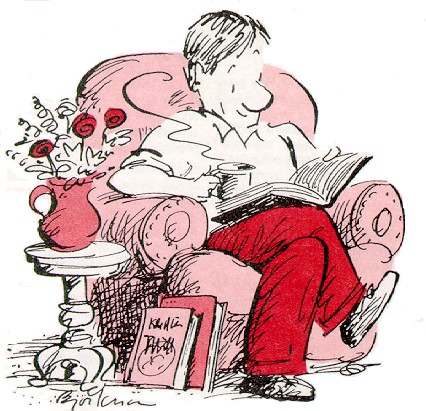
How many of us, through sheer force of habit, accidentally throw away our precious pebbles of eternal life? I am referring to the Holy Scripture where by continual exposure to it daily, weekly, monthly… we became so familiar with it that all the precious words of wisdom and knowledge contained within it that can give us eternal life became as common as the pebbles on the beaches of Desaru. Hearing the Word of God read from the Old and New Testament during Sunday worship has become so familiar, so routine, that we are no longer hearing but waiting for it to be over so that we can get on with our service. Hearing the Word of God preached from the pulpit whether as a sermon or a homily is another familiar routine. We listen for the jokes, the mistakes the preacher makes, and think of dinner or whatever our next meal will be like. We understand what the preacher is saying yet the pebble feels cold to the touch. Some of us even listen to other sermons and talks on our MP3 players. Yet it has become so familiar that often, we miss a warm pebble because we are so used to throwing away cold pebbles.

This also applies to our daily devotion or quiet time; time we have decided to set aside to spend with God. Yet after a time, this has become a familiar routine habit. We begin to find that it is harder and harder to notice warm pebbles because there are so many cold pebbles. Could it be that we have been throwing away the warm pebbles?

Let me suggest a way to avoid throwing away warm pebbles accidentally. The way is to ask ourselves three questions

(1) When is the most important time?
(2) Who is the most important person?
(3) What is the most important thing to do?


(Pause now and write down the answers to these three questions)

The answers to these three questions are in the Bible. Yet how often have we missed them because of our familiarity with it. The most important time is now. Though the Bible has a strong emphasis on the continuity with the past and a strong eschatological component (the future), its emphasis has always been living in the present. What is important is our encounter with the living Christ in this present moment of our life. Now is important.

The answer to the second question is Jesus Christ. He is the most important person because he is the author and perfector of our faith. Because we use the word Jesus Christ so often, it has become such a ‘common’ word that we do not attach much emotional or relevance to it. Ending our prayers “in Jesus’ name” has now become a formula. In becoming so familiar with name Jesus, we often forget that He is the most important person in our life.

The most important thing to do is to love. The Bible is a love story - between God and His people. Jesus came to show God’s love for us. Paul teaches us how to love one another in community. Yet, we have become so familiar with reading about love that we do not get out of our seat and love. Do we love our spouses, our children, our families, our church, our community, our co-workers, and our country? How have we shown it today? Love is in the doing, not in the talking.

Lord,

help us to remember the answers to these three questions; the most important time is now, the most important person is Jesus Christ and the most important thing to do is to love. Help us to appreciate and hold on to these precious moments when we experience a personal encounter with You and not throw it away by our habit of familiarity.

Amen.

.

Labels: , ,

Wednesday, July 11, 2007

The Centre

I imagine that I walk into a desert place.
I spend some time exploring the surroundings,
then settle down to contemplate my life.

I see how frequently I rush outside myself
-to people, occupations, places, things-
in search of strength and peace and meaning,
forgetting the source for all
is here within my heart.
It is here that I must search.

Each person carries thoughts
that have the power to bring instant peace.
I search for mine.

I also search for the thoughts
that help me face life's challenges
with fortitude and courage.

What are the thoughts that make me warm and gentle,
that exorcise the hate and anger in my heart?

What thoughts put meaning in my life?
produce contentment?
give me joy?
propel me into service?

Before I leave the desert
I recall the existence of another source within
that does not need the aids of thoughts
to give me all I need.

I make an indirect attempt to reach it
by imagining a cave within my heart
suffused with light.
The light invades my body as I enter.
I can feel its rays create and energize
and warm and heal.

So I sit within the cave in silent adoration
as the light seeps in through every pore.

"Hello, I have been waiting here for you a long time,"Jesus said as he glazed into my eyes. His gaze was long and loving, and I felt my soul was transparent.

"I have waited here while you were running everywhere to look for strength, and for comfort and for peace," He said.

"My heart was breaking too," He said with tears in His eyes, " as yours were. I feel your pain, your hurt, and your anger."

"I also watched as you try to make yourself feel better," He added sadly, " by drinking yourself into a stupor, by ceaseless watching of movies and televisions, by lustful sexual encounters, by self-talk and drugged abuse of your body for momentarily pleasure."

"These escapes did not last long enough, did it?" He asked looking into my eye,"When it is over, you still end up with yourself and your problems."

"You want to talk about it?" He asked sincerely.

"Yes, " I said in a broken voice, "Yes, I do. Forgive me, Father for I have sinned..."


Lord,

I thank you for this reminder that wherever we go you are there with us. Father, we ask for your forgiveness that we look for strength, and comfort, and encouragement everywhere except from You, the endless source of strength, comfort and encouragement. Lord, we are here now. Please give us strength, comfort and encouragement for another day. Please lead us back to this cave often to meet you.

Amen

Labels: ,