Thursday, January 21, 2016

Ten Years of Blogging

I have been blogging for ten years! The unsettling events of 2015 and the beginning of 2016 had so distracted me that that I almost let such an important anniversary slipped my mind! I started this blog on 21 January 2006. I posted my 1000th post on 20 July 2008, 2001st post on 1 Jan 2010, and 3000th post on 11 Feb 2015. One of the features I like about blog is that I can easily retrieve previous posts, unlike Facebook or twitters. Blogging is part of my digital Great Commission activities.

My very first post Why I begin blogging in 2006 states the reasons why I started the blog.
• With the numerous viewpoints available, I want to add a distinctive Christian one
• I support the open access of knowledge that the Internet offers
• Use Web 2.0 as a platform to sharing our learning experiences
• Be part of an online community

In time, my blogging activities expanded and so did my number of blogs. Aside from this blog, I also administer the following blogs, reflecting my diverse interests.
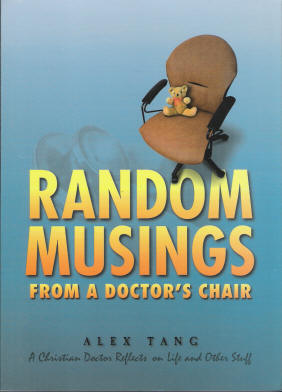
Random Writing from a Doctor’s Chair
Random Sermon from a Doctor’s Chair
Random Spirituality from a Doctor’s Chair
Random Photos from a Doctor’s Chair

My postings in the blogs have lessen in the last few years because of my increased involvement in Facebook, Twitter, Linkedin, Pinterest, Google Plus and Youtube. This does not mean that I think that the importance of blogs has decreased. In fact, I believe that blogging has settled into the distinctive niche it was meant to be. Where Facebook, Twitter, Linkedin, Pinterest and Google Plus deal with the daily, social online interactions, blogs offers a place for longer, more reflective and reasoned articles to be posted.

I will continue to blog 


  •  Spiritual disciplineBlogging is a spiritual discipline as I try to write at least 1,000 words daily. Not all of what I have written will be posted. Some will be published elsewhere. I find writing helps me to think and understand myself. It also helps me to experience God and engage with his creation.

  • Teaching. The Internet has grown tremendously in the last two decades. It has become the largest depository of knowledge mankind has ever created. It is also the largest collection of hubris. I will continue to present a Christian viewpoint from as far as I understand it. I do not pretend to know it all but I see the need for Christian counterpoint especially from an Asian perspective.

  • Recommending. I will continue to recommend good books, blog postings and websites. I find open sharing is very useful as others may also come across articles or post I am not aware of.

  • Interaction. I value interactions on my blogs and other social media. I value open minds and fellow seekers. However, I will not waste my time with biased, opinionated, rude bigots. We learn more in our interactions. 

  • Community. My readers and friends are my online tribe and community. I value every one of them. Their comments and likes are much appreciated. I love the friendships we have formed online and in some cases in the physical world. It is always a pleasure to meet someone in the flesh whom we have met online. I am slowly going down the list and praying for each of my Facebook friends.


Dear friends, thank you for reading this far and being part of my life. God bless you all. 

Labels: , , ,

Thursday, March 05, 2015

Notes to Medical Students: On Studying


Notes to Medical Students: On Studying

Studying and studying hard are the defining characteristics of a medical student. During my varsity days, as my friends from the Arts and Science goes off to the pubs and parties for the evening, the standing joke are that the medical students are monks and nuns who have to stay back to fulfil their daily ritual of offerings to the god of medicine. Studying and studying hard are still the hallmarks of medical students though I note that the newer textbooks are written in simpler language, more colorful and very much thinner. 

Maybe in the past you depend on your intelligence to get away from hard work. You studied and understand the system in your secondary schools and colleagues. Using this knowledge you are able to coast through with minimal work. This may work when you are the most intelligent fish in a small pool. In medical faculty, things are different. You will find that everyone is as intelligent as or even more intelligent than you! Everyone is smart, committed and well-motivated. The game has changed. So must your game plan. It is no longer enough to do the minimal and just coast by. You will have to study and study hard. There is a core content of knowledge that you have to assimilate and there is no other way of assimilating this except to sit down and study. The commonality of students who failed and have to repeat the year are their inadequacy of their core of content knowledge.

Not only you have to study harder, you also have to study smarter. There are a lot of information in each medical discipline but you are not required to know everything. You are required to know what is common and important. Start by finding out from your tutors which are the common and important topics. Some departments have helpfully identified these topics for you. Study these topics and remember them well. Rare conditions may be fun to memorize but this impresses nobody, especially your consultants. Make notes, create keywords and develop a way to memorize these information. Memorization works by repetition; so repeat, repeat and repeat.

Finally, make learning a way of life. Students love to try to beat the system by studying past years’ questions. And it may even work, allowing you to graduate on time. The final test of all your studying is not in the exams results or your piece of diploma but when you are faced with a very sick and dying patient. It is 4am in the morning and there is no senior staff around to consult. The patient’s life is in your hands. You are on your own and your only recourse (aside from Google, which may not be too helpful) is your own assimilated core of knowledge. Build the foundation for your core of knowledge now as a student and continue to study and add onto it the rest of your professional career.


more notes to medical students here

Labels: , ,

Wednesday, August 28, 2013

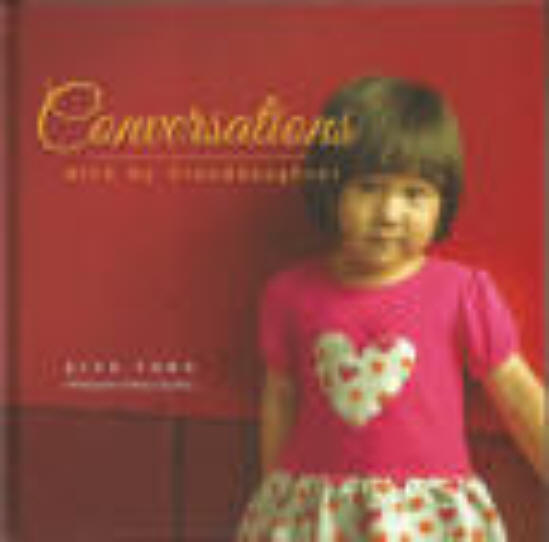
Conversations with my Granddaugther: Serendipity


Hello little one,

It is a joy watching you rediscover the world afresh every morning. The word that comes to Grampa’s mind in watching you is serendipity. It is a long word but it just means discovering or enjoying something good by chance or mistake. Serendipity happens not by searching but by being alive to the moment. From the moment you wake up you are full of energy and want to rush to play with your toys and stuff. Grampa cannot catch up with you anymore. And sometimes Grampa wonders if you have a spare battery hidden somewhere because your energy is boundless.

Each day is a day of discovery and of learning new things, enjoying new experiences, and new sensations through your senses. By playing through the day you are learning much. Through serendipity your learning of new things and new skills increase by leaps and bounds. Every moment brings new objective lesson to be included in your ever increasing knowledge of the world around you. 

Little one, you reminded Grampa that big people has made learning a chore; a legalistic way to acquire new skills and knowledge. They call it schooling or formal education. They force all the little children through it so these children can become productive members of society; which usually means they get good jobs and make a lot of money. Schooling tells the children what they should learn, when they should learn it and how they could remember what they were told. Basically schooling produces little clones of conformist worker drones for the factories. Schooling has become synonymous with learning. And this type of learning kills off serendipity. 

Learning, little one as you have so ably demonstrated, is play. We learn through playing. And everyone enjoys playing. It is fun and energizing. There is laughter and joy. And there is serendipity. And before you know it, everyone has learned something new. How Grampa wish that big people realizes that and return learning to playing. We really learn more about the world, values and character by playing than through memorizing huge chunks of textbooks for examinations (which we promptly forget after the examinations anyway). 

So play on, little one. You will realize one day that life is a big game. So do not take it too seriously, play it well, and have fun along the way. Who knows, serendipity may come along and brings you wisdom to finish this game well.

.

Labels: , ,

Wednesday, May 04, 2011

Mindfulness and Cognitive Behavioral Therapy


Mindfulness is a discipline that trains a person to be aware of the present moment and his or her place in that moment. It has a focus on the awareness which processes the mental and emotional responses of that person's consciousness. Mindfulness is often associated with Buddhist meditation.

Cognitive Behavioural Therapy (CBT) is a form of psychotherapy that undertakes to change behaviour by understanding and modifying the thinking behind that particular behaviour.

What happens when Mindfulness is combined with Cognitive Behavioural Therapy (CBT) to form a new form of psychotherapy called Mindfulness-Based Cognitive Behavioral Therapy (MB-CBT)?

Actually I was not surprised at this merger because Buddhism recently has become very closely involved with neuroscience.

I find this article interesting

The ‘third wave’ of Cognitive Behavioural Therapy (CBT) – Can it be integrated into a Christian context?
By Sarah Plum and Paul Hebblethwaite

The aim of the article is to look at the possibility using Mindfulness Based Cognitive Therapy as a tool for treating depression and some forms of anxiety and how this may be compatible with Biblical teaching. We appreciate that some individuals may find this technique not compatible with their Christian faith, but we are not asking or expecting individuals to change their fundamental Christian beliefs or to participate in any practice that would contradict their faith but rather to look at how this tool can be used for the benefit of their clients. This article should be useful even to those that could not embrace this technique as it will at least give some useful insight.


read more


.

Labels: , , ,

Thursday, January 27, 2011

Ken Robinson on Reimagining Education


This animate was adapted from a talk given at the RSA by Sir Ken Robinson, world-renowned education and creativity expert and recipient of the RSA's Benjamin Franklin award.


For more information on Sir Ken's work visit: http://www.sirkenrobinson.com

Also see my post here on a talk he gave for TEDS and my review on his book, The Element.

.

Labels: ,

Saturday, November 06, 2010

The Leader as Lifelong Learner

Excellent article by a guest post on Michael Hyatt's blog.

The Leader as Lifelong Learner

This is a guest post by Daniel Offer. 
Widely considered to be one of America’s greatest business philosophers, Jim Rohn, the late Dallas businessman and dynamic public speaker, is well known for his commitment to lifelong personal development. During his talks on the subject, he is fond of pointing out that every house that costs over $500,000 (adjusted for inflation) has a room in it called a library.
A Stack of Books Outside - Photo courtesy of ©iStockphoto.com/urbancow, Image #3906868
Photo courtesy of ©iStockphoto.com/urbancow
“Why do you suppose that is?” Rohn challenges his audience. “Doesn’t that make you curious? How come every house over $500,000 has got a library? Does that tell you something? Does that educate you at all?”
There is no doubt that Rohn is right; successful people do read more. Leaders, in particular, seem to read more than almost anyone else. After all, curiosity is often cited as a common characteristic of great leaders. Lincoln was famous for reading both the Bible and Shakespeare; Franklin Roosevelt loved Kipling. “Every great leader I’ve ever met has been a great reader,” says Rohn.
For most of us, books were where it all began.

read more

Labels: , ,

Friday, October 01, 2010

Free Online Courses

I love it when people post or offer free contents on the Net and I have posted about it here. This is what the Net is all about. Dave Drager shares more free online resources.

8 Awesome Websites to Take Free College Courses Online

by Dave Drager on Sep. 30th, 2010

MIT OpenCourseware

online college courses
Massachusetts Institute of Technology was a pioneer in offering online college courses and they still have the most diverse and in-depth collection of classes available anywhere. Their online offering is an archived version of real courses that have been taught at MIT, and you may need to purchase the textbook to follow along with the class. These courses come highly recommended.

Carnegie Mellon OpenLearning

online courses
Carnegie Mellon, based in Pittsburgh, PA, has a variety of courses available for anyone online. While the selection is not as great as MIT’s, many core courses are presented in an easy to follow online format. Their courses are similar to what a paying student would receive minus the course credit or access to an instructor.

Khan Acadamy

online courses
Salman Khan began putting videos on YouTube to help with tutoring a cousin. When he started receiving feedback that they were helping a lot more people than just his cousin, he realized he was on to something good.
Today, there are over 1000 videos on KhanAcademy, which is now a 501(c)(3) non-profit. Most videos are about math. However, there are also many other topics that he explores. Even Bill Gates has said that he uses Khan to teach his kids about math. These are not college courses per-se, but the math he introduces in them are at college level and many people praise them for being clearer and easier to comprehend than actual college courses!

University of California at Berkeley

online courses
UC Berkeley has put online videos and audio of many of its most popular courses up on their Webcast website. They do not include the text materials which can be very helpful for taking online college courses. However, you can still learn a lot by watching the videos of the lecures.
They have lectures for ongoing courses and also historical class archives on their website, as well as videos of recorded events and one-off lectures.

Stanford University iTunesU

free online college courses
Stanford has made many of their courses and lectures available via iTunes in iTunesU. This collection is great if you are on the go or want to listen to courses while commuting. They have an impressive collection of content available, all for free. The downside is that you need to use iTunes to view their content.

Tufts OpenCourseware

free online college courses
Tufts uses the OpenCourseware format to offer full content on a number of their programs. Worth mentioning from Tufts are their Medical and Dental school courses as well as selections from other courses.

Open University LearningSpace

free online college courses
Learningspace offers content from the Open University, based in the UK. This university pledges to be open and accepts many different kinds of students in its real world classrooms. It also opened up its content to anyone online. The online college courses are laid out extremely well and offer many different topics with skill levels going from beginner up to expert.

Johns Hopkins OpenCourseware

online college courses
Johns Hopkins is a respected medical school outside of Baltimore, Maryland. They offer a selection of courses from their school which would be of particular interest to medical students.

read more

HT: Sivin

Labels: ,

Friday, August 27, 2010

Training of Generation Y

In an interesting article published in Medscape on Training the Physician and the Anesthesiologist of the Future by Alex Macario, MD, MBA the training program of anesthesiologists is presented.

Figure 1. Factors that influence the changing physician workforce.

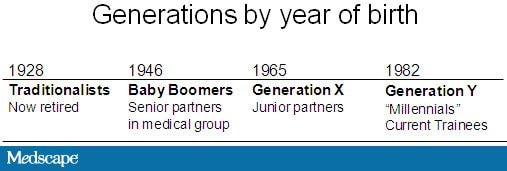
However I am more interested in the way he discerns the different demographic of the various groups of people involved in the training. This has relevance not only in the training of physicians but also of other areas including theological education.

Figure 2. Recent generations by year of birth.

Alex Macario's study is focused on the United States but his characteristics of Generation Y is fascinating and will be useful for educators elsewhere in the world.

Table 1. Characteristics of the Millennial Generation

Largest generation of young people in the country's history, likely surpassing the aging baby boom generation (78 million)[3]
Economically, they may not be better off than their doting parents, especially after the 2008 worldwide financial crisis
The most ethnically and racially diverse cohort of youth in United States history: 60% (a record low) are white, 19% are Hispanic, 14% black, 4% Asian; and 3% are mixed race or other.[4] They are comfortable with heterogeneity in living arrangement or socioeconomic class
Team-oriented, banding together to socialize rather than pairing off, acting as each other's resources or peer mentors
Civic-minded with a desire to make a positive contribution to society and to the health of the planet[5]
Have been spurred to achievement and display a self-confidence that reflects their being raised in a child-centered world
Comfortable with Web communications, media, and digital technologies (eg, Facebook, YouTube, Google and Wikipedia)
Easier social communication through technology may explain the reputation of the millennial generation for being peer-oriented
Accelerating technologic change may create shorter generations, as young people just a few years apart have different experiences with technology[6]
Increased global exposure through the Web, leading students and residents in record numbers to seek international educational experiences
Many millennials (42% of women and 30% of men) talk to their parents every day and many are still financially dependent on their parents; this has led to a new acronym: KIPPERS (Kids in Parents' Pockets Eroding Retirement Savings).[7] As the skills required for certain jobs become more specialized, many young people return to school for professional degrees with the hope that this additional training will help them land a job. This creates more dependence on others, such as their parents, for financial support.


Education and training in the present have to be designed to factor in the demographic of the millennials if these programs are to be successful.

Worth thinking about.

.

Labels: , , , , ,

Tuesday, January 05, 2010

Helps for the Aging Brain

Adult Learning | Neuroscience from NYTimes.com

How to Train the Aging Brain

Illustration from istockphoto.com
Published: December 29, 2009

Some good news by Barbara Strauch for people with middle aged brains (and I assume older). All is not lost.

The brain, as it traverses middle age, gets better at recognizing the central idea, the big picture. If kept in good shape, the brain can continue to build pathways that help its owner recognize patterns and, as a consequence, see significance and even solutions much faster than a young person can.

The trick is finding ways to keep brain connections in good condition and to grow more of them.

“The brain is plastic and continues to change, not in getting bigger but allowing for greater complexity and deeper understanding,” says Kathleen Taylor, a professor at St. Mary’s College of California, who has studied ways to teach adults effectively. “As adults we may not always learn quite as fast, but we are set up for this next developmental step.”


read more

Labels:

Friday, September 25, 2009

Are Our Pastors Adequately Equiped for Ministry?

Random Musings on theological education #2 : Are the curriculum designed to equip pastor for ministry?

In random musing #1, I asked the question whether studying ancient languages (Greek and Hebrews) are essential for training of pastors who will probably not be using these languages in their ministries. Now I will ask whether the curriculum of local theological schools are designed to equip pastors for their role of being shepherd to their congregations or parachurch organisations. Here I will confine myself to the Master of Divinity (M.Div) program as it is taken by many churches as the entry level for ordination and pastoring.

The Association of Theological Schools (ATS) in the United States developed the following standards for M.Div in June 1996. Since then, many of the theological schools have been revising their curriculum to conform to these standards [see Foster et al, Educating Clergy: Teaching Practices and Pastoral Imagination (San Francisco: Jossey-Bass, 2006)]. The standards are that the curriculum should consists of four equal parts:

(1) Religious Heritage - the teaching and understanding of theology, traditions, languages etc

(2) Cultural Context- understanding the culture of the church and the local context or cultural realities in which the church is in.

(3) Personal and Spiritual Formation - development in personal faith, spiritual maturity, moral integrity and public witness.

(4) Capacity for Ministerial and Public Leadership - development of skills for leadership and ability to do theological reflection on their ministries.

These four categories are essential in developing a well equipped pastor and I can see why the ATS is eager to revise their curriculum to fit it.

What about our local theological school curriculum? I did a very rough survey using information from their websites about their M.Div program, using the credit courses as a rough indicator. It must be noted that I am just looking at the formal curriculum and not the informal and null curriculum of these schools. These are established theological schools in Malaysia and Singapore.

School A has a M.Div program that require 98 credits to qualify, School B (90) and School C (114).
School A have four majors (Christian education, Biblical studies, Intercultural studies, Pastoral ministry). School C has four majors (Pastoral, Missions, Child Development, Youth).


It may be observed that in school A the major emphasis in the "Religious Heritage" category is balanced by "Ministerial and Leadership." "Religious Heritage" are often core studies in OT, NT, biblical languages, historical and theological foundations. School B seems to weigh heavily in the "Religious Heritage" category. School C is interesting because it manages to reduce the "Religious Heritage" category and give room to cultural context and spiritual formation.

The major contribution to the category "Cultural Context" comes from practicum and internship programs.

There is very little formal programs for personal and spiritual formation in these curriculum with the exception of school C. While it must be acknowledged that all three schools are aware of the importance of spiritual formation of their students, not being in the formal curriculum means that it is often not given priority or treated as an optional add-on. It also means that there is no attempt to measure or assessment its learning outcomes.

Somehow the impression from this rough survey seem to indicate that our local theological curriculum is heavy with cognitive and skills development but weak in personal and relevance. This has important implications in the type of graduates produced. This is something worth thinking about.

Addendum

Matthew Green made a similar comment on his blog, Reflections of Spiritual Formation

Labels: ,

Saturday, April 11, 2009

Random Musings on Teaching In Higher Education (2)

Teaching Values in Higher Education


Recently I received an email about medicine with this equation


- evidence + experience = good medicine


I beg to differ from my learned colleague whom I respect very much. While the practice of medicine has improved with the introduction of evidence-based medicine, it is important to realize that evidence based-medicine is not the holy grail of medical standards. Even the highest level of meta-analysis has its limitation. It is just a statistical program which analyses data fed into it. It is important not to forget the old axiom: GIGO (garbage in, garbage out). Also not everything that is done in the practice of medicine is available in the evidence-based medicine databases.


Experience is a good teacher but repetition is not a proof of expertise or even of competence. A doctor may be repeating the same mistake repeatedly. However, not repeating mistakes and increased competence may be achieved by combining evidence with experience. I believe that there is still another component to the equation. This component is good character. Thus I will suggest that the equation should be


E²GC- evidence + experience + good character = good medicine


I believed that good medicine can only be practiced by a doctor with good character. I have seen surgeons who have excellent surgical skills who could not bother with whom they operated upon. “The operation was successful but the patient died” was their creed. I have seen doctors who treat their patients as objects- some problems to be solved and then move on. True care, concern and compassion can only come out of good character. Good characters are formed by good beliefs.


It is a fallacy in many institutions of higher learning that knowing will automatically lead to believing. For example, if we teach our students to be compassionate to their patients, they will automatically be compassionate because of their knowledge. Unfortunately this is not true.


Educator Emeritus Professor Brian Hill of Murdock University identifies in How Learners Respond to the Teaching of Beliefs and Values the three dimensions in how students respond to the teaching of values. These dimensions are the psychological dimensions of the cognitive, the emotional, and the volitional. While writing about teaching in schools, I believe his findings have implications in centers of higher learning. The possible response of a student to the teaching of a value X may be:


Cognitive

(1) I don’t get it. What do you mean by X?

2) Ah, I understand what you mean by X.

(3) I understand what you mean by X, but I don’t believe X is true.

(4) I accept your claim that X is true.


Emotional

1) Knowing X makes no difference to me.

(2) I have a bad feeling about X.

(3) I don’t feel I can leave up to X

(4) I have a good feel about X.


Volitional

(1) I’m not willing to attach value to X in my life-priorities.

(2) I’m willing, so far as I can, to attach value to X in my life-priorities.

(3) I’m prepared to prioritise X in my own life, but I don’t regard it as something everyone else should necessarily prioritise.

4) I’m prepared to prioritise X in my own life and, whenever appropriate, will commend its priority to others.


According to Hill, the cognitive plays a small role in the learning of values. The emotional dimension is more important and it is that dimension that influences the volitional in prioritizing its values. In the teaching of values, I agree with Hill that teachers have a tendency to use conditioning, coercion, indoctrination and persuasion as possible pedagogies.


Instead he suggests the following:

(1) I will model X in my own behaviour before students.

2) I will, where necessary for the common good, require students to behave in the classroom in a manner consistent with X.

(3) I will encourage maturing students to engage in critical examination of the grounds for and against prioritizing X in their lives.

4) I will represent to students that X, in my opinion, points to a defensible value by which to live, but I will respect and not penalize dissent.


Hill highlights that in the teaching of values, we need to be aware of the cognitive, emotional and volitional dimensions of learning. Our pedagogy must be based on these dimensions and should involve modeling, reflection and respect.


Reference:

Hill, Brian V., How Learners Respond to the Teaching of Beliefs and Values, Journal of Education and Christian Beliefs, 12:2 (2008) 101-113

Labels: , , , , ,