Wednesday, February 10, 2016

The Banana Syndrome: Losing Our Cultural Heritage

Banana
English-educated Chinese Christians in Malaysia and Singapore faces a unique quandary. Their mindset, worldview and culture are influenced by the Anglo-American influences that come with an English education system. Yet, these Christians are ethnic Chinese brought up with their Chinese cultural heritage whether they are aware of them or not. No wonder they are often called bananas – yellow on the outside but white in the inside. That is one of the reasons why mainland Chinese when China was forced open to the West were very resistant to Christianity. They see Christianity as a Western imperialist tool. They recognize that embracing the Western culture will threaten their Chinese identity. Early Chinese Christian converts were regarded as no longer Chinese.
Present day English-educated Chinese Christians still struggle with the issue of whether they are Chinese Christians or Christian Chinese. This is especially acute in families that no longer speak Chinese or any of its dialects. In many such families their lifestyles are closer to Anglo-Americans rather than to their Chinese-educated brethren. Yet intrinsic to their identity is their Chinese heritage. The pull to their roots become stronger as these English-educated Chinese becomes older. This highlights an important point. As Christians were are not only called by God to be his people (special calling), to be his agent in redemption (general calling) but also to embrace our cultural heritage (cultural calling). Our cultural heritage shows the diversity of God’s people. Revelation 7 shows a heavenly scene where there is a mighty multitude of God’s people from every nation, people, tribe and language.
As Christians, we are to incarnate our ethnicity and its culture. This is especially true in our Chinese English-speaking congregations in Malaysia and Singapore. I am sure this will be same with Chinese Christians elsewhere. There is much we can learn from our Chinese Chinese-speaking congregations in the way they have contextualized the gospel and Christian living within the Chinese heritage. In Chinese culture, the Chinese Lunar New Year is the most important event in the year. The reunion dinner where the whole family comes together is the social event of the year. Family members travel thousands of miles to attend.
I have observed over the years, for many English-speaking Chinese Christians, the Lunar New Year celebrations are becoming less and less important. Similar to the Harvest and other Chinese festivals. It is just another public holiday. More and more are taking the opportunity during this period to travel overseas for extended holidays. There is nothing wrong with not wanting to celebrate Chinese New Year. However this may be symptomatic of the loosening of our cultural identity. There is no running away from our cultural heritage and identity. We run away at our loss. Recently many churches in Malaysia and Singapore are engaged in emotionally mature spirituality. I believe it is time for us to embrace our cultural spirituality too.
.

Labels: , , ,

Thursday, December 31, 2015

God Knows


God Knows

And I said to the man who stood at the gate of the year:
“Give me a light that I may tread safely into the unknown.”
And he replied:
“Go out into the darkness and put your hand into the Hand of God.
That shall be to you better than light and safer than a known way.”
So I went forth, and finding the Hand of God, trod gladly into the night.
And He led me towards the hills and the breaking of day in the lone East.

So heart be still:
What need our little life
Our human life to know,
If God hath comprehension?
In all the dizzy strife
Of things both high and low,
God hideth His intention.

God knows. His will
Is best. The stretch of years
Which wind ahead, so dim
To our imperfect vision,
Are clear to God. Our fears
Are premature; In Him,
All time hath full provision.

Then rest: until
God moves to lift the veil
From our impatient eyes,
When, as the sweeter features
Of Life’s stern face we hail,
Fair beyond all surmise
God’s thought around His creatures
Our mind shall fill.

by Minnie Louise Haskins

.

Labels: , , , , ,

Saturday, September 27, 2014

Eugene Peterson on Christian Spirituality


Labels: , ,

Tuesday, August 26, 2014

The Marriage Vows (1 Cor 7:2-4)

Labels: , , , ,

Tuesday, February 19, 2013

Lead us not into temptations

 
Lead us not into temptations from Alex Tang


Lead us not into Temptations
Text: Luke 4:1-13

Sermon Statement
It is the human Jesus who resisted the temptations of Satan by his lived experience of the Scriptures. This gives us hope that we can resist temptations by (1) knowing ourselves; (2) developing a plan to resist; (3) avoid temptations; (4) resist and pray; and to (5) get the help of theirs.

more here


. 


Labels: , ,

Monday, November 26, 2012

The Eye Witnesses (Numbers 13)


Sermon Statement

We are God’s witnesses. The world will mostly know God though what we reveal to them through our lives as His witnesses. To be effective witnesses, we need to see through the eyes of faith.

 read more here
download audio here (mp3)

.

Labels: ,

Monday, April 09, 2012

Prayer of St. Theresa

Labels: ,

Sunday, March 25, 2012

The Last Temptation of Jesus Christ

Despondency in Gethsemane
View more PowerPoint from Alex Tang


Sermon statement
Jesus’ temptation in Gethsemane is the crisis point in salvation history and encourages us to watch and pray.

read more

. 

Labels: , , ,

Thursday, March 08, 2012

Fenelon on One Thing is Needful


Martha, Martha! You are anxious and troubled about many things; one thing is needful. (Luke 10:41-42 RSV)

We think there are a thousand things we should be concerned with, but there is actually only one. If we take care of that one thing, all the others will find themselves done. And if we fail to take care of the one thing that is needful, all the others—no matter how successfully we may seem to do them—will fall into ruin. So why are we so torn between matters of the heart and our worldly cares?

From this day forward I resolve to give my total attention to the only thing on earth I ought to be concerned with. Illumined by God's holy light, I resolve to stop worrying and to do every moment, with all the strength of my mind and body, whatever God in his providence places in my path. I will not be grieved about turning everything else over to God, because it is not my work I am doing, but God’s. And I ought to want to do only what God gives me to do.

I resolve not to become keenly excited about anything, because it is dangerous to want to appropriate God’s work to ourselves. If we do that, then we do God's work in own strength; we turn good into bad and we allow pride to take over. And then we become flushed with the pursuit of success. We concealed our illusion by using the pretext of seeking God’s glory.

O God, give me the grace to be faithful in my actions, but indifferent to success. The only thing I ought to be concerned with is to desire your will and to quietly meditate on you - even in the midst of busy times. It is up to you to crown my feeble actions with such fruit as is pleasing to you—and none at all, if that is what you find best for me.

 
Francois Fenelon
Meditations on the Heart of God

Labels: , , ,

Wednesday, November 02, 2011

Nathan Greene's Paintings

I love these three paintings by Christian artist Nathan Greene.

Chief of the Medical Staff

An original oil painting commissioned by the Versacare Corporation to demonstrate the care of Jesus in human suffering.

Difficult Case Paper

In Good Hands

view more of his works here

Labels: , , ,

Wednesday, May 11, 2011

The Quotidian Mysteries: Laundry. Liturgy and Women's Work

I have come to believe that the true mystics of the quotidian are not those who contemplate holiness in isolation, reaching godlike illumination in serene silence, but those who manage to find God in a life filled with noise, the demands of other people and relentless daily duties that can consume the self. They may be young parents juggling child-rearing and making a living...[I]f they are wise, they treasure the rare moments of solitude and silence that come their way, and use them not to escape, to distract themselves with television and the like. Instead, they listen for a sign of God's presence and they open their hearts toward prayer.
Kathleen Norris (1998), The Quotidian Mysteries (New York, NY: Paulist, 1, 70)

Labels: , ,

Wednesday, February 23, 2011

Dallas Willard's Sense of Ministry

I find this comment by Dallas Willard on his homepage of his website very relevant.

My sense of ministry is to judge the lay of the land for your times and shoot where the enemy is. The enemy in our time is not human capacity, or over activism, but the enemy is passivity - the idea that God has done everything and you are essentially left to be a consumer of the grace of God, so the only thing you have to do is find out how to do that and do it regularly. I think this is a terrible mistake and accounts for the withdrawal of active Christians from so many areas of life where they should be present. It also accounts for the lack of spiritual growth, for you can be sure that if you do not act in an advised fashion consistently and resolutely you will not grow spiritually.


There is a great collection of his articles and recordings on Dallas Willard's website

.

Labels: , ,

Wednesday, January 19, 2011

Review on Yancey's What is Good is God?


Philip Yancey, (2010), What Good is God? (New York, NY: Faith Works)

Philip Yancey, journalist turned best seller author, is not one who is afraid to ask hard questions about the question of evil, why God allows suffering and why the church is failing its members. It is noticable that Yancey has matured in his thinking and beliefs since the days when he first wrote about Dr Paul Brand and then begins to ask searching questions about suffering, and describe his recovery from the trauma of his early church experiences.

In this, his latest book, Yancey not only ask questions but begins to provide some answers. "What Good is God" may also be rephrased as what "God is good for" as he searched for this God in a series of ten different scenerios. Each scenerios is followed by a talk which he gave to the people involved in these respective scenerios. Essentially this is a book about redemption. Redemption in the way people seek to redeem themselves out of bad situations, and redemption as a work of God. This may be found in his interviews and observations about victims of random violence in Columbine, sex workers in Wisconsin, the underground church in China, and reconciliation in South Africa.

I cannot help but feel that there is a sense of calmness and self acceptance in Yancey that is not so obvious in his earlier books. Whether it is due to his accident and near death experience or other reasons, only the author will know and I hope one day he will descibe his own faith journey.

This is a good book to read for those of us who dare to ask difficult questions about God and His Church, dare to admit our doubts, and question our sufferings.
.

Labels: ,

Friday, January 14, 2011

Should we as Christians give money to beggars?

Should we as Christians give money to beggars? This is a question that has troubled me for some time. Apparently others are bothered by it too as shown in these diverse views given by these contributors to Christianity Today.

Top Story
Illustration by Amanda Duffy
THE VILLAGE GREEN
Should Christians Give Money to People on the Street?
Gary Hoag: Give Freely
Andy Bales: Only as a Last Resort
Ron Sider: Don't Give Money to Street People


Labels: ,

Friday, November 19, 2010

The Human Response in Spiritual Formation


The human response in the process of spiritual formation is twofold. One is the cognitive volitional action of assent to respond to God’s revelation. The second is a passive submission to allow the Holy Spirit to transform the inner person. The human response is important in the process of spiritual formation. Augustine is reported to have said, “God with us will not, as we without God cannot.”

Human beings are given the free will to make choices. Examples abound in the Bible. Joshua’s challenge to the ancient Israelites to choose, and his own choice to follow the Lord (Josh. 24:15) in the Old Testament indicate that human beings have the ability to make choices. This is supported by Paul’s letter to the Philippians where he shares his angst in having to choose between continuing to serve in his apostolic ministry and dying and being with Christ (Phil. 1:22). This implies that Paul is allowed his personal preference. Calvin in his anthropological understanding of man explains that no person has absolute autonomy or free will. Because of the effect of the original sin, a person’s ability to make choices is tainted. However, unlike Martin Luther, Calvin believes that fallen people still bear the imago Dei, though a deformed one. Thus all persons may make choices to restore this broken imago Dei in their spiritual formation.

The human response is to be willing and to allow the Holy Spirit to do his transforming work in the individual’s inner life. This is often not easy as Paul himself attests to in Romans 7. The means of spiritual formation offers some understanding and suggestions on how a matrix may be formed for the Holy Spirit to work in.

In Ephesians 5:18 Paul urges his readers, “Do not get drunk on wine, which leads to debauchery. Instead, be filled with the Spirit.” Theologian John Coe points out that the words “to be filled with the Spirit” in the Greek have a verb-form that is a present passive imperative. This may be taken to mean that instead of actively doing something, a person is to passively allow something to be done to him or her. This highlights the passive submission of a person required in spiritual formation. Thus spiritual formation does not encourage work-righteousness but embraces effort to become like Christ. Dallas Willard affirms this by often repeating that “God is not opposed to effort but to earning”. The anthropological understanding of spiritual formation is paradoxical in that it is an active choice to seek shalom with God and yet it is also to passively allow God to create that shalom in the person. 

All that implies that a person has to want to grow spiritually before Christian spiritual formation can take place.

. 


Labels: ,

Monday, November 15, 2010

The Real Thing


read more

.

Labels: ,

Monday, November 08, 2010

What Really Matters


“I wonder what is for dinner today?” mused disciple Ah Lek, a wistful look crossing his face, “I hope it is those giant wantons that our cook uncle Tong makes so well.” “What giant wanton?” sniggered disciple Ah Kow giving disciple Ah Lek a hard punch on his shoulder. “It’s shui jiao dumpling! So stupid-la! Giant wanton! Ha ha ha.”

“It does look like giant wanton. And they are so tasty,” Ah Lek retorted, rubbing his shoulder. “Yes,” added disciple Ah Lian, “our cook is so clever and his food so good that I always go for seconds.” “And thirds and fourths,” muttered disciple Ah Kow under his breath.

“My body is the temple of the God so I must take good care of it,” declares Ah Lian staring daggers at disciple Ah Kow. “Not just a temple but a megatemple,” observed disciple Ah Kow while eyeing disciple Ah Lian’s wide waist. “Ouch!” groaned disciple Ah Kow when disciple Ah Lian’s sandal bounced off his forehead.

“Did you know that our cook uncle Tong is a very famous cook?” chipped in senior disciple Ah Moo who had just returned from the Middle East monastery in the disciple exchange program. The Middle East monastery loath to let senior disciple Ah Moo leave because they were more reluctant to take back their disciple Iskandar. Ah Moo was munching on char siew pau which he missed very much during his time in the Middle East. The cook made a fresh batch just for him as a welcome back present. “Our cook is Iron Wok Tong!”

“No!” exclaimed all the disciples in unison. “Not the world famous Iron Wok Tong!” gasped disciple Ah Lian who loves watching the food channel on their satellite television as much as she loves eating. “Iron Wok Tong started a large chain of restaurants. His Tai Pai Tong restaurants are found in every major city and people have to wait in long queues just to get a seat. It was rumoured that he cooked a great banquet for the Emperor and the Emperor actually asked for seconds.” Disciple Ah Lian looked around and saw that all the other disciples were listening intently.

Basking in the limelight, disciple Ah Lian continued, “Iron Wok Tong was very famous. The Emperor gave him the title ‘The Greatest Cook in China’. Iron Wok Tong was so rich that he was rated one of the top ten richest men in all of China! He had a large mansion and a concubine in every city. Some people say that his carriage is made of gold!”

“One day a few years ago, he had an accident and was seriously injured. Then he just disappeared. Nobody knows where he is now,” finished disciple Ah Lian.

“Numoo…,” began senior disciple Ah Moo with his mouth full and promptly choked. Disciple Ah Lian walked calmly up to her senior disciple and punched him in the midriff. A piece of char siew flew out of his mouth and hit disciple Ah Lek in the eye. “When someone is choking you are supposed to hit him in the back, not the front,” complained disciple Ah Lek as he wiped the char siew sauce from his face. “Oh!” blushed disciple Ah Lian.

“I know where he is!” gasped senior disciple Ah Moo from the floor while gripping his tummy. “I know where Iron Wok Tong is! There.” He pointed to the cook who was listening to their conversation while tending to his beloved bonsai trees. Everyone turn to stare at the middle-aged man with a large paunch. “Uncle Tong!”

“Uncle Tong, why didn’t you tell us that you are the famous Iron Wok Tong,” the excited disciples shouted as they gathered around their beloved cook.

Cook Ah Tong smiled as he sat on a small stool and fanned himself. He looked at the excited young faces around him. The cook had this peaceful and serene atmosphere about him. He moved slowly and calmly as if he had all the time in the world which sometimes led to burnt rice. “Yes, I was Iron Wok Tong,” admitted the cook, “then I decided to retreat from the world.” “Wow,” disciple Ah Lek thought to himself, “like these kungfu movies where the master sword man always decided to retreat from the world.”

“But why, Uncle Tong?” asked disciple Ah Lian. “You had everything!” “Yes, I had everything and yes, my carriage is made of pure gold,” began cook Ah Tong shifting to make himself comfortable.

“Yes, I had everything everyone could dream of. Then one day, it was a Sunday, I remember. I was very drunk but decided to take my carriage for a drive. I must have pushed the horses very hard because the carriage was moving very fast. While rounding a corner at the steep slopes of the Three Gorges, I lost control and the horses and carriage plunged into the yellow river below. I was thrown out and crashed into a tree on the side of the gorge. I blacked out. The tree must have stopped my fall or else I would have drowned in the river like my horses.

“When I woke up, it was evening for it was getting dark and cold. I was caught in the tree head down, hanging perilously one hundred feet above the deep river. My first thought was how lucky I was until I realise that I cannot feel my body below my neck. I was paralysed from my neck downwards! Then I knew I was going to die. I knew that the fragile branches will break under my weight and I will fall into the river and drown. I hung there for three days and three nights before the villagers found and rescued me.”

Iron Wok Tong paused and his eyes turned misty. “During those three days and three nights when I was waiting to die, did you know what I was thinking of? No, not my reputation as the greatest cook in China, not my chain of restaurants, not my mansion or great wealth. No, all I wanted is to hold my wife’s hand and look into her eyes and see her smile. All I wanted is to hold and hug my children once more. All I wanted is to see my friends one more time, maybe have a game of mahjong together.

“Alone during the hot days and cold nights I had a lot of time to think. I reviewed my life and wondered if my life was worth anything. Waiting to die, my thoughts were often about what I would say to the Lord at judgment day. ‘Would you like me to make you a char siew pau?’

“It took almost a year for me to recover. Abba Thomas is a great doctor though he always said that it was the prayers of the villagers that healed me. During the twelve months of recovery I often thought about my longings and regrets I had when I thought I was going to die. So I decided to retreat from the world and live for what really matters.

“I wanted to spend more time with my wife and family. I wanted to spend more time building relationships with other people. I wanted to make sure that the rest of my life means something, so that I when I die, I will not be ashamed to stand before the One. But the only thing I know how to do is cook.

“So I came to Abba Ah Beng and begged for a job as a cook. I wanted to cook for you young people so that you will be physically healthy when you leave this monastery to carry out God’s purposes. That’s all I wanted to do. Iron Wok Tong is no more. It is just me, Ah Tong.”

There was a hush when cook Ah Tong finished. “Uncle Tong,” whispered disciple Ah Lek, “can you make me a char siew pau?”


Reflection Questions

1.      In the busyness of everyday life, our loved ones often receive low priorities. How do we love and value our loved one in the remaining days we have on this earth?
2.      How do we build friendship with other people that are enduring, encouraging and deifying?
3.      We often think that we must do great things for the Lord. What are some of the significant ways we can serve the Lord while living our present life?

Labels: ,

Saturday, October 30, 2010

Os Guiness on the Thinking Man's Quest for Meaning

Os Guiness gave a great talk at the Veritas Forum. The Journey: A Thinking Person's Quest for Meaning
Os Guinness
University of California, Los Angeles
7 April 2010

Labels: , ,

Friday, October 29, 2010

What You Leave Behind


Rumours were spreading that Abba Isaac is dying. His disciples gathered from far and wide to bid farewell to their teacher who have enriched their lives. They gathered inside the same old thatched hut beneath the great sand dune in the Egyptian desert where Abba Isaac had lived most of his life alone as a hermit before he started to spiritually form his disciples. A well which supplied life giving water was still there near the hut.  The arriving disciples drank deep of the cool water which also brought back memories of their time with Abba Isaac. The hut is actually a simple lean-to. There was no furniture as long as the disciples could remember. Abba Isaac sat on a piece of cloth which serves as his seating mat in the daytime and his bed at night. The only other thing in the hut aside from the body of Abba Isaac was his well thumbed and dog-eared Bible.

“Your holiness,” one disciple greeted another, “I did not know that you are a disciple of Abba Isaac. I heard you are building another palace in Rome. What is the news from the Vatican?” “Your eminence, the news from Rome is good,” replied the other disciple, “congratulations to your promotion to the Most Right Canon of the Church of the Cold and Rainy Isles.” “It is God’s will that I take over leadership of the church. Ah, here’s Ah Beng. How are you dear brother?” The disciples embraced each other, the finery of the clothing and accessories of the first two disciples contrasted sharply with the simple garb of Abba Ah Beng’s monk robe. Another disciple appeared and was greeted joyfully even though he was wearing only a loin cloth. It is Abba Anthony who chose to live as a hermit in a tomb. “How is Abba Isaac?” asked Abba Anthony looking at the still frail figure on the mat. “Not good. The doctors said he could go anytime” answered one of the disciples. “I am going miss him,” whispered Abba Ah Beng watching the gradually slowing breathing of the man on the mat. “Without him, I will not be who I am today,” continued Abba Ah Beng thinking of his loin cloth and Sow Lin Monastery.

“Which of his disciples do you think Abba Isaac will consider his most successful disciple?” asked the disciple who was addressed as his holiness. “You, of course,” promptly answer the disciple who is the Most Right Canon. “Must be both of you,” commented Abba Ah Beng, “for you are both powerful, rich and famous.” “Obviously, not me as I have renounced the world and survived on alms given by the villagers,” said Abba Anthony. There was silence as the impact of what they have said sunk into them. As one, they look at Abba Isaac.

The old man had a sallow pale complexion and was extremely emaciated. They could make out the outline of his ribcage. As they watched each breath became shallower and shallower. At times the disciples could not see any breathing movement.

“I shall build a cathedral in his name,” declares the disciple who was addressed as his holiness. “Abba Isaac’s legacy will be in churches and feasts observed in his name.”

“I shall establish a seminary in his name and build a statue of him in the courtyard. Future generations of theological students will walk pass him everyday on their way to classes,” said the Most Right Canon. “We will publish all his teachings so that scholars can study them.” Abba Anthony said, “I am the most sorry of this great man’s legacy because I have nothing but myself. Even then, I am a sorry example of manhood, being beset by guilt, unholy desires and attachment to things. My only consolation is that I am a sinner saved by grace.”

“I want to have a relic from Abba Isaac for my monastery. I shall enclose it in a golden receptacle and place it on an altar in the main worship hall,” said Abba Ah Beng thoughtfully. “Maybe I should take his right forefinger as that was what he frequently used to wag at me,” thought Abba Ah Beng as he reached instinctively to touch Abba Isaac’s hand.

“Aahhh!” shouted Abba Isaac suddenly, jumping up into a sitting position. “Wah!” yelled the disciples simultaneously. “We thought you were dead!” said Abba Anthony breathlessly.

“Dead!” glared Abba Isaac, “can’t a man sleep in peace without his disciples burying him?”

Reflection Questions
  1. When we think of legacies to leave behind we usually think of physical legacies such as properties and wealth. What are the other types of legacies we can leave behind?
  2. What are some of the spiritual legacies we can leave behind?
  3. How can we ensure that the legacies we leave behind will endure and have eternal value?

Dear God,
We confess that we are much too attached to this world and the things of this world. Often when we think of legacies, we think only of physical ones. Help us now to invest in and develop spiritual legacies that will be of value eternally. May we devote all our mind, might, passion, energy and emotions to pursuing these spiritual legacies.
Amen

.

Labels: ,

Monday, October 18, 2010

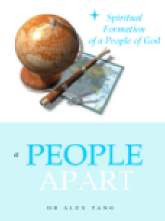
A People Apart

A People Apart (Jer. 35:14)


Sermon Statement

Christians are a people called apart for God because they are a people who are saved by God, who knows the Word of God, who loves the people of God, who loves those who do not know God, who lives their lives with integrity, who experiences joy, and who are free.

Text (Jeremiah 35:14)

Jonadab son of Recab ordered his sons not to drink wine and this command has been kept. To this day they do not drink wine, because they obey their forefather's command. But I have spoken to you again and again, yet you have not obeyed me. (NIV)

Background (Jeremiah 35:1- 18)

JER 35:1 This is the word that came to Jeremiah from the LORD during the reign of Jehoiakim son of Josiah king of Judah: 2 "Go to the Recabite family and invite them to come to one of the side rooms of the house of the LORD and give them wine to drink."

read more

.

Labels: , ,