Wednesday, February 22, 2017

Reading at x1.5 Speed


I am a strong advocate that while we can live busy lives we do not have to live hurried one. Technology is to be embraced to make our lives better, it does not make us its slave. There are many ways to read a book. As a famous British philosopher Sir Roger Bacon once said,


 Some books are to be tasted, others to be swallowed, and some few to be chewed and digested: that is, some books are to be read only in parts, others to be read, but not curiously, and some few to be read wholly, and with diligence and attention


 What he was saying was that not all books are to be treated as equal. Hence the way we approach and read them should be tailored to their value. I often interpret that he also implied the reading speed. This is only an implication as most readers in Sir Roger’s time read moving their lips. Hence, the speed at which they read is limited by how fast they can mouth the words. It is only in the late 19th and 20th Century do we read without moving our lips. We do appreciate what he is saying that some books are to be read slowly to savour them, while others deserve to be skimmed through. Modern ‘speed reading’ is mainly skimming.

Recently, technology has introduced us to the audio books and videos. Videos are a form of visual books. Now, freed from being bound to a single locale, I can listen to audio books while driving, doing housework or exercising. I also watch videos while on my treadmill. Aside from providing this means, technology also provided an interesting trick. The speed I can listen or watch these books.

Now I find that I can adjust the speed at which I listen to audiobooks or watch a video. With a hardcopy book, how fast I read is dependent on my ability to read and comprehend. With audio and video, the delivery may be adjusted to my receiving and comprehension speed. I find that listening at x1.5 speed, my comprehension is as good as listening at x1.0 speed. This is the same for watching videos. Of course, I can always adjust to x0.5 speed when I find the text difficult to understand, repeat and replay. In video, I can speed through the hesitation between the speaker’s words. Now I can listen to more books and watch more videos than before! For audiobooks, I normally use x1.5 for nonfiction and x2.0 for fiction. For videos, I use x2.0 for lectures and sermons and x1.5 for movies.

When books are made easily available by the technology Gutenberg printing press, we read by moving our lips as we read word by word. With training, we are able to read faster by skimming. Now with digital technology, we are able to read faster audio and visual books. Do not be alarmed by this. 


Actually, the art of reading is not the speed but getting the main thesis or message of the book whatever the format. I will estimate that 80% of any book is padding and the gem is in the 20% if we can find it. The 20% contains the heart of the whole book. It does not matter at whatever speed we read, only that we discover this gem at the heart of the book. If we then we slow down to savour, reflect, and assimilate, then we would have read that book well.


.


Labels: ,

Monday, August 11, 2014

The Digital Doctor


During one clinic session, I look down at my desk and could not see it! It was covered by keyboards, mouse, tablets, smart phones, and all other electronic connection that a doctor needs today. I have my medical notes in my website in a server hosted in USA, my paediatrics notes at UpToDate somewhere else at their company server farm, my half written books and writing projects in Dropbox, my students files in Google Drive, my literature search via Monash virtual library hosted in Australia, my access to Monash online courses in Moodle in Kuala Lumpur, and my patients’ file in a cloud somewhere between Johor Baru and Kuala Lumpur. My Facebook, Linked-in, Google+, Tumbr, Twitter, and Pinterest accounts are in another cloud somewhere around the world. Oh yes, my online gaming Star Trek Online and TitanFall.

Technology has both hindered and helped me. I spent 50% less time talking to my patients and their parents as I used these of their 50% clinic face-to-face time with me to key in their online electronic prescription on the computer on my desk. In the past I was always able to give them my full attention as I sit facing them as I write out my prescription on paper. Now I have to turn away from them 90 degrees to face my computer. It is hard to carry on a conversation when you are facing the screen and trying to type in important information and to double check its accuracy. Believe me, I have tried. I am not that good a multitasker. Patients and their parents are aware of this. After a while there is this awkward silence as I key in their prescriptions.


Another subtle influence I have to consciously resist is that by keying in information and prescription, I am forced to think of my patient as an object. This object is defined by data and numbers. My patients have always been and will be persons to me. I did not sign up to be a doctor so that I can reduce them to data. This aspect of modern medicine is worrisome to me.

.

Labels: , , ,

Wednesday, July 30, 2014

Ethical Reflections about Emerging Medical Technologies


Medical Utopias: Ethical Reflections about Emerging Medical Technologies

Abstract
Medical utopias are often about good health, absence of suffering, and even delaying of the aging process. The last two decades have seen a tremendous increase in emerging medical technologies to achieve these utopias. The completion of the sequencing of the human genome sets the stage for the next step of genetic and molecular advances. The increase in computing power, storage capacity, connectivity, and the Internet has opened avenues of new diagnostic and therapeutic modalities. The perfecting of sustaining cell growth in vitro and cell nucleus transfer has opened the way to cloning, stem cell harvesting, and a new field of regenerative medicine. However, these emerging technologies bring with them a large number of bioethical concerns that need to be addressed. These concerns involving tissue engineering, bioelectronics, new genetics, cloning, gene therapy, germ-line genome modifications are only the tip of the iceberg. In this paper I will reflect on three areas of concern. Firstly, the emergence of the digital patient will be considered. This digital patient will be deeply formed and informed by health information technology (IT), the social media, and issues involving privacy, confidentiality and data security. Secondly, the direct to customers (DTC) genetic screening tests will be discussed. The ethical issue of buccal swabs taken at home and be tested for genetic diseases and future prediction of other illnesses which is marketed directly to the consumers will be examined. Finally, the development of new pharmaco-therapeutics will be explored. There have been changes in the way new drugs are tested and these changes do raise some ethical concerns. The examination of these ethical issues will be done in the framework of respect for autonomy, beneficence, non-maleficence, and justice. 


.

Labels: , ,

Saturday, April 26, 2014

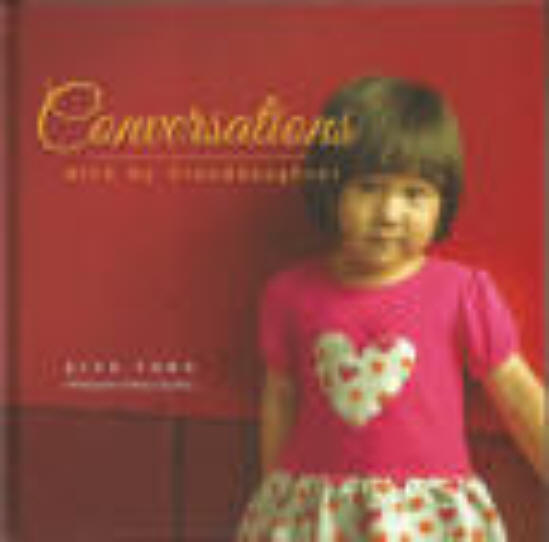
Conversations with my granddaughter about technology


Hello little one. I can see that you are having a good time with your iPad. Frankly I am amazed at how your little fingers interact so effortless with the touch screen and how instinctively you seem to know your way around an apps and to change to another apps when you are done with one. Grampa will have taken hours to do what you did within minutes and even then Grampa would need to consult an operating manual (if there is one available).  Things are changing so fast that Grampa has difficulty keeping pace. Grampa is sure you will not be able to imagine a world without mobile smartphones and Facetime where not only can you talk to Grampa but also to see Grampa and show your latest achievement or demonstrate some new acrobat skills you have developed.

This has not always been so, little one. In Grampa’s younger days, there were no computers and mobile smartphones. Grampa had to use a typewriter to write. What is a typewriter, you will ask. To show you, Grampa will have to take you to a museum! You can still see the large house phone at Grampa’s house but in time this will be replaced by the mobile phones.

You grew up with rapidly changing technology so to you are comfortable with it. To many big people technology is a big threat. They will tell you that technology like the iPad will damage your brain and impair your thinking skills. They will further espouse that mobile smartphones will retard your communication skills and sense of community. Do not fear, little one. Grampa do not believe this. As long as you master technology and not the other way around, you will be okay. I am sure that when the printing press was invented, there were a hue and cry about how the printed pages will distort the thinking of those who read these words, the death of writing and the demise of memory. Yet, the printing press has been with us for more that five hundred years and after billion of books, our reshaped society cannot live without the printed word. People still write with pen and paper. They can still use their memory to remember things. Within reasonable limits they seem to be able to think.

Grampa knows that the way you receive and process information will be different from Grampa’s. Grampa’s mental processing tends to be linear following the cause and effect progression. Yours will be new processes of thinking that will take  years of research for educationalists and neuroscientist to understand. However this will be the way your generation thinks. There is nothing wrong with that. What you will think of, experience and create, Grampa, with all his imagination, will never ever conceive of. When you invented a warp capable spaceship, don’t forget to beam Grampa up!

Use technology but do not let technology be your master. Use technology but do not be so dependent on technology that you cannot function without it. Grampa can see that you have no problem with that at this moment. You do your magic with your iPad but Grampa observes that you still go back to your coloring pencils and sticker books. Grampa is happy with that because Grampa is more competent in using color pencils than painting with the iPad!


Dear Lord, help this little one to develop her mental processes so that she will be able to use technology as a tool in her thinking process. Teach and guide her to perceive and receive your truth as you reveal yourself to her. Amen

.

Labels: , ,

Thursday, June 30, 2011

Challies' The Next Story


Tim Challies, (2011), The Next Story: Life and Faith after the Digital Explosion, Grand Rapids, MI: Zondervan.

Pastor, author and blogger Tim Challies asks three important questions about technology. He deals mainly with the impressive development of the technology of the CPU, Internet and digital communication. The three questions are (1) 'if technology was somehow taking over my life', (2) 'if it was remaking me in its image', and (3) 'if it was making me a tool of my tools'. His approach to answering these three questions is systematic as he deals with the theory, theology and experience of technology in the areas of (1) communication, (2) mediation/identity, (3) distraction, (4) information, (5) truth/authority and (6) visibility/privacy. Though there is scope for a wider work, the questions by its design imply his personal experiences and reflections.
Whether we are in a post-digital explosion era or still in the digital explosion era may still be argued. The social media is still expanding and the next 'killer' apps may be just below the horizon. The digital revolution, for all its hype is still limited to a few prosperous countries while the majority of humankind is not able to read or write, least of all to use a computer.

Are we in the 'next story' is also open to debate. Technology does not change human nature, only the means for human nature to achieve their purposes. One would not call the era after the invention of the printing press which is the technology similar to the present digital revolution the 'next' story. It is still the continuation of the human story.

Challies' experience with the digital is an interesting read but is hardly representative. He was right that his book was descriptive but it contain just too much history and facts about the digital revolution. Unfortunately there are too many of such 'descriptive' books in the market. However I have enjoyed his 'prescriptive' and learned much from his suggestions for Christians in the use of the digital media. One idea that stands out his is suggestion that we become accountable for our blog postings. I have never though of that though I have accountability groups for other aspects of my life. The book will may be better if it is more prescriptive.

Challies asked three important questions that need to be considered. Will the digital technology enslave us, keep us in bondage and force us to worship idols. With respect to Neil Postman and Marshall McLuhan, I believe that human nature has not changed since the time of creation. At present, we just have more toys to play with. We have in our human nature the propensity to addiction. Digital technology offers yet another thing to be addicted to. Living in another time, those who are enslaved and addicted to digital technology will have found something else to be addicted to.

What has changed is the way we live. We have always multi-tasked. Most of us can walk and talk at the same time so it is not something new. What is new is that we can walk and talk at the same time with someone on the other side of the world with our mobile phone.

This book is in scope comparable to Tapscott's Grown Up Digital (my review here).

Labels: , ,

Saturday, January 01, 2011

My IPhone Failed Me!


My iPhone alarm did not activate and wake me up for the New Year. So I have missed a new year!

.

Labels:

Thursday, December 02, 2010

Age of Music Piracy Over?

Another interesting article about online music. Now what about movies and television series?

The Age of Music Piracy Is Officially Over

 Illustration: Brock Davis
Illustration: Brock Davis
Mark down the date: The age of stealing music via the Internet is officially over. It’s time for everybody to go legit. The reason: We won. And all you audiophiles and copyfighters, you know who fixed our problems? The record labels and online stores we loved to hate.
Granted, when Apple launched the iTunes Music Store in 2003 there was a lot to complain about. Tracks you bought on computer A often refused to play on gadget B, thanks to that old netizen bogeyman, digital rights management. (It’s crippleware!) My local Apple store was actually picketed by nerds in hazmat suits attempting to educate passersby on the evils of DRM.
Well played, protesters: In January 2009, Apple announced that it would remove the copyright protection wrapper from every song in its store. Today, Amazon and Walmart both sell music encoded as MP3s, which don’t even have hooks for copyright-protection locks. The battle is over, comrades.

read more

Labels: ,