Wednesday, March 27, 2013

Shrine of the Book

The Shrine of the Book houses the Dead Sea Scrolls, the oldest biblical manuscripts in the world, as well as rare early medieval biblical manuscripts. The scrolls were discovered in 1947–56 in 11 caves in and around the Wadi Qumran. An elaborate planning process of seven years led to the building's eventual construction in 1965 which was funded by the family of David Samuel Gottesman, the Hungarian émigré, the philanthropist who had purchased the scrolls as a gift to the State of Israel.


The building consists of a white dome over a building located two-thirds below the ground. The dome is reflected in a pool of water that surrounds it. Across from the white dome is a black basalt wall.


The colors and shapes of the building are based on the imagery of the Scroll of the War of the Sons of Light Against the Sons of Darkness, whereas the white dome symbolizes the Sons of Light and the black wall symbolizes the Sons of Darkness. The interior of the shrine was designed to depict the environment in which the scrolls were found. There is also a permanent display on life in the Qumran, where the scrolls were written. The entire structure was designed to resemble a pot in which the scrolls were found. The shrine was designed by Armand Bartos and Frederick Kiesler, and was opened in 1965.


interior of the dome with the structure of a scroll. The Isaiah document is the bright lower yellow ring

As the fragility of the scrolls makes it impossible to display all on a continuous basis, a system of rotation is used. After a scroll has been exhibited for 3–6months, it is removed from its showcase and placed temporarily in a special storeroom, where it "rests" from exposure. The museum also holds other rare ancient manuscripts and displays The Aleppo Codex, which is from the 10th-century and is believed to be the oldest complete Bible in Hebrew


Examine the scrolls:

View the Commentary on the Habakkuk Scroll
The Commentary on the Habakkuk Scroll


Labels: ,

Scale Model of Jerusalem in the Second Temple Period

The Israel Museum in Jerusalem is a large museum and I wished I had more time to explore it. There is an Archaeology Wing, Fine Arts Wing, Shrine of the Book, Model of Second Temple, Wing for Jewish Art and Life and a Youth Wing.


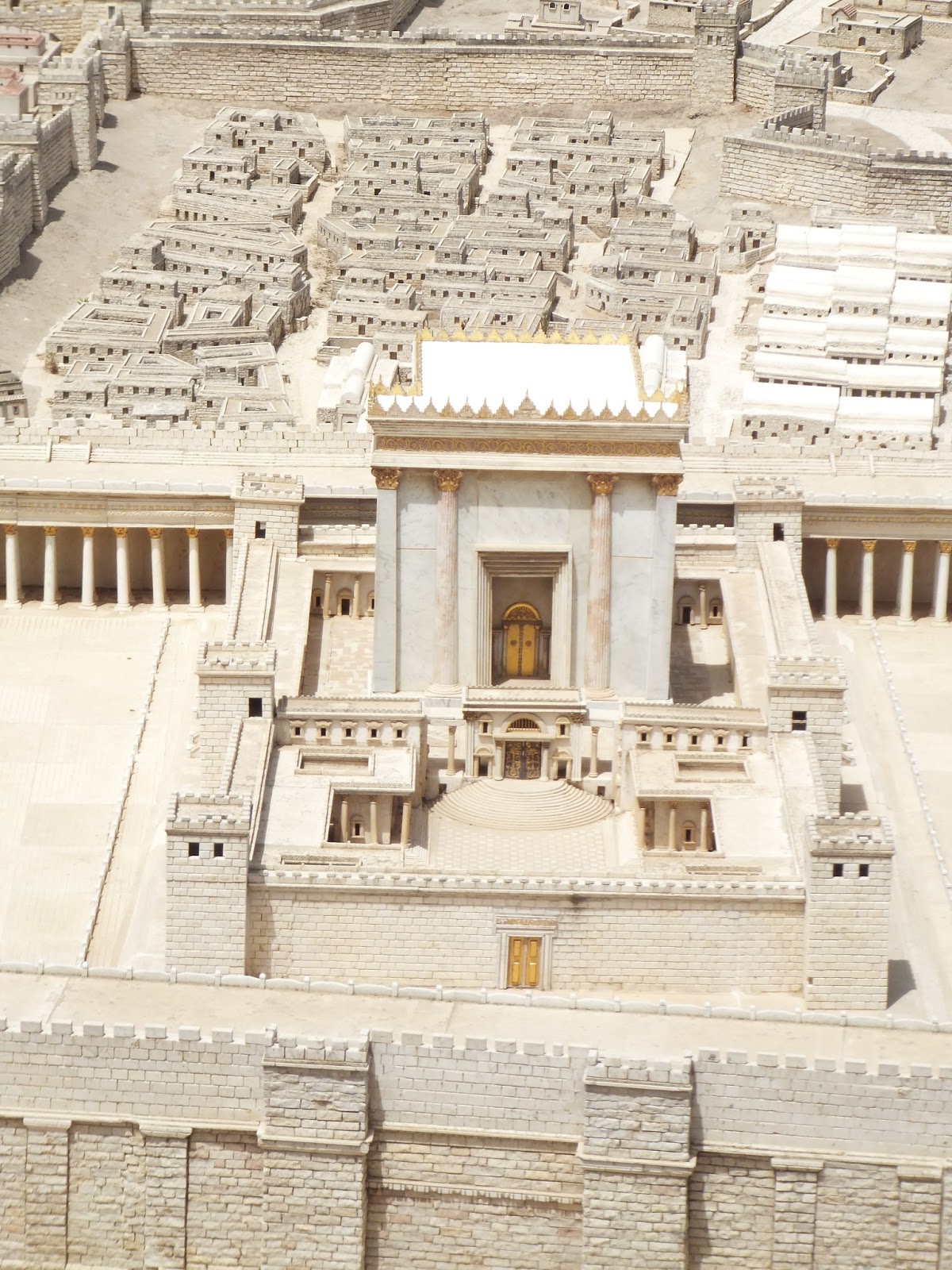
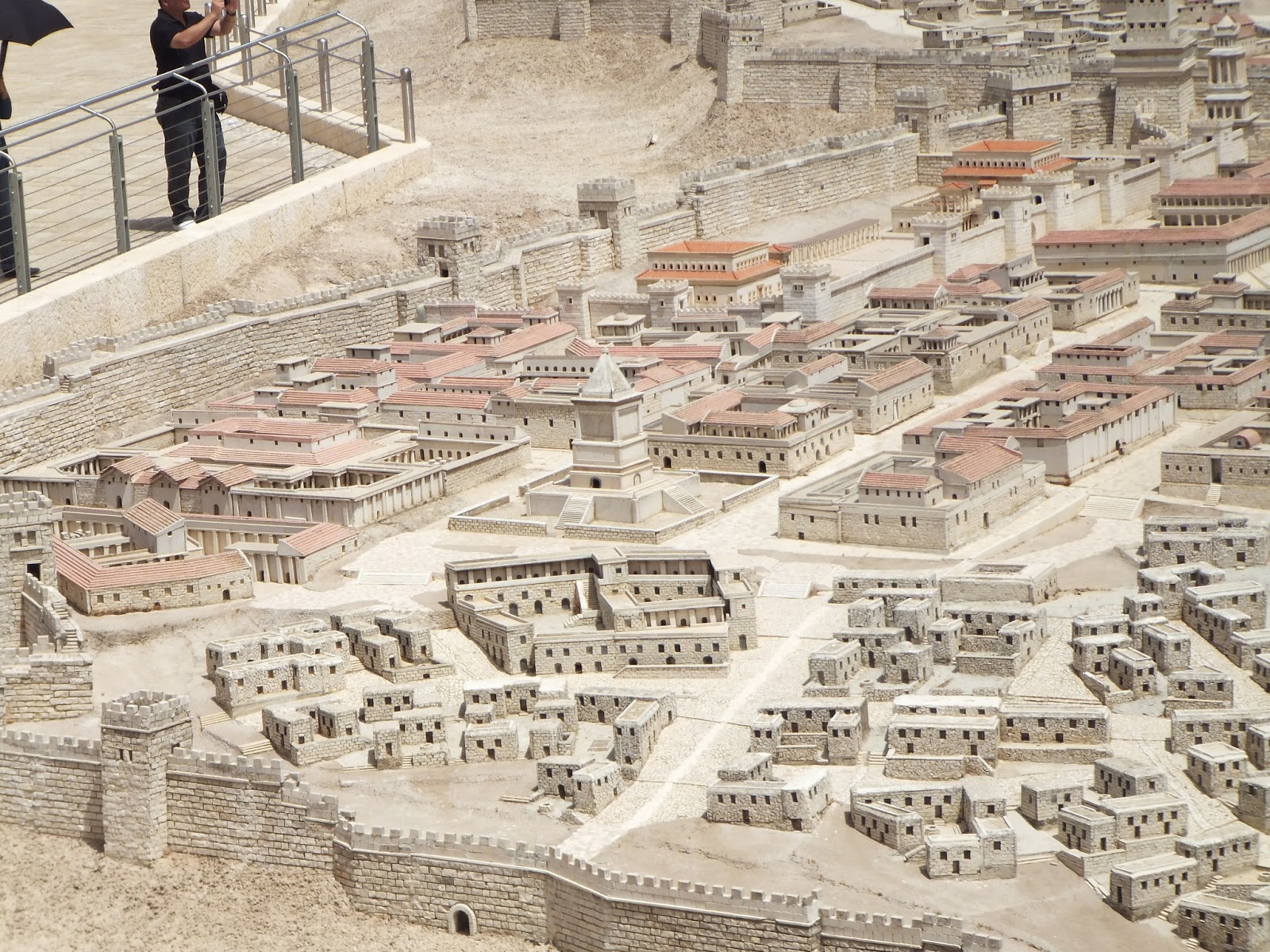
The model shows a replication of Jerusalem just prior to its siege by the Romans in 66 AD and its destruction in 70 AD


replica of the Second Temple


City of David in foreground


Labels: ,

The Lion Gate in Jerusalem

AC 7:54 When they heard this, they were furious and gnashed their teeth at him. 55 But Stephen, full of the Holy Spirit, looked up to heaven and saw the glory of God, and Jesus standing at the right hand of God. 56 "Look," he said, "I see heaven open and the Son of Man standing at the right hand of God." AC 7:57 At this they covered their ears and, yelling at the top of their voices, they all rushed at him, 58 dragged him out of the city and began to stone him. Meanwhile, the witnesses laid their clothes at the feet of a young man named Saul. AC 7:59 While they were stoning him, Stephen prayed, "Lord Jesus, receive my spirit." 60 Then he fell on his knees and cried out, "Lord, do not hold this sin against them." When he had said this, he fell asleep. 


The Lions' Gate (Hebrew: שער האריות‎ Sha'ar Ha'Arayot, Arabic: باب الأسباط‎, also St. Stephen's Gate or Sheep Gate) is located in the Old City Walls of Jerusalem and is one of seven open Gates in Jerusalem's Old City Walls.

Located in the east wall, the entrance marks the beginning of the traditional Christian observance of the last walk of Jesus from prison to crucifixion, the Via Dolorosa. Near the gate’s crest are four figures of panthers, often mistaken for lions, two on the left and two on the right. They were placed there by Sultan Suleiman the Magnificent to celebrate the Ottoman defeat of the Mamluks in 1517. Legend has it that Suleiman's predecessor Selim I dreamed of lions that were going to eat him because of his plans to level the city. He was spared only after promising to protect the city by building a wall around it. This led to the lion becoming the heraldic symbol of Jerusalem. However, Jerusalem already had been, from Biblical times, the capital of the Kingdom of Judah, whose emblem was a lion (Genesis 49:9).

                                                                                                                                  source: Wiki


In another version, Suleiman taxed Jerusalem's residents with heavy taxes which they could not afford to pay. That night Suleiman had a dream of two lions coming to devour him. When he woke up, he asked his dream solvers what his dream meant. A wise respected man came forward and asked Suleiman what was on his mind before drifting to sleep. Suleiman responded that he was thinking about how to punish all the men who didn't pay his taxes. The wise man responded that since Suleiman thought badly about the holy city, God was angry. To atone, Suleiman built the Lions' Gate to protect Jerusalem from invaders.
                                                                                                                                              source: Wiki

street in the Old City leading to the Lion Gate


street outside the Old City with the Lion Gate in background


Labels: ,

Tuesday, March 26, 2013

The City of David


 David build his capital city not within the borders of modern day Jerusalem but on a narrow ridge just south of the Temple Mount. It is a long triangular ridge bordered by the Tyropoeoan valley on the west and the Kirdon valley in the east.


Though the land was technically given to the tribe of Benjamin, it was never claimed. It showed how shrewd a politician David was when he chose it to be the nation's capital as it was independent of any of the tribal structures. By bringing the Ark of the Covenant there (2 Sam.5; 6-9; 1 Chr.11:4-7), he made Jebus or the City of David the political and religious capital of the twelve tribes.


view of the Kildron Valley from Mt Ophel


staircase leading down from the acropolis


.

Labels: , ,