Saturday, May 09, 2015

Travelling with Books


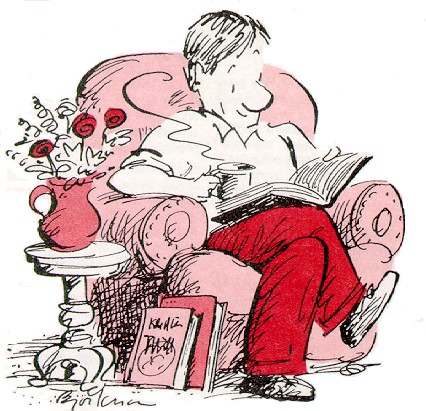
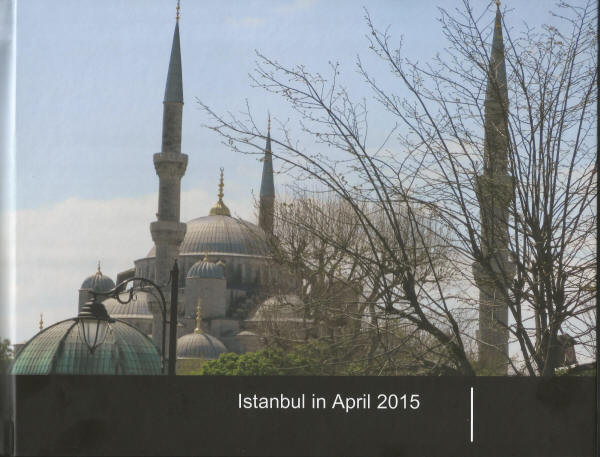
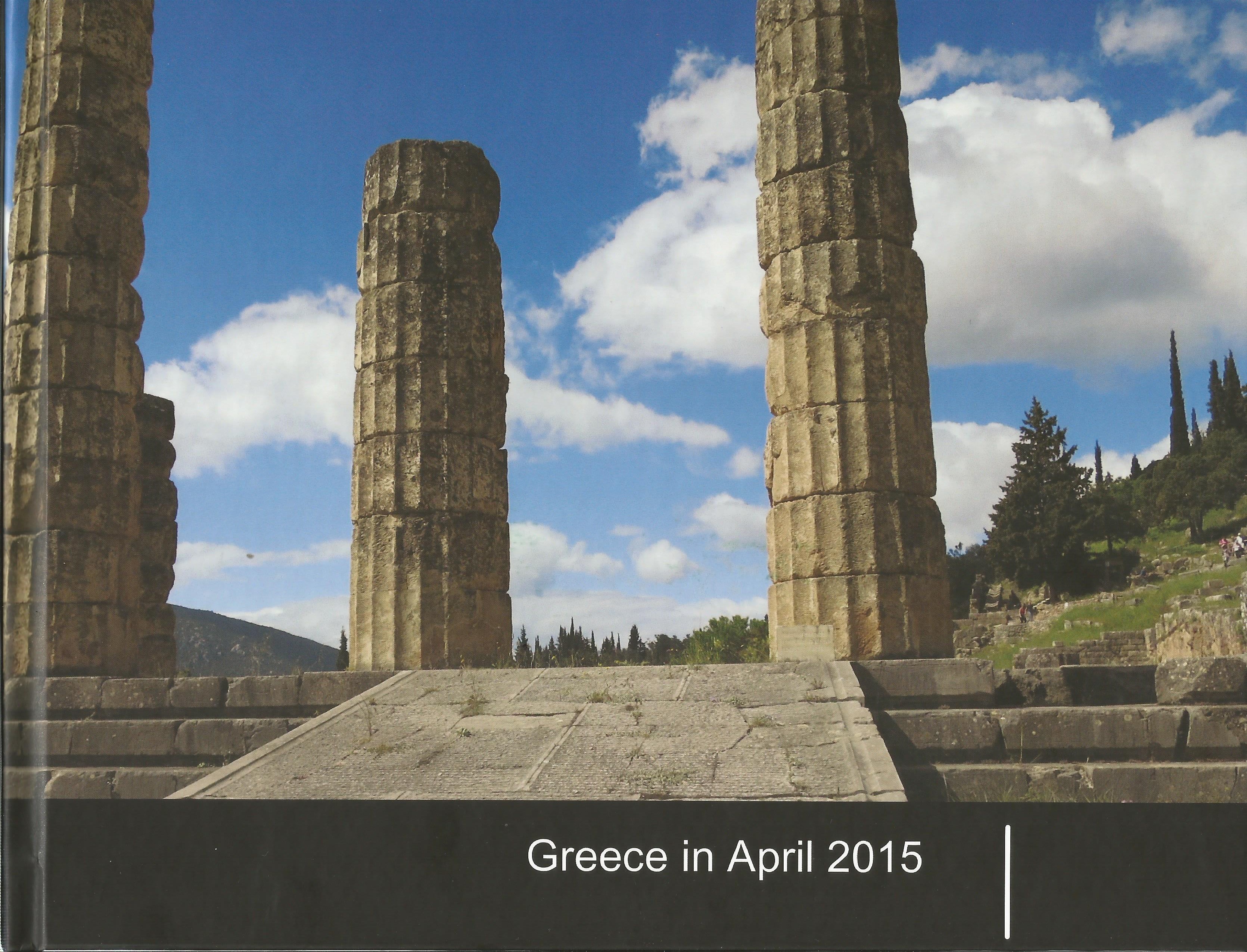
For the last three weeks I have been travelling around Istanbul in Turkey and key significant archaeological sites in Greece with just one paperback book. No, my reading during travels have not slowed down. I have most of the books I want to read in digital format in my iPhone and iPad. I used to measure the length of my journey by the number of paperbacks I will read.

Destination London one way is a two paperback journey (12 hours) while San Francisco is a three paperback one (18 hours). This means I usually lug around 10-15 kg of books in my luggage during my travels. If I have to choose between books or clothes in my luggage, books usually wins.
Nowadays I travel with only one paperback to read during take off and landing and at other times when digital appliances are forbidden. Otherwise, I read using my iPhone 6 plus (which has a larger screen) or my iPad. And I can carry more books. My devices has about 1,000 books on them. However these ebooks have no weight. My luggage is lighter and when it wears out, I will buy smaller ones.

I am also able to highlight, make notes and comments on my ebooks. This is extremely important for me. Another advantage is that I have Microsoft Word on my iPad which allows me to write while travelling. In the past I have to bring along a laptop computer.

Technology has changed reading and books during travels. At home I still prefer to read hard-copies-books which I can touch, smell and feel. I am still a devout hardcopy bibliophile. However, I cannot deny the advantage of ebooks for portability and convenience.

The paperback I brought along was Valerio Massimo Manfredi’s Odysseus: The Oath. Valerio is an Italian historian and archaeologist. I always liked his books. While travelling in Asia Minor and Greece, I find it refreshing to read this retelling of the Homer’s Iliad main protagonist Odysseus. I have enjoyed reading it. This book ends with the fall of Troy. I look forward to reading it sequel, Odysseus: The Return. Of course, I will read a hard or softcopy book, not an ebook one at home.

.

Labels: ,

Sunday, June 15, 2014

Hey, this just not my phone, this is also my library!


We are very aware that mobile hand phones especially smart phones have become as essential part of life in the last two decades. Nowadays we cannot imagine life before these small portable mobile devices. Pay phone booths, expensive operator assisted calls and land line are slowly becoming a thing of the past. The world has become even more interconnected as never before. With the ever expanding cellular infrastructure development, cellular mobile phones are becoming common in some underdeveloped countries even before the land based telephones. According to the United Nations more than 6 billion of the 7 billion people on earth today has access to a mobile phone!

This is an exciting time for the Church. Most mobile phones not only receive voice phone calls but also books and videos. This means that The Church has a unique opportunity today to make the bible available to almost 85% of the people on earth by means of free downloads of e-bible or audio bible! This is a fantastic opportunity. Not only e-bibles but also books on Christianity, Christian living and theology.

The revolution that resulted from the Guttenberg Press caused not only a revolution in learning and knowledge, but indirectly the Protestant Reformation. The bible became more easily available and was translated into a more readable form in the local languages from Latin or Greek. The limitations to that revolution was printing costs, distribution and point of sales/bookshops. The present e-book revolution bypass the limitations of the printing press (surprisingly this has not really translated to cheaper books). The electronic version is easily distributed and downloaded at the cost of a website and mobile apps.

The e-book revolution has placed the power of publishing and distribution into the hands of the authors and readers. Publishers are gatekeepers of printed books and while it is acknowledged that as corporate companies, they need to make a profit, they however also limit books published to that of a few superstar authors. Authors should make their works free or at a minimal charge on the Internet. This is especially true of sermon transcript, books on Christianity and Christian living. In fact, superstar authors and pastors should be the first to do so. Many do not need these incomes from their books. The call is also to Christian theological publishers. For reasons best known to themselves, most of our theological writings in books and journals are locked up behind walls that demand we pay a high monetary price to have access to these books and articles. Open the doors and allow the knowledge and wisdom to be available to all. Commentaries, theological thesis and writings are valuable resources that should be available to all. Everyone, including the poorest Christian living in the slums should have access to a well-stocked Christian library through his or her phone.

The mobile phones also make easily accessible videos and audio messages. Through Youtube, Godtube and other such services, everyone will be able to access Christian documentaries, attend lectures, participate in conferences, and even attend Church services. The technology for streaming video is always improving as is the technology for uploading and downloading.


The dawn of a new era is here. It is now possible to share the bible and Christian teachings to at least 85% of the whole population, even those who are living at the ends of the earth. This is a tremendous opportunity. It is hoped that the Church will awaken to this opportunity.


.

Labels: , , , ,

Tuesday, October 11, 2011

Free Online Theological Library


It is one of my fondest hope that there should be free sharing of information and knowledge. Unfortunately much information and knowledge is locked up in books and journals that are jealously guarded by their publishing companies and only accessible by paying large fees. Some journal databases used to have accounts for individuals like ATLA but for some reasons, they have removed the individual accounts and now have only institutional accounts. This means that one has to belong to an established institution and that institution must have a library with such accounts. Otherwise, one will not have access to these books and journals. It is always my fervor wish that some organisation will set up a digital library that is accessible for all. Globethics.net which has a free ethics library has just set up a free theological library.

The aim of Globethics.net is to ensure that people in all regions of the world are empowered to reflect and act on ethical issues. In order to ensure access to knowledge resources in applied ethics, Globethics.net has developed its Globethics.net Library, the leading global digital library on ethics. Globethics.net took this initiative to ensure that persons - especially in Africa, Asia and Latin-America - have access to good quality and up to date knowledge resources. The founding conviction of Globethics.net was that more equal access to knowledge resources in the field of applied ethics will enable persons and institutions from developing and transition economies to become more visible and audible in the global discourse on ethics. There is no cost involved in using the library. Individuals only need to register (free of charge) as participants on the Globethics.net website (www.globethics.net) to get access to all the full text journals, encyclopedias, e-books and other resources in the library.

So click link and get your access to a free theological library.

.

Labels: , ,

Friday, September 09, 2011

Why are e-books so expensive?

Why is e-books so expensive?

Michael Hyatt,a former publisher at Thomas Nelson provide an this question a couple of years ago.

3D Rendering of the Word “eBook” Using Conventional Type - Photo courtesy of ©iStockphoto.com/Franck-Boston, Image #12661284

Let me begin by putting things in perspective. First, the retail price has already been adjusted. As you are probably aware, Amazon is selling most eBooks for $9.99. That is already roughly half the price (depending on the format) of the typical physical book.

While Amazon is currently buying these books from some publishers at a discount off the physical retail price of the book, this will ultimately change. When it does, publishers will net approximately 70% of the retail selling price or $7.00. (This is often referred to as “the agency model.”) This will fluctuate up or down, depending on where retail pricing levels ultimately land.

read more

Hyatt is right and amazon is no longer selling its ebook at USD 9.90. Just a cursory look at the Kindle store will show that an ebook may cost more that a paperback and cost slightly less than a hardcover. Tom Clancy's Against All Enemies kindle e-book cost USD 14.99, hardcover USD 16.22 and paperback USD 9.90. Why is the e-book so expensive if all else remain the same? It does not take an increase of so much cost to digital preparation, quality assurance and digital preparation, does it?

One reason may be about publishers and their bottomlines. The reason why amazon increased their price is due to pressure from publishers.

Amazon has given in to publisher pressure and agreed to abandon their $9.99 price point for eBooks...Publisher Macmillan felt that the $9.99 price devalued many of its bestsellers, which often sell for $30 in hardcover format. In response to the pricing dispute, Amazon briefly removed all Macmillan books from its store last week. However, the boycott lasted only a few days before Amazon gave in to Macmillan's demands...Publishers seem more interested in protecting the value of their hardcover books than competing in a digital format. Will higher eBook prices convince you to purchase a physical copy of your next novel, or will accept a modest price increase given that eBooks are typically cheaper? read more
While publishers argue that it is to protect their hardcover books ( I wonder how many people actually purchase hardcover books) I suspect it is just to increase their margins. After all, there are now less physical bookstores around for them to squeeze. I agree with Ken Anderson in his blog, The Scholarly Kitchen post The Expensive e-Book.

I’d argue with Bransford’s assertion (a recent analysis, Bransford explains why e-books can list at higher prices than print books) that the publisher’s incentives are predominantly rational — if they’re based on revenues instead of net income, they’re questionable; if they’re based on existing contracts and obligations, they’re not rational but institutionalized, a difference worth noting; if they’re based on current sales proportions (print selling the majority of books), they’re rational but only for the time being; and if they’re habituated, they’re certainly not rational but comfortable. And by pricing their e-books against the revenue model of print instead of the income model of print, publishers are creating a pricing practice that has consumers justifiably confused, as Bransford notes:
But the biggest problem . . . is that it creates a great deal of consumer confusion and angst. It doesn’t make any intuitive sense for e-books to cost more than paper. By keeping e-book prices high, it opens up a huge opportunity for the 99-cent Kindle bestsellers to exploit. Also: As the music industry found out, annoy digital consumers at your peril.
 I echo Anderson and remind publishers that they annoy digital consumers at their peril. It is the economics of value. if you sell cheap, more people will buy and you actually make more money. If it is too expensive, less people will buy and they will lose money.

I may sell my new e-book Tales from the Monastery: Spiritual Formation the Asian Way at USD 0.99. What do you think? Will you buy?

.

.

Labels: , ,