Monday, January 30, 2017

Biomedical Ethics for the Contemporary Church

The course will be held over two weekends in Kuching, Sarawak, Malaysia


Biomedical Ethical Challenges Facing the Contemporary Church
STM TEE module


We are living in a time of a tsunami of change. Christians are often swarmed by newer and latest technologies without having a chance to examine the ethical considerations. This course will help to surf this tsunami by evaluating from a pastoral-theological perspective, issues that will involve everyone at some time in their lives. These issues include abortion, mercy-killing, advance medical directives, test tube and designer babies, gene editing, stem cell therapies, cloning, reproductive issues, gene therapy, prenatal testing, chimera research, life enhancement, aesthetic surgery, organ transplant, and regenerative medicine. These challenges are affecting every Christian in one way or other.

This non-technical course is for pastors, church leaders, counsellors and church members who are interested in surfing.

Speaker

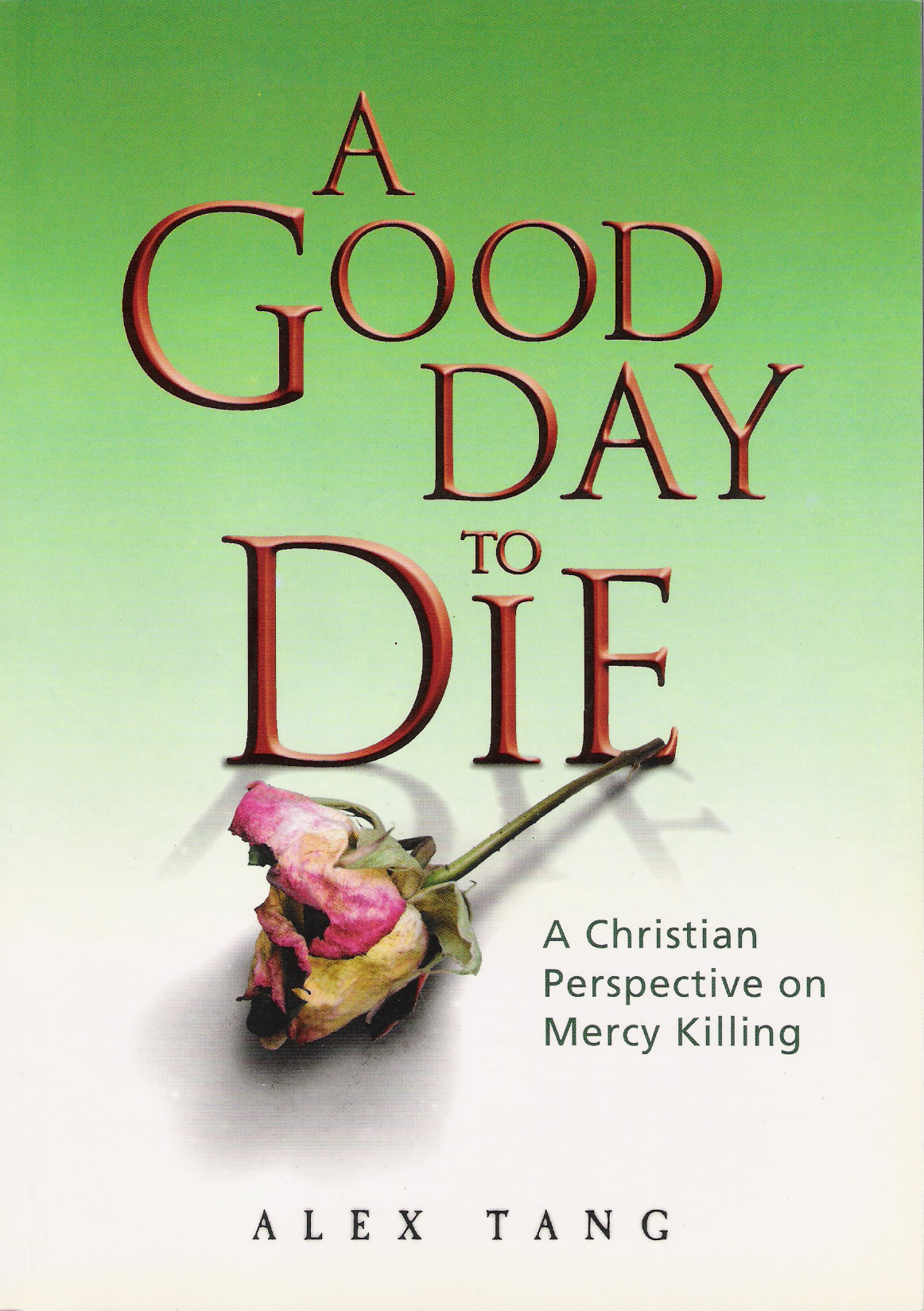
Dr Alex Tang is associate professor of paediatrics in Monash University and consultant paediatrician at KPJ Johor Specialist Hospital. He is an ordained Presbyterian elder and lectures at several seminaries. He has authored two books on biomedical ethics; A Good Day to Die on euthanasia or mercy killing and Live and Let Live on abortion, cloning and reproductive ethics and published numerous articles. For more information, visit his website at www.alextang.org

Labels: , , ,

Tuesday, January 19, 2016

Dengue Vaccine: To Vaccinate or not to Vaccinate, that is the question.


Dengvaxia (Sanofi Pasteur) is a live attenuated tetravalent chimeric vaccine made using recombinant DNA technology by adding the four serotypes of dengue virus into a yellow fever vaccine strain. There are ongoing phase III trials in Latin America and Asia involving over 31,000 children between the ages of 2 and 14 years. In the first reports from the trials, vaccine efficacy was 56.5% in the Asian study and 64.7% in the Latin American study in patients who received at least one injection of the vaccine. Efficacy varied by serotype. These are the preliminary only as the trails are still ongoing.
In both trials, vaccine reduced by about 80% the number of severe dengue cases. A closer look at the data shows that in Latin American and Asia at the 3rd year of follow-up showed that the efficacy of the vaccine was 65.6% in preventing hospitalization in children older than 9 years of age on the third year of followup. The response was greater in children who has been infected by dengue fever before (81.9%). The vaccine was approved in Mexico, Philippines, and Brazil in December 2015. Dengvaxia consists of three injections at 0, 6 and 12 months.

Other dengue vaccines may take a few more years to be available. Notable are DENVax (Inviragen/Takeda), TetraVax-DV (National Institute of Allergy and Infectious Diseases), TDENV PIV (GlaxoSmithKline) and V180 (Merck). DENVax looks promising as it combines dengue serotype 1,3 and 4 unto virus type 2 making it a purely dengue vaccine. It is being developed at Mahidol University in Bangkok. Currently all these are only in the phase 1 and 2 stages of development and it may be many years before it can be used.

There is a current dengue epidemic in many Asian countries with the number of cases and death increasing every month. Measures to control the vector, the Aedes mosquito, whether by reducing its breeding grounds, destroying the larvae, and killing of adults by fogging has not been proven effective in stamping the epidemic. Due to the ineffective measures, there is a loud public outcry and pressure on the respective governments to fast track the approval of Dengvaxia as what has happened in India where in January 2016, barely a month after the vaccine was approved for use in Mexico, Philippines and Brazil, the Indian government decided to waive a planned large scale trial and approve the use of the vaccine in the subcontinent. This means that India will not have any data on phase 3 and 4 clinical data conducted on her own people. The approval was based on phase 3 clinical data done in other countries. There always a risk when a new vaccine is introduced without adequate local data in a local population.

The WHO Strategic Advisory Group of Experts (SAGE) on Immunization is currently reviewing the evidence for Dengvarix and key considerations include vaccine safety, vaccine efficacy, disease burden, programmatic suitability, and cost-effectiveness. It is expected that it will submit its findings in April 2016. There is one major paper that describe the various trials done for Dengvaxia. It was published in New England Journal of Medicine on 24 September 2015. It collects data from various trials during a 25 month period (two years +one month). For a vaccine study, there is insufficient numbers and time for its true efficacy to be determined. There is also not much data to show whether people who received the vaccine may develop a more severe form of dengue when further infected. This could be the fastest record for a clinical paper to be published and the vaccine approved for use in Mexico, Brazil and Philippines. Other countries, for example Thailand (in which the 4 of the extension trials has been done) have not approved the use of the vaccine.

There is a dilemma here. On one hand, there is a full brown epidemic in progress. But this epidemic has been ongoing for many years so it may be call an endemic. On the other hand, there is a vaccine that is available though its true effectiveness is not really known. Furthermore, the safety profile, long term side effects and other side effects of this vaccine is also not known. There is not enough data available. Should we pressurize the Ministry of Health to approve this vaccine and allow its widespread use? The event of the Influenza H1N1 pandemic comes to mind. Because of the public outcry and panic, most governments stockpiled millions of dollars’ worth of Tamiflu, an antiviral agent. Tamiflu is not effective against H1N1. This is a known fact at the beginning of the pandemic. Yet that did not prevent governments from wasting their scarce resources from stocking up the antiviral agent.

In view of this dilemma, I will suggest two things. First, the Ministry of Health in cooperation with Sanofi to conduct a few large scale clinical trials of the efficacy and effectiveness of Dengvarix on Malaysians in Malaysia. This should give us the clinical data we need to make informed decisions about the vaccine. Second, we (the Malaysian public and healthcare professionals) should be patient and wait for the WHO recommendations that should be out in April this year. A point of note is that Brazil’s approval of the vaccine in December last year is conditional also to the WHO recommendation, which means it is not freely available in Brazil yet.

To conclude, when a fellow professional, who knew of my caution about using Dengvarix asked, “What will you tell your patient who is sick with dengue that you did not offered to give the vaccine?” My reply is that, “What will you tell your patient whom you had given the vaccine and come down with more severe form of dengue?”


.

Labels: , , ,

Wednesday, December 16, 2015

Christian Concerns about Emerging Technologies


I presented a paper at this International Conference on Christian Responses to Global Health Issues.

Abstract  

Medical Utopias: Christian Ethical Reflections about Emerging Medical Technologies

Medical utopias are often about good health, absence of suffering, and even delaying of the aging process. The last two decades have seen a tremendous increase in emerging medical technologies to achieve these utopias. The completion of the sequencing of the human genome sets the stage for the next step of genetic and molecular advances. The increase in computing power, storage capacity, connectivity, and the Internet has opened avenues of new diagnostic and therapeutic modalities. The perfecting of sustaining cell growth in vitro and cell nucleus transfer has opened the way to cloning, stem cell harvesting, and a new field of regenerative medicine. However, these emerging technologies bring with them a large number of bioethical concerns that need to be addressed. These concerns involving tissue engineering, bioelectronics, new genetics, cloning, gene therapy, germ-line genome modifications are only the tip of the iceberg.

 In this paper I will reflect on three areas of concern. Firstly, the emergence of the digital patient will be considered. This digital patient will be deeply formed and informed by health information technology (IT), the social media, and issues involving privacy, confidentiality and data security. Secondly, the direct to customers (DTC) genetic screening tests will be discussed. The ethical issue of buccal swabs taken at home and be tested for genetic diseases and future prediction of other illnesses which is marketed directly to the consumers will be examined. Finally, the development of new pharmaco-therapeutics will be explored. There have been changes in the way new drugs are tested and these changes do raise some ethical concerns. The examination of these ethical issues will be done within a biblical and theological framework.

The full text of my paper is on Academia.edu and on my website Kairos Spiritual Formation. I hope to work on it and prepare it for publication in a journal.

Will welcome any comments or feedback.

 .

Labels: ,

Tuesday, March 10, 2015

Biomedical Ethics Course in Malaysia Theological Seminary 2015


.

Labels: , ,

Saturday, January 10, 2015

Definition of Life


Labels: ,

Wednesday, July 30, 2014

Ethical Reflections about Emerging Medical Technologies


Medical Utopias: Ethical Reflections about Emerging Medical Technologies

Abstract
Medical utopias are often about good health, absence of suffering, and even delaying of the aging process. The last two decades have seen a tremendous increase in emerging medical technologies to achieve these utopias. The completion of the sequencing of the human genome sets the stage for the next step of genetic and molecular advances. The increase in computing power, storage capacity, connectivity, and the Internet has opened avenues of new diagnostic and therapeutic modalities. The perfecting of sustaining cell growth in vitro and cell nucleus transfer has opened the way to cloning, stem cell harvesting, and a new field of regenerative medicine. However, these emerging technologies bring with them a large number of bioethical concerns that need to be addressed. These concerns involving tissue engineering, bioelectronics, new genetics, cloning, gene therapy, germ-line genome modifications are only the tip of the iceberg. In this paper I will reflect on three areas of concern. Firstly, the emergence of the digital patient will be considered. This digital patient will be deeply formed and informed by health information technology (IT), the social media, and issues involving privacy, confidentiality and data security. Secondly, the direct to customers (DTC) genetic screening tests will be discussed. The ethical issue of buccal swabs taken at home and be tested for genetic diseases and future prediction of other illnesses which is marketed directly to the consumers will be examined. Finally, the development of new pharmaco-therapeutics will be explored. There have been changes in the way new drugs are tested and these changes do raise some ethical concerns. The examination of these ethical issues will be done in the framework of respect for autonomy, beneficence, non-maleficence, and justice. 


.

Labels: , ,

Tuesday, March 20, 2012

Brave New World seminar


Had a great time with participants in this seminar. Loved this poster.

.

Labels:

Friday, February 03, 2012

The Challenge of Biomedical Issues to the Contemporary Church

Brave New World: The Challenge of Biomedical Issues to the Contemporary Church


Title of Seminar Brave New World
Subtitle The Challenge of Biomedical Issues to the Contemporary Church
Synopsis Advances in medical treatment modalities, biotechnological innovations, and genetic-molecular manipulations have brought about a set of unique challenging issues not faced by the Church before. A pastoral-theological approach is needed to examine, reflect and develop responses to these difficult moral and ethical issues such as test tube and designer babies, facts and fallacies of stem cell therapies, cloning, reproductive technologies, abortion, mercy-killing, allocation of scarce healthcare resources, living will, gene therapy, prenatal diagnosis, and aesthetic surgery.
Christians should be engaging personally with these issues and also help others to do so. A rational engagement is essential to all Christians who are committed to living ethically in these changing times.
Speaker’s bio Dr Alex Tang is a senior consultant paediatrician in the Johor Specialist Hospital in Johor Bahru, Malaysia. He received his medical training from the National University of Malaysia, post-graduate training in Singapore and the United Kingdom and his theological training from the Malaysia Bible Seminary and the United States. Alex has published numerous articles on bioethics, written two books on the Christian response to biomedical ethical issues and taught courses on biomedical ethics in seminaries in Singapore and Malaysia.
Date and Time 17 Mar 2012, 1-4pm
Location
TCA College
Please click here to download a pdf version of this.

.

Labels: , ,

Friday, November 25, 2011

Intelligent Research and Tea of Science

My blog posts on research issues provoked by the movies Captain America here and Rise of the Planet of the Apes here are picked up and published by Tea of Science - Scientist and Laboratory Network.


 Intelligent Research
  Dr. Alex Tang
  Medical Research Network page.
 What are the lines in altering the genetic code of human. Dr. Alex shares his view.
 
 
.

Labels: , , ,

Tuesday, October 11, 2011

Free Online Theological Library


It is one of my fondest hope that there should be free sharing of information and knowledge. Unfortunately much information and knowledge is locked up in books and journals that are jealously guarded by their publishing companies and only accessible by paying large fees. Some journal databases used to have accounts for individuals like ATLA but for some reasons, they have removed the individual accounts and now have only institutional accounts. This means that one has to belong to an established institution and that institution must have a library with such accounts. Otherwise, one will not have access to these books and journals. It is always my fervor wish that some organisation will set up a digital library that is accessible for all. Globethics.net which has a free ethics library has just set up a free theological library.

The aim of Globethics.net is to ensure that people in all regions of the world are empowered to reflect and act on ethical issues. In order to ensure access to knowledge resources in applied ethics, Globethics.net has developed its Globethics.net Library, the leading global digital library on ethics. Globethics.net took this initiative to ensure that persons - especially in Africa, Asia and Latin-America - have access to good quality and up to date knowledge resources. The founding conviction of Globethics.net was that more equal access to knowledge resources in the field of applied ethics will enable persons and institutions from developing and transition economies to become more visible and audible in the global discourse on ethics. There is no cost involved in using the library. Individuals only need to register (free of charge) as participants on the Globethics.net website (www.globethics.net) to get access to all the full text journals, encyclopedias, e-books and other resources in the library.

So click link and get your access to a free theological library.

.

Labels: , ,

Thursday, February 10, 2011

What You Should Know about Prebiotics and Probiotics

There is a lot of interest in prebiotic and probiotics generated mainly by companies producing infant milk formula on the beneficial effects of these two agents. Probiotics are the 'good' bacteria that is found in the intestines. Prebiotics are food nutritients for probiotics or the 'good' bacteria. The idea of giving a baby prebiotics is to provide nutrition to the good bacteria so that it will grow in the intestine. It is postulated that the presence of good bacteria (probiotics) helps the newborn's intestine to develop their immune response to infection and maybe allegy. Human milk contains prebiotics.

The newborn intestine is sterile. Colonisation of the intetsine begins almost immediately with different bacterias, differing by whether the baby is exclusively breast fed or formula fed. Nevertheless by six weeks, the organisms in the intestines of these two groups are the same. Does this warrant the addition of prebiotic and probiotic to infant formula? Apparently these companies think so because they are marketing the addition to infant formula of prebiotics and probiotics as directly responsible to improve the child's immune response and to reduce allergy.

What are the facts?
  • while probiotics is useful in the treatment of infective and antibiotics diarrhea, there is no evidence available that prebiotics and probiotics improve or strengthened a child's immunity.
  • a Cochrane review in 2007 conclude that there is insufficient evidence to warrant routine supplement of probiotics to either pregnant women or infants for prevention of allerguc disorders in infant. The Cockrane review is a database for evidence-based medicine.
  • The American Academy of Pediatrics (AAP) recently issued an extensive Clinical Report: Probiotics and Prebiotics in Pediatrics authored by Dan W. Thomas, MD, Frank R. Greer, MD, and the Committee on Nutrition and the Section on Gastroenterology, Hepatology, and Nutrition.
Medscape conducted an interview with Dr Thomas concerning this report,
 
Medscape: While the report makes clear that human milk is the preferred food for infants, what would you suggest primary care providers advise parents who choose to bottle-feed? Should infant formula supplemented with probiotics be recommended?

Dr. Thomas: No one can answer this question at this time. The health benefits of feeding infant formula containing probiotics and/or prebiotics are unproven. In essence, this report challenges industry and healthcare researchers to conduct high-quality, evidence-based studies to answer these questions.

 
The addition of prebiotics and probiotics to infant formulas is another example of industrial driven marketing based on doubtful or unproven scientific data. The inclusion of prebiotics and probiotics follow a trend of additional of supplements to infant formulas. As with prebiotics and probiotics, all these supplements have no or doubtful evidence that they are of actual value. With each inclusion, the price of the infant formula increase. This is a burden to mothers who are unable to breast feed because they could not produce milk or they have to work. In the meantime, these infant formula companies which are usually multinationals make millions.

Labels: , , , ,

Saturday, September 04, 2010

The Anti-Lesbian Drug?

Newsweek recently published an article entitled The Anti-Lesbian Drug concerning the use of a steroid named dexamethasome by doctors to prevent female fetuses from developing congenital adrenal hyperplasia (CAH). With this provocative headline, the author Sharon Begley) writes,

Mike Kemp / Corbis

Genetic engineers, move over: the latest scheme for creating children to a parent’s specifications requires no DNA tinkering, but merely giving mom a steroid while she’s pregnant, and presto—no chance that her daughters will be lesbians or (worse?) ‘uppity.’

Or so one might guess from the storm brewing over the prenatal use of that steroid, called dexamethasone. In February, bioethicist Alice Dreger of Northwestern University and two colleagues blew the whistle on the controversial practice of giving pregnant women dexamethasone to keep the female fetuses they are carrying from developing ambiguous genitalia. read more


While there is a need for bioethics watchdog centres such as The Hasting Center's Bioethics Forum, there is also a need to be careful while examining the evidence or the lack of it. Alice Dreger, Ellen K. Feder, Anne Tamar-Mattis (06/29/2010) posted Preventing Homosexuality (and Uppity Women) in the Womb? , the article which was picked up by Newsweek.

While everyone has been busy watching geneticists at the frontier of the brave new world, none of us seem to have noticed what some pediatricians are up to. Perhaps it is because so many people are fascinated by the idea of a “gay gene” that prenatal “lesbian hormones” have slipped past public scrutiny. In any case, we think Nimkarn and New’s “paradigm for prenatal diagnosis and treatment” suggests a reason why activists for gay and lesbian rights should be wary of believing that claims for the innateness of homosexuality will lead to liberation. Evidence that homosexual orientation is inborn could, instead, very well lead to new means of pathologization and prevention, as it seems to be in the case we’ve been tracking.

Needless to say, we do not think it reasonable or just to use medicine to try to prevent homosexual and bisexual orientations. Nor do we think it reasonable to use medicine to prevent uppity women, like the sort who might raise just these kinds of alarms. Consider that our declaration of our conflict of interest.

Read more


The official responses are below

LETTER FROM THE FOOD AND DRUG ADMINISTRATION
LETTER FROM THE OFFICE OF HUMAN RESEARCH PROTECTIONS

Labels: , , , ,

Tuesday, June 15, 2010

If the World is so Dangerous Why Have Children?

Top Story
THEOLOGY IN THE NEWS
Peter Singer's Swan Song
Bioethicist asks: 'Why don't we make ourselves the last generation on earth?'


Peter Singer is a bioethicist I love to argue with. Even though we do not agree in many areas, I find his provocative thinking challenging. His latest is that since we all agree that the world is so bad and destructive, why have children? Why bring them into such a dangerous world?


Writing June 6 for The New York Times, Singer asks a characteristically provocative question: "How good does life have to be, to make it reasonable to bring a child into the world?" He wonders whether even the comparatively high Western standard of living is suitable for a fulfilling time on earth...

Singer offers climate change as one threat to the Western way of life. And he pulls no punches while offering one possible response to this potential crisis that he says threatens future generations. "[W]hy don't we make ourselves the last generation on earth? If we would all agree to have ourselves sterilized then no sacrifices would be required—we could party our way into extinction!" Whether he realizes it or not, Singer cites an ethic attested and condemned in Scripture (Isaiah 39:8; 1 Corinthians 15:32). If there is no hope for tomorrow, this dystopian ethic says, at least we don't have to worry about tomorrow. We can live it up today...

Still, Singer prompts us to reflect on why Christians nevertheless enthusiastically bring children into this world. We harbor no false hope about eradicating suffering through evolution. We understand these children to be stained with sin from the beginning. We groan along with a creation subjected to futility, currently awaiting redemption (Rom. 8:19-23). What reason do we have, then, to bring new children into this world?

read more

.

Labels: , , , ,

Thursday, March 18, 2010

Is Cosmetic Surgery Immoral?

In a previous post I have noted the question whether it is sinful to go for cosmetic surgery?
Christine A. Scheller notes,
“Beauty often wins love. It just does,” write Karen Lee-Thorp and Cynthia Hicks in Why Beauty Matters. No wonder women and, increasingly, men are willing to endure the pain and risk of elective cosmetic surgery to attain it. New York Times reporter Alex Kaczynski states it bluntly in her cosmetic surgery expose, Beauty Junkies. “In the end it all comes down to sex. . . . We are looking for love. And we will accept lust.”
The reasons used to justify cosmetic surgery are sex and love.

Top Story
Photo by Getty Images
THROWING INKWELLS from Christianity Today online
Is Cosmetic Surgery Immoral?
Even more importantly: Why do you want to know?

Hans Madueme, MD writing in Dignitas 17(1): 2009 a publication of Center for Bioethics & Human Dignity notes in Nip & Tuck: A Parable that while one may argue the issues in terms of treatment versus enhancement, recent advances have blurred the difference between the two. Hence she writes,

In short, ‘nip & tuck’ culture can serve as an old-fashioned moral parable. Cosmetic surgery is a relatively new technology, one that allows us to gratify old desires in new, more effective ways. The moral narrative here is certainly about beauty and covetousness, vanity and denial. But it is perhaps broader and deeper than that. It is about men and women, about us. You and I are frail creatures, wearied by the relentless punishments of life, dissatisfied with our lot, restless and often inconsolable, searching after something beyond us. There is an insatiable longing in our hearts, a yearning for meaning, for transcendence, for fulfillment. What are we after? What do we want? What are we willing to do to get it? Like the practiced fingers of a surgeon, these questions peel away our polished masks, revealing our true selves, our real identities. From wearing makeup to choosing friends, from buying a house to considering liposuction, life in its ordinariness, life in its spiritually charged imperfections and sufferings, reveals the kinds of people we are and are becoming. Botox culture vividly reminds us, if we are listening, that we are men and women with longings, loves, and lords. We are in fact in the full swing of a theological drama: our lives are irreducibly religious, and it is the living God of Jesus Christ with whom we have to do (cf. Acts 17:28). We will worship something – God or paltry idol. Cosmetic surgery is just the tip of the iceberg. Look deeper and you will find our vices and virtues, our hearts and our gods.


Madueme makes an important point here. It is not that cosmetic surgery is immoral or anything. Like many medical procedures, it is amoral. The issue here is why do so many people seek to go under the knife to make themselves look different? Who is it that we worship? What is wrong with us?

What do you think?
.

Labels: , ,

Monday, February 22, 2010

Book Review Roland Chia Biomedical Ethics


Roland Chia is Chew Hock Hin Professor of Christian Doctrine and Dean of the School of Postgraduate Studies at Trinity Theological College (TTC) in Singapore. In this 2010 book which was jointly published by Genesis Books (imprint of Armour Publishing) and the National Council of Churches of Singapore, Chia develops his theological antropological approach to biomedical ethics. Chia has been instrumental in the writing of many of the National Council of Churches of Singapore's positional papers on biomedical ethics including organ trading and euthanasia. It is good that he now consolidate his thinking together in one book on biomedical ethics for the church.

This book is divided into three parts which is helpful in the way he develops his theological anthropology. The first parts deals with the theological foundations which he then applies in some current issues in bioethics in the second part. The third part is his suggestions for the role of the church in dealing with this complex problems.

This is a well written book and I am able to follow his theological discussion and appreciate his approach to these complex issues as a theologian. He notes,

The theological anthropology that we have been developing in these pages seeks to articulate a understanding of determinism and freedom proper to human beings who are self-transcending yet embodied creatures (p.51)

While it is understandable that this thin volume is an introduction to a complex number of issues, I have hoped that he has given more attention to the each individual issues rather than giving a general overall impression. For example, Artificial Reproductive Technology (ART) was reckoned to be bad because of "medicalisation of procreation", "commodification", and "commercialisation of human beings". This is oversimplifying a complex series of procedures. ART includes In Vitro Fertilisation (IVF). We have to examine IVF in light of his theological anthropology and to take into consideration the stigma of infertility in the Asian culture and whether IVF with the sperms from the husband, eggs from the wife and the fertilised ovum implanted in the wife's womb to be necessarily bad. The only shortcoming is that sexual intercourse is not involved. Yes, we do have to pay the doctors, embryologists and hospitals for the IVF services but could that be counted as commercialisation and commodification? (p.87-88).

In the section on abortion, Chia brings out the issue of whether abortion should be allowed in rape victims. While he makes a strong case that rape rarely result in pregnancy (which is not true), he however does not give the answer to this issue (p.99-100). I have hoped that he will.

The section on chimera research is well written and raises many questions. It is an area where more theological thinking must take place. Chimera research involves combining human and animal genetic material.

It is in the final section of the book that Chia gives us our money's worth. It is his call to the church to act, in being missional, teaching, counselling and being involved in public theology.

Public theology is based on the assumption that the creedal symbols and statements of Christianity have public meaning. Public theology therefore have to do with how the faith that Christian profess is linked with how they live and conduct themselves in society (p.200-204)

Chia argues that the church has a role in public policy. This is especially interesting to me as I have just read Tan Seow Hon's chapter on "Religion and Abortion in Singapore" from Issues of Law and Justice in Singapore: Some Christian Reflections (2009) which is published by Chia's seminary under their CSCA Christianity in South East Asia Series.

While the footnotes are helpful, it will be better if there is a bibliography and index to the book.

This is a significant book as this is the first book on the introduction to almost the whole field of biomedical ethics by an influential theologian in a respected seminary in Singapore. I strongly recommend this book to anyone who needs to understand biomedical issues (that means everyone especially pastors and church leaders). I will include this on the reading list when I teach my module on "Biomedical Ethics Facing the Contemporary Church" in June 2010 at East Asia School of Theology (EAST) in Singapore.

.

Labels: , , ,

Friday, December 18, 2009

The Future of Bioscience and Healthcare


I have always been fascinated with future forecast especially in the area of science, technological, society and culture. I like reading books by futurists. Most futurists are system thinkers who sees trends in the present and are able to extrapolate these trends into the future. This book which was published in September 2009 deals with the future of biosciences. Most of us will appreciate that biosciences is the next wave of the future with its confluence into healthcare.

Bioscience is the new name for biological sciences that deals with the cutting edge technology of gene manipulation technologies, anti-aging modalities, cloning and pharmaceutical developments. The research and development of these technologies are expanding by leaps and bounds. It is not inconceivable that human life expectancies will be expanded to 120 years within the next decade.

The limitation to biosciences is not the research and development, the authors argue, but whether society can continue to support a large aging population especially if the life expectancy increase to over 100. The limitation is the resources for healthcare. There are four possible scenarios that can happen in the future. These four scenarios are the interactions of public perception of biosciences and healthcare resources. The public reception of biosciences can range from unconditional acceptance total rejection.

This is a well researched book on biosciences and healthcare resources. The discussion will be enhanced by a deeper discussion of globalisation and religious impact on social trends. However the authors are wise to limit their discussion to the North American context as their data are mainly from that region.

.

Labels: , , ,

Saturday, November 14, 2009

Top Five Books on Life Ethics


How to Be a Christian in a Brave New World
By Joni Eareckson Tada and Nigel M. De S. Cameron

Two pioneers in defending the dignity of human life challenge the church to understand and care about efforts to remake humanity using robotics, embryo harvesting, and genetic engineering. Who better than Eareckson Tada to talk about the use of exotic technologies to heal human bodies?

* * *

Human Dignity in the Biotech Century: A Christian Vision for Public Policy
By Joni Eareckson Tada and Nigel M. de S. Cameron

This volume comprises essays from top thinkers and activists in the field on topics like learning from past mistakes, new technology, genetics, and transhumanism. Get ready for the science fiction realities of the 21st century, and get involved.

* * *

Does God Need Our Help?: Cloning, Assisted Suicide, and Other Challenges in Bioethics
By John F. Kilner and C. Ben Mitchell

Designed like a field guide, this accessible book covers all the bases. Kilner and Mitchell present the major secular ethical frameworks and contrast them with biblical perspectives. They also sort out promising developments from morally dubious ones

* * *

Bioethics: A Primer for Christians
By Gilbert Meilaender

For the reader wanting to dig deeper, Meilaender—a former member of the President's Council on Bioethics—lays out the theological framework. From prenatal screening to organ donation, this volume elucidates and elaborates. A must-read for pastors, teachers,lay leaders, and thoughtful Christians.

* * *

Embryo: A Defense of Human Life
By Robert P. George and Christopher Tollefsen

If you have ever wanted to defend the moral value of an embryo without using the Bible, this is the book for you. Simplifying a complex issue, the authors offer a compelling case for the embryo from the perspective of systematic biology and ethical reasoning.

Copyright © 2009 Christianity Today


Shucks, he did not include any of my books *smile*

Here are some of my recommendations.

.

Labels: , ,

Tuesday, October 27, 2009

Who is a Bioethicist?

This post from blog.bioethics.net contains an interesting argument between two famous bioethicists, Arthur Caplan and Zeke Emanuel on who may be claim to be a bioethicist.

Facts alone won't suffice for the field of bioethics
by Arthur Caplan

When you get old enough as a practitioner in any field young people seek your advice about what they should do if they want to do what you do. Given that my age seems to be increasing exponentially this has been happening to me with increasing frequency. Undergraduates, high school students, medical students, those pursuing degrees in law and nursing and even those interested in a mid-career change have been asking me what they need to do if they want to pursue a career in bioethics.


read more

Labels: ,

Friday, July 24, 2009

Prenatal Screening and Abortion

More from the August 2009 issue of The American Journal of Bioethics. This asks an important question: Is it ethical to provide pre-natal diagnosis of congenital abnormalities when abortion is not an option?

Prenatal Diagnosis and Abortion for Congenital Abnormalities: Is It Ethical to Provide One Without the Other?
by Angela Ballantyne, Richard Ashcroft, Florencia Luna, Ainsley J. Newson
AJOB 2009; 9(8):48
ABSTRACT |FULL TEXT

Open Peer Commentary

A Closer Look at the Abortion Debate in Iran
by Kiarash Aramesh
AJOB 2009; 9(8):57
FULL TEXT

Prenatal Diagnosis and Abortion are Not in Conflict in Israel
by Ari Z. Zivotofsky, Alan B. Jotkowitz
AJOB 2009; 9(8):58
FULL TEXT

From Iran to Latin America: Must Prenatal Diagnosis Necessarily Be Provided With Abortion for Congenital Abnormalities?
by Daniel Sperling
AJOB 2009; 9(8):61
FULL TEXT

An Unjustified Exception to an Unjust Law?
by David Wasserman, Adrienne Asch
AJOB 2009; 9(8):63
FULL TEXT

Does Prenatal Diagnosis Morally Require Provision of Selective Abortion?
by Diana Buccafurni, Pepe Lee Chang
AJOB 2009; 9(8):65
FULL TEXT

Can, Should, Ought, Must
by Howard Trachtman
AJOB 2009; 9(8):67
FULL TEXT

Prenatal Testing Can Be Advantageous Even When Abortion is Not an Option
by Alexander A. Kon
AJOB 2009; 9(8):69
FULL TEXT

Abortion: Prohibitions and Exceptions
by Sheelagh McGuinness
AJOB 2009; 9(8):70
FULL TEXT

Labels: , , , ,

Thursday, July 23, 2009

More Discussion On Organ Donation

From the August 2009 issue of The American Journal of Bioethics

Why Consent May Not Be Needed For Organ Procurement
by James Delaney, David B. Hershenov
AJOB 2009; 9(8):3
ABSTRACT |FULL TEXT

Open Peer Commentary

Pardon My Asking: What's New?
by D. Micah Hester, Toby Schonfeld
AJOB 2009; 9(8):11
FULL TEXT

The Organ Conscription Trolley Problem
by Adam Kolber
AJOB 2009; 9(8):13
FULL TEXT

Hypotheticals, Analogies, Death's Harms, and Organ Procurement
by James L. Nelson
AJOB 2009; 9(8):14
FULL TEXT

Survivors' Interest in Human Remains
by Norman L. Cantor
AJOB 2009; 9(8):16
FULL TEXT

Why Intuitions and Metaphysics Are the Wrong Approach for Health Law: A Commentary on Delaney and Hershenov
by Christopher Robertson
AJOB 2009; 9(8):18
FULL TEXT


.

Labels: , ,