Tuesday, July 06, 2010

Can the Soul be Saved?

I am still searching for the soul (or a better understanding of it). Came across Direction, a Mennonite Brethren Forum magazine which has a special issue Fall 2008 devoted to Can the Soul be Saved?


Can the Soul Be Saved?


From the Editor: Can the Soul Be Saved?Vic Froese166-7
Paul on the Human Being as a “Psychic Body”: Neither Dualist nor MonistGordon Zerbe168-84
Is the Search for the Anabaptist Soul a Dead End? Historic Anabaptism Meets Nancey Murphy’s Nonreductive PhysicalismTerry G. Hiebert185-200
I’m a Soul, Man: One Psychologist’s Reflection on Human NatureDelmar B. Epp201-14
Nancey Murphy’s Bodies and Souls, or Spirited Bodies? A Review EssayWendy J. Miller215-22
Resurrection of the Body or Immortality of the Soul? Some Personal ReflectionsDan Epp-Tiessen223-27
An Invitation to an Intimate and Transformative Relationship with God (Jeremiah 31:15-22)Laura Neufeld228-37

Some good thoughts here,

.

Labels: , , ,

Wednesday, June 30, 2010

Theology and Neuroscience: What is the Soul?


I have been thinking about the nature of the human soul especially in the light of the recent scientific advances of neuroscience. I came across Michael Sheiser's interesting blog named The Naked Bible. With a name like that, how can I resist?

Here are some interesting thoughts Michael has on the body-soul

Biblical Anthropology and the Mind-Body Debate, Part 1

Biblical Anthropology and the Mind-Body Debate, Part 2
Biblical Anthropology and the Mind-Body Debate, Part 3


read also his

Biblical Anthropology Posts

The discussion focused on this issue:

In terms of biblical theology, is a human being composed of two parts (flesh/body + immaterial soul) or three parts (flesh/body + soul + spirit)?

Here are the posts in order:

Biblical Anthropology: Part 1, Part 2, Part 3, Part 4, Part 5, Part 6, and Part 7

picture source

Labels: , , ,

Wednesday, June 23, 2010

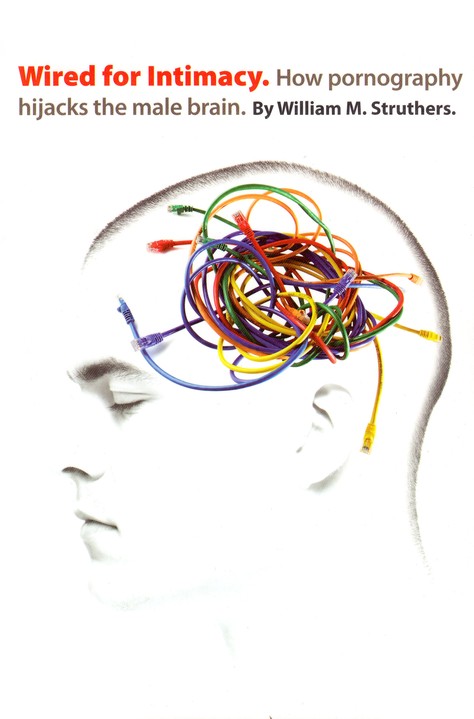
Struthers on Pornography and the Male Brain


I have read the book recently and find it a fascinating read with many new insights.

This Week in LeadershipThis Is Your Brain on Porn
The science behind the struggle, and how the church can help.


William Struthers is dedicated to understanding the brain. In his role as associate professor of psychology at Wheaton College (IL), Struthers teaches courses on behavioral neuroscience—biological reasons why people make the decisions they do. In Wired for Intimacy: How pornography hijacks the male brain (IVP, 2009), Struthers explores the science behind why men find pornography compelling, what it does to their brains, and how they can find freedom. Leadership associate editor Brandon O'Brien spoke with Struthers to find out how pastors can help men break the patterns of pornography abuse.

| Finish this article |

.

Labels: , , , ,

Monday, September 21, 2009

A Stroke of Insight


Jill Bolte Taylor, My Stroke of Insight (London: Penguin Books, 2006)

Dr Jill Taylor is a neuroanatomist affiliated with the Midwest Proton Radiotherapy Institute in Bloomington, Indiana. On 10 December 1996, Jill (37 years old) developed a stroke due to a rupture in an AV malformation (blood vessel) in her brain. Aside from the brain damage due to hypoxia (due to lack of oxygen because of reduced blood flow), she also had a blood clot which need neurosurgical removal a few months later. Being a Harvard trained scientist, Jill was able to clinically observe her stoke-in-evolution. This is the account of her observations where she was only able to perceive the world through her right hemisphere(brain) for the period before her operation and the gradually retraining of her left brain after the operation.

She noted that she experienced profound peace and interconnectness with all creation when she was using only her right brain. She liken this sense of peace to a religious experience or experiencing Nirvana. The left brain is associated with rational thinking and brain chatter. When she was rediscovering the use of her left brain, she discovered that she does have a choice to response positively or negatively to any situation. This is her 'stroke of insight.' The default preprograming was apparently to respond negatively to any situation with anxiety, worry and unhappiness.

There are some interesting aspects of her account. Is it possible that the right brain, being more intuitive are more sensitive to the transcendent and imminent God? Is the development of the spiritual life a development of the interconnectiveness through our right brain?

Her account of her insight on the left brain also rises some interesting questions. Is our spiritual development a reprogramming of the neuropathways of the left brain by perception, spiritual disciplines and choice? Is that what St.Paul meant when he wrote, "Finally, brothers, whatever is true, whatever is noble, whatever is right, whatever is pure, whatever is lovely, whatever is admirable--if anything is excellent or praiseworthy--think about such things" (Phil.4:8)?

I find this fascinating especially in the study of physiology of religious experiences. Maybe I should name this 'neurotheology' !

More about Dr Jill Taylor here

Labels: , ,