The Banana Syndrome: Losing Our Cultural Heritage

Labels: Christian living, Christian Spirituality, Christianity, Culture
My adventures with God,life and all these stuff.

Labels: Christian living, Christian Spirituality, Christianity, Culture
Labels: Aging, Culture, Movies, Spiritual Formation
Labels: Comics and Mangas, Culture, Movies
SFI Seminar 2011/2
Labels: Chinese, Chinese Religions, Conference Information, Culture, Spiritual Formation Institute
The best Yee Sang I have tasted this year is a take-away Yee Sang from Ichiban-boshi in Great World Shopping Mall in Singapore! It was brought across the causeway to my dining table in Malaysia.
Labels: Chinese, Culture, Festivals. Chinese
I enjoyed the way this article is written and the insights it contains.
What technology brings to us individually is the possibility of finding out who we are, and more important, who we might be. During his or her lifetime, each person acquires a unique combination of latent abilities, handy skills, nascent insights, and potential experiences that no one else shares. Even twins—who share common DNA—don’t share the same life. When people maximize their set of talents, they shine because no one can do what they do. People fully inhabiting their unique mixture of skills are inimitable, and that is what we prize about them. Talent unleashed doesn’t mean that everyone will sing on Broadway or play in the Olympics or win a Nobel Prize. Those high-profile roles are merely three well-worn ways of being a star, and by deliberate design those particular opportunities are limited. Popular culture wrongly fixates on proven star roles as the destiny of anyone successful. In fact, those positions of prominence and stardom can be prisons, straitjackets defined by how someone else excelled.
Ideally, we would find a position of excellence tailored specifically for everyone born. We don’t normally think of opportunities this way, but these tools for achievement are called “technology.” The technology of vibrating strings opened up (created) the potential for a virtuoso violin player. The technology of oil paint and canvas unleashed the talents of painters through the centuries. The technology of film created cinematic talents. The soft technologies of writing, lawmaking, and mathematics all expanded our potential to create and do good. Thus in the course of our lives as we invent things and create new works that others may build on, we—as friends, family, clan, nation, and society— have a direct role in enabling each person to optimize their talents—not in the sense of being famous but in the sense of being unequaled in his or her unique contribution.
However, if we fail to enlarge the possibilities for other people, we diminish them, and that is unforgivable. Enlarging the scope of creativity for others, then, is an obligation. We enlarge others by enlarging the possibilities of the technium— the greater ecosystem of technology – by developing more technology and more convivial expressions of it.
Labels: Culture, Society, Technology
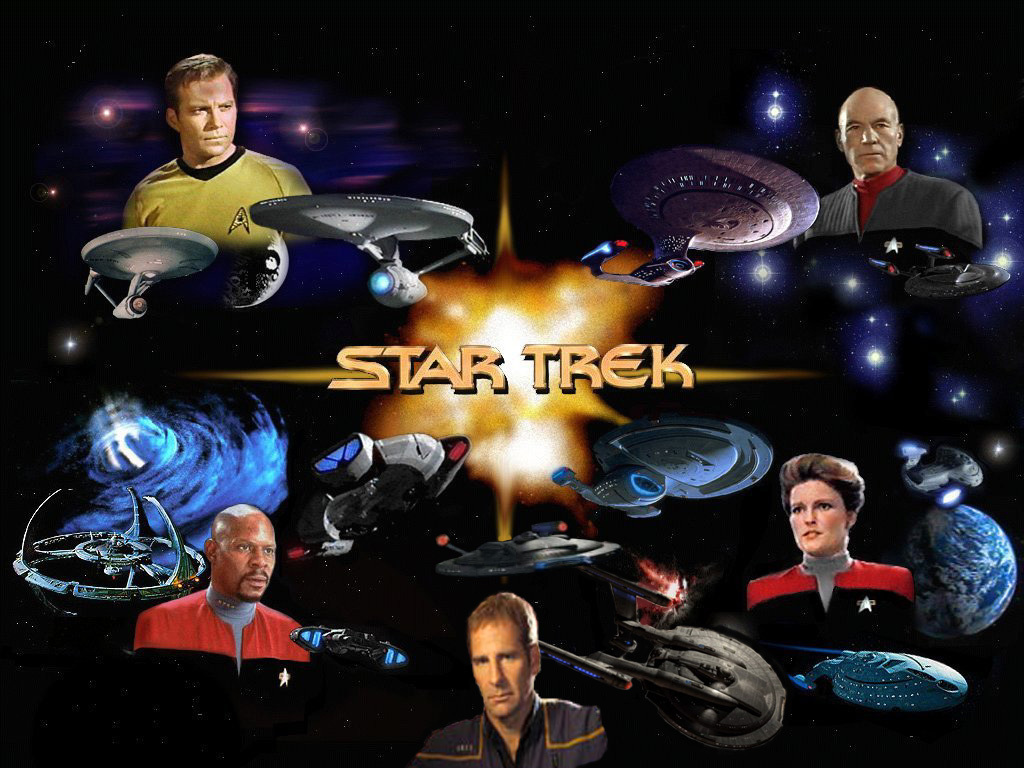
On 8 September 1966, NBC aired the first episode of Star Trek in an episode named The Man Trap. That launched the phenomenon known as the Star Trek Universe.


Labels: Culture, Movies, Science Fiction, Star Trek, Television
Reality is broken, says Jane McGonigal, and we need to make it work more like a game. Her work shows us how.
Jane McGonigal asks: Why doesn't the real world work more like an online game? In the best-designed games, our human experience is optimized: We have important work to do, we're surrounded by potential collaborators, and we learn quickly and in a low-risk environment. In her work as a game designer, she creates games that use mobile and digital technologies to turn everyday spaces into playing fields, and everyday people into teammates. Her game-world insights can explain -- and improve -- the way we learn, work, solve problems, and lead our real lives.
McGonigal directs game R&D at the Institute for the Future, a nonprofit forecasting firm where she developed Superstruct, a massively multiplayer game in which players organize society to solve for issues that will confront the world in 2019. She masterminded World Without Oil, which simulated the beginning of a global oil crisis and inspired players to change their daily energy habits. McGonigal also works with global companies to develop games that build on our collective-intelligence infrastructure -- like The Lost Ring, a mystery game for McDonald's that became the world’s biggest alternate reality game, played by more than 5 million people. (Not to mention the delightful Top Secret Dance-Off, which taps that space in our brains where embarrasment and joy mingle.) She's working on book called Reality Is Broken: Why Games Make Us Happy and How They Can Change the World.
"Instead of providing gamers with better and more immersive alternatives to reality, I want all of us to be become responsible for providing the world with a better and more immersive reality."Jane McGonigal
Labels: Computer games, Culture, Spiritual Formation, Technology
The website Rotten Tomatoes is my favourite movie website. Here is their take on Legendary Heroes on Film.
Without question, movies have helped enhance the stories behind some of the greatest heroes of all time, whether they are based in fact or fiction. From Ancient Greece to the Wild West, feudal Japan to the fields of Scotland, heroes from all over the world have had their stories perpetuated into legend.
With Ridley Scott's Robin Hood (starring Russell Crowe and Cate Blanchett) drawing us back to Sherwood Forest on May 14, it's time to take a trip into historical fact, classic fiction, and regional lore to identify the many legends that have found new life in film.
For the stories behind some of the names that will continue to be passed on from generation to generation, join us for a cinematic tour of some of the most legendary heroes of all-time!
Written by Alex Vo, David Chung, Jeff Giles, Ryan Fujitani, Sara Schieron, Tim Ryan

Labels: Book Review, Communication, Culture, Economics, Influencer, Internet
With a vision for a free online encyclopedia, Wales assembled legions of volunteer contributors, gave them tools for collaborating, and created the self-organizing, self-correcting, ever-expanding, multilingual encyclopedia of the future.
Jimmy Wales went from betting on interest rates and foreign-currency fluctuations (as an option trader) to betting on the willingness of people to share their knowledge. That's how Wikipedia, imagined in 2001, became one of the most-referenced, most-used repositories of knowledge on the planet, with more than one million articles in English (compared with the Britannica's 80,000) and hundreds of thousands in dozens of other languages, all freely available.
The "wiki" in the name refers to software that allows anyone with Internet access to add, delete or edit entries. This has led to controversies about the reliability of the information, prompting the Wikimedia Foundation to set tighter rules for editors, while still keeping Wikipedia open-source. One thing is certain: Wikipedia will never be finished. In the meantime Wales has started working on Wikiasari, a wiki-style search engine.
"Wikipedia represents a belief in the supremacy of reason and the goodness of others. ... From the respectful clash of opposing viewpoints and the combined wisdom of the many, something resembling the truth will emerge. Most of the time."WIRED
Labels: Communication, Community, Culture, Internet, Technology

I’ve written a personal addendum to Linchpin. Here it is, it's a free PDF. Insubordinate is a 40 page ebook, feel free to share. I couldn’t possibly include all the linchpins I’ve worked with over the years, but I think you’ll find that many of the examples in the ebook resonate.

Labels: Critical Thinking, Culture
Technology is changing education. William Drummond explores using Facebook as a learning management tool and a panel explores the 21st century student. [12/2008]
Labels: Communication, Community, Culture, Education
Finally the anime craze has grabbed hold of the Batman. Here is a sculpture of an anime Batman. This is finely detailed. Look carefully at the chest plate. I find the variation of the Batman logo fascinating.


Labels: Batman, Batman-Joker, Comics and Mangas, Culture, Movies
Virtual Mentor. May 2010, Volume 12, Number 5: 357-433. Full Issue PDF
The Contested Status of Cosmetic and Reconstructive Plastic Surgery
Scott B. Grant
Full Text | PDF
Virtual Mentor. 2010; 12:359-362.
The “Mommy Makeover” Package
Commentary by Eric T. Carniol and Paul J. Carniol
Full Text | PDF
Virtual Mentor. 2010; 12:363-366.
Outer Ear Construction: Is Advocacy Part of Treatment?
Commentary by June K. Wu
Full Text | PDF
Virtual Mentor. 2010; 12:367-372.
An Argument for Patient Autonomy in Elective Surgery
Commentary by Michael Van Vliet and Joseph Rosen
Full Text | PDF
Virtual Mentor. 2010; 12:373-375.
AMA Code of Medical Ethics’ Opinion on Physician Advertising
Full Text | PDF
Virtual Mentor. 2010; 12:376-377.
Ethical Issues in Face Transplantation
Christian J. Vercler
Full Text | PDF
Virtual Mentor. 2010; 12:378-382.
Diagnosing and Treating Microtia
Mitchell A. Stotland
Full Text | PDF
Virtual Mentor. 2010; 12:383-388.
Silicone Breast Implant Litigation
Kristin E. Schleiter
Full Text | PDF
Virtual Mentor. 2010; 12:389-394.
An Argument Against the Feasibility of Taxing Cosmetic Surgery
Lauren Sydney Flicker and Rachel Zuraw
Full Text | PDF
Virtual Mentor. 2010; 12:395-400.
Are Cosmetic Surgeons Complicit in Promoting Suspect Norms of Beauty?
Jordan Amadio
Full Text | PDF
Virtual Mentor. 2010; 12:401-405.
Comic Strip: Mirror, Mirror
Khris Oak
PDF
Virtual Mentor. 2010; 12:406.
Advertising Cosmetic Surgery
Deborah A. Sullivan
Full Text | PDF
Virtual Mentor. 2010; 12:407-411.
The Genetic Basis of Body Shape: Lessons from Mirror Twins and High-Definition Digital Photography
David Teplica
Full Text | PDF
Virtual Mentor. 2010; 12:412-417.
Character and the Plastic Surgeon
Robert T. Grant and Michael Sosin
Full Text | PDF
Virtual Mentor. 2010; 12:418-421.
Labels: Advertising, Biomedical Ethics, Culture, Medical Education, Medical Students, Medicine
This collection is published by the Australian Post. Unfortunately I am unable to find the month and year of publication. I loved it as it has 10 of my favourite comics superheroes.


Labels: Comics and Mangas, Culture, Really Random Wacky Musings

One is to accept the invitation and then use Facebook's privacy settings to limit the flow of information between you and your new "friend." To do this, you can create a "colleagues" list from the Friends menu and then add to it your new friend. Then navigate to the privacy settings and use the "Profile Information" section to control what information people on the "colleagues" list can see.
An alternative, says workplace etiquette expert Barbara Pachter, is to suggest to the colleague that you connect instead on LinkedIn, a social network for professional relationships.
"You can just go ahead and ask them to join you on LinkedIn and hope they forget they sent you a Facebook friend request," said Pachter, the author of New Rules @ Work.
"Or you can say, Thanks for asking me. I'm keeping Facebook for my family and friends. I'm asking you to join me on my professional network instead.'"
Pachter said that whatever you do, it's important not to offend your colleague -- and that's not just because politeness is good etiquette.
"The person you offend might end up being your boss next year," she said.
Ha. That's unlikely for me but I do like to make friends on Facebook. Each friend brings new aspects and perspective of humanity. For a student of human nature like me, that is a bonus. Some reveal too much of themselves while others reveal too little. Yet each life is of value and I am constantly being amazed at the diversity of my friends' interests. I am also amazed at how much time some of my friends spend online with Facebook. I assume they do have a life somewhere.
It is interesting that Facebook was started only 4 years ago according to Wiki but 6 years ago according to founder Mark Zuckerberg in his Facebook blog. This is because Facebook seems to be around like forever. Entertainment Weekly notes its value, "How on earth did we stalk our exes, remember our co-workers' birthdays, bug our friends, and play a rousing game of Scrabulous before Facebook?" This was also during the peak of blogging. Nowadays, many bloggers are Facebookers (yes, there is such a term. I checked).
Many Facebookers are also gamers. The top 5 games on Facebook today are Farmville, Mafia Wars, Cafe World, Fishville and Zunga Poker. CNN Doug Gross gives us the highs and lows of The Facebook games millions love (or hate). No, I have not played any of these games yet. I am still trying to figure out Star Trek online.
Facebook is a virtual watering hole for the gathering of the futurists, the nerds, the internet addicts,the technocrats, the lonely, the bored, the seekers, the gurus, the joyful and the sad. Facebook is a pub in L-space. It is also a place of interconnectivity for people to connect with one another, keep abreast of each others' activities, and retain a sense of control in our fast moving fragmented world. It is also a safe place to hide from intimacy and the emotional investments of a 'real' human relationships. As in the television series Cheers, it is a place where everyone knows your name!
UpdateLabels: Communication, Community, Culture
A valuable lesson I always caution myself about...
It's easy it is to “speak prophetically” when you know it's what people want to hear.
Every once in a while I find myself preaching for the nod. That’s when we try to hard wire a bit of ego-stroke into a Sunday morning message. We do it a lot, and it’s so easy—insert that small comment, that little aside, or even that main point that we know will appeal to the sensibilities of certain listeners. You know, the left-leaning (or right leaning) political comment. The doctrinal aside that scratches the itch of that person so prone to give up the "Amen" or the vigorous head nod.
Preaching for the nod has less to do with what we see in the biblical text and more to do with what we want people to see in us. And there lies the danger.
The most God-centered, John Piper-esque sermon or community-centered dialogical discussion can be completely me-centered if my intention is to get certain people to tell me, “Good words today, Pastor!” If my intention is to get certain people to see me as sufficiently hip and relevant (or standing against the tide of culture), or progressive (or appropriately conservative), or doctrinally adventurous (or steadfastly orthodox), then I have traded the proclamation of God's Word for the proclamation of myself, regardless of how I dress it up.
And all for that little nod.
read more
Labels: Culture, Preaching, Spiritual Formation