Monday, July 26, 2010

The Open Door

I nick this wonderful post from Helen Rosenthal's blog Reflections of an RSCJ.


When we pray, the door is always open. We are invited to enter and just be at home with the Lord. Sometimes this seems too good to be true. We want to believe it; we say we do, but we often wait at the threshold, timid and even fearful. We only need to look up and see that the door is open for us and the one who loves us is inside. He hears our prayer and opens the door even before we knock. The door will lead us into His Heart. Have confidence and courage and go forward. I think I often hesitate, feel unworthy, and yet I know from experience that I need just to go through the door of prayer and I can enter His Heart.


.

Labels: , ,

Tuesday, August 11, 2009

Spiritual Formation Reflection on Church Website

The Trinity Methodist Church in Kuching, Sarawak has posted one of my reflections on their website.

Spiritual Formation by Alex Tang


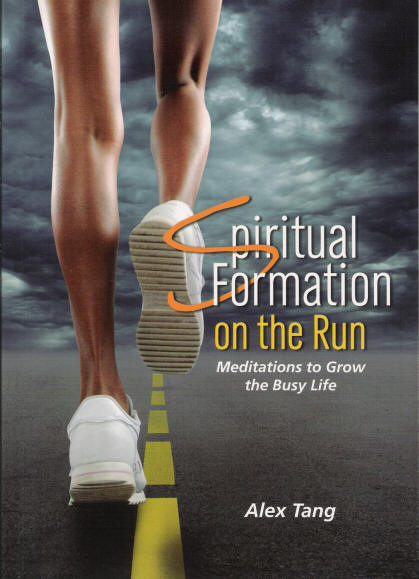
Spiritual Formation on the Run by Dr Alex Tang(see last para)

Spiritual Formation on the Run by Dr Alex Tang(see last para)

Dr Alex Tang has kindly consented the Editor to post his sharing on Spiritual Formation (extracted) on our site. He is also the author of this book Spiritual Formation on the Run, which is available in our Library( donated by him). Read more of him in the websites below

www.kairos2.com

www.draltang01.blogspot.com

Now read on and you may print it to read in your quiet time. This may be what each and everyone of us badly needs.

By Dr Alex Tang

The Call

A Call to Spiritual Formation

San Antonio, 2009


Christian spiritual formation is the process of being shaped by the Spirit into the likeness of Christ, filled with love for God and the world.


read more

HT: Simon Wong

Labels: , ,

Friday, March 20, 2009

Christian eBooks Online

The community of Christian etext redactors is very active, and transcriptions of public domain books on the topic are abundant. The following are archives of public domain etexts about Christianity and related topics.

Some of these are: Christian Classics Ethereal Library This is probably the largest general purpose archive of Christian texts.

Additional Early Church Fathers at the Tertullian Project website. This dovetails with the 'Early Church Fathers' collection at CCEL.

The Unbound Bible has the best collection of downloadable Bible data files anywhere. Highly recommended.

Digital Christian Library and related topics, with many unique items, by a very active scanner.

The Gnostic Society A collection of shorter texts on Gnosticism. Also has a collection of Dead Sea Scroll translations.

The Catholic Encyclopeda This is a project to put online this huge work from 1913.

Project Wittenberg A comprehensive archive of Lutheran texts, of general interest for the study of Protestantism.

Quaker Heritage Press publishes etexts of rare and out-of-print Quaker documents.

Restoration Movement Texts. Primary texts of a 19th century American religious movement, predecessor of Churches of Christ, the Christian Churches, and the Disciples of Christ, among other groups.

Labels: , ,

Saturday, March 07, 2009

Open Courseware Links

I love people who share their resources online FREE. Here is a wonderful list by Christian Colleges.


Top 100 Open Coursware Links on Theology and Philosophy

You don’t have to be enrolled in a college program to study theology, religious history and philosophy. Whether you want to learn more about your culture or understand how different religions and societies have evolved, this list of 100 open courseware links will help you consider theology and philosophy in a completely new way. For lectures and study materials on Darwin, Catholicism, Judaism, the Enlightenment and more, read more
.

Labels: , , , ,

Wednesday, January 14, 2009

Useful Blogs Links

Jessica Merritt from ChristianColleges.com posted the

Top 100 Theology Blogs
which includes Tony Siew's Revelation is Real: This blog is about reflections on Christianity and often the book of Revelation.

Congratulations, Tony. An honour well deserved.


Also check out her useful lists of...
100 Free and Useful Online Tools to Study the Scripture

100+ Great Social Sites Especially for Christians

50 Awe-inspiring, Free, High-Res Collections of Religious Imagery

.
Happy clicking :)

Labels: ,

Sunday, August 17, 2008

Websites about Church History

Christianity Today liveblog August 11, 2008 3:55PM

The List: HistoryWatch
Chris Armstrong's favorite websites about church history.
Chris Armstrong

An associate professor of church history at Bethel Seminary in St. Paul, Minnesota, and senior editor of Christian History & Biography, Armstrong chooses his favorite websites about church history.

Christian Classics Ethereal Library (CCEL)
This is the mother lode of church-history-related books by some of the most brilliant and inspiring of our foreparents. In a wide array of digital formats, you’ll find G. K. Chesterton’s Orthodoxy, John Bunyan’s Pilgrim’s Progress, and Augustine’s Confessions; volumes of the church fathers; an archive of hymn tunes; and much more.

Christian History & Biography
At this site, you’ll find articles from current and past issues of the CT sister publication, a slew of online-only newsletters, and such goodies as This Week in Christian History, Person of the Week, and Quote of the Week. Also, I hear that its editors are working on some major improvements for the site that are coming soon, so stay tuned!

Early Church Online Encyclopedia
Though no longer maintained, ECOLE is a worthy archive. The glossary provides short definitions of early Christian people, groups, events, and ideas from Abelard to Zosimus. The longer articles address such topics as “Sadducees,” “Stoicism,” and “the Arian Controversy.” The accompanying chronology pulls it all together.

Internet Medieval Sourcebook
This chronologically organized trove of primary documents is accompanied by pithy explanations of some of the important interpretive themes and arguments in medieval studies today. Check out, for instance, the material on feudalism: you think you know what this term means, but scholars today are changing their minds about it!

Met Museum: Timeline of Art History
This site links timelines to maps, providing a synoptic view of world art and architecture through history. The resources after A.D. 1, especially in the West, include a rich mine of material related to the history of Christianity. For example, see the essay on “Private Devotion in Medieval Christianity,” linked in the timeline at “1400–1500, Europe.”

read more

Labels: ,

Wednesday, May 09, 2007

Ancient Future Evangelicalism


In tribute to Dr. Webber, this week's Christian History & Biography newsletter contains excerpts from a few of his books and statements from those who knew him or were influenced by him.

Looking backward, moving forward"Classical Christianity was shaped in a pagan and relativistic society much like our own. Classical Christianity was not an accommodation to paganism but an alternative practice of life. Christians in a postmodern world will succeed, not by watering down the faith, but by being a countercultural community that invites people to be shaped by the story of Israel and Jesus.

"We now live in a transitional time in which the modern worldview of the Enlightenment is crumbling and a new worldview is beginning to take shape. Some leaders will insist on preserving the Christian faith in its modern form; others will run headlong into the sweeping changes that accommodate Christianity to postmodern forms; and a third group will carefully and cautiously seek to interface historic Christian truths in the dawning of a new era.

"My argument has been that evangelicals will do well to affirm a Christianity that has a deep kinship with the faith of the early church. … For here is a faith that, like a tapestry, weaves everything in and out of the main thread—Christ. … Here, I believe, is a faith for our time, a faith that finds in the ancient Christian tradition a power to speak to the postmodern world."

—From Ancient-Future Faith: Rethinking Evangelicalism for a Postmodern World (Baker: 1999)

***

"The concern of this writing is to go back to the earliest convictions of Christian spirituality. Why go back? Because the Roman culture in which Christianity first emerged is very similar to the culture of today's world. It was a culture of political unrest, a world of numerous religious options, a time of moral confusion and poverty. The religions of the day made no demands on believing, behaving, or belonging. In this context the Christian message was not presented as one more spirituality among the spiritualities but as Alan Kreider points out, Christians proclaimed, "We believe, we behave, we belong." One would think that the clarity of union with God in the context of the plurality of religions would doom it to failure. But it was that very union with God—lived out in belief, behavior, and belonging—that resulted in the rapid spread of the Christian faith throughout the Roman Empire."

—From The Divine Embrace: Recovering the Passionate Spiritual Life (Baker, 2006)

***

"How do you deliver the authentic faith and great wisdom of the past into the new cultural situation of the twenty-first century? The way into the future, I argue, is not an innovative new start for the church; rather, the road to the future runs through the past. These three matters—roots, connection, and authenticity in a changing world—will help us to maintain continuity with historic Christianity as the church moves forward."

—From Ancient-Future Time: Forming Spirituality Through the Christian Year (Baker, 2004)

Labels: , , , ,

Friday, April 13, 2007

Exegeting Proverbs


Ben Witherington posted this interesting item on his blog.

Match the proverbs with the photos

1) "Train a child in the way they should go, and when they are old they will not stop going that way." Prov. 22.6

2) "Sluggards bury their hands in the dish and will not even bring them back to their mouths." Prov. 19.24

3) "How long will you lie there O sluggard? When will you get up from your sleep? A little sleep, a little slumber and poverty will come upon you like a robber, and want like an armed man." Prov. 6.9-11

Labels: , ,

Sunday, April 08, 2007

Reflections on Triuum


Some wonderful reflections from Lilian's blog

On Good Friday

To a Broken God

Didn't see You there, didn't know You were weeping too
I thought of tears as a human wound
Though of course You care, You have shown You were human too
They say You cried at Lazarus' tomb
I was unaware how it is with a broken God
I thought of You as above my pain
Lost in my despair, so it is with a broken heart
I never dreamed You could feel the same
Once in a magazine I saw a face
Wrinkled up in grief and travailed grace
I kept looking to that face,
some sad refugee in some sad place
And in his eyes the sorrow of our race
Then I saw it was the face of God, the face of God,
Your face, dear God.
Some say You're not there, just a myth for a lazy life
An artifact from an ancient scroll
But I have known You there in the gift of a weary sigh
Lord of the lost and lonesome soul
I was unaware how it is with a broken God
I never dreamed You could feel the same


more...

On Holy Saturday

The resurrection happens when we respond to trials with patient trust knowing that our God loves us more than we can imagine. The resurrection happens when we allow compassion for the world to be birthed from our wounded hearts. The resurrection happens among God's people when the strong learn to embrace those who are weak.
In the waiting time this dark Saturday, let the darkness bring to fullness within us what God dearly desires for his beloved ones. And let us patiently await the birth of joy in our lives.


more...

On Easter Sunday

Let us raise our voices to the cross of Christ
Where the earth and heaven unite
God has wed creation on the tree of hope
Where the darkness becomes our light
Let us join in the dance of heaven and earth
Give thanks for the goodness of God


more...

Labels: , ,

Thursday, April 05, 2007

To be a Great Physician


We physicians all have heroes during our training. We all remember the great physicians.
I contend that the great physicians differ from the good physicians because they understand the entire story. Only when we understand the complete story do we make consistent diagnoses.

Each patient represents a story. That story includes their diseases, their new problem, their social situation, and their beliefs.

How do we understand the story? We must develop excellent communication skills and gather the history in appropriate depth. We must perform a targeted physical examination based on the historical clues. We must order the correct diagnostic tests, and interpret them in the context of the history and physical exam. Once we collect the appropriate data, we then should construct that patient's story.

The story includes making the correct diagnosis or diagnoses. The story must describe the patient's context. Who is this patient? What are the patient's goals? How might the patient's personal situation impact our treatment options?

Sir William Osler said, "The good physician treats the disease; the great physician treats the patient who has the disease." The great physician understands the patient and the context of that patient's illness.

For you physician readers, take Osler's challenge. Be a great physician. Understand the full story. Make correct diagnoses. Consult the patient in designing the treatment plans that best fit that patient.

Follow the results with consistency and compassion. By so doing, you will not only be providing the highest quality medical care; you will also be living up to the ideals of William Osler and those of Tinsley Randolph Harrison -- the greatest of physician role models.

That's my opinion. I'm Dr. Robert Centor, Professor of Medicine at the University of Alabama, Birmingham. Watch videocast here

Labels: ,

Tuesday, April 03, 2007

Which Soldier Type Are You?

Did an interesting test at QuizFarm.

Which soldier type are you? by rebelranger

You scored as Special Ops. Special ops. You're sneaky, tactful, and a loner. You prefer to do your jobs alone, working where you don't come into contact with people. But everyonce in a while you hit it big and are noticed and given fame. Your given the more sensitive problems. You get things done, and do what has to be done.

"VULCAN NECK PINCH!!!"
"owww.......(slump)"

Officer

100%

Special Ops

100%

Support Gunner

63%

Engineer

38%

Artillery/Armor

25%

Medic

0%

Combat Infantry

0%

Civilian

0%

Which soldier type are you?
created with QuizFarm.com

Is that me?

Labels: ,

Wednesday, March 28, 2007

The Contemplative Christian


AS kingfishers catch fire, dragonflies dráw fláme;
As tumbled over rim in roundy wells
Stones ring; like each tucked string tells, each hung bell’s
Bow swung finds tongue to fling out broad its name;
Each mortal thing does one thing and the same:
Deals out that being indoors each one dwells;
Selves—goes itself; myself it speaks and spells,
Crying Whát I do is me: for that I came.

Í say móre: the just man justices;
Kéeps gráce: thát keeps all his goings graces;
Acts in God’s eye what in God’s eye he is—
Chríst—for Christ plays in ten thousand places,
Lovely in limbs, and lovely in eyes not his
To the Father through the features of men’s faces.

‘As kingfishers catch fire, dragonflies dráw fláme’
by Gerard Manley Hopkins (1844–89). Poems. 1918.


The vivid sonnet says that living beings were created to have Christ come alive in them. Eugene Peterson said. "Hopkins doesn't talk about achieving this congruence, but how it is achieved in us, when Christ lives in us." Peterson describes congruence as the alignment of who you are and what you do, the harmony of the ends you seek and the means you use to achieve them.

Nathan Bierma writes,

This is not the triumphal self-motivated march toward sanctification in which many American Christians are caught up. "It's easier to talk about what Christians do—life as performance," Peterson said. But the three pieces of Jesus' fundamental declaration that he is the way, the truth, and the life, must be in perfect correspondence. "Only when we live Jesus' truth in Jesus' way do we get Jesus' life," Peterson said. Not his truth in our way for the sake of our life. Peterson speculated that America's current hunger for "spirituality"—which he earlier told the (Christian) Century often "degenerates into a sloppy subjectivism"—may have been brought on by Christian leaders who say the right things but lack this coherent identity—"a life lived whole, with integrity, the inside and outside organic to one another."

The deeper problem, Peterson said, is that two things that are basic to the Christian life run counter to the American ethos. First, the Christian life is not about us, but about God. It is not like giving ourselves a makeover. "We're in on it, but we're not the subject or the action," Peterson said. Ever notice how in the Bible, we always come in after a preposition? God with us, in us, for us. In an individualistic, commercial culture, where the self is the center of everything, an autonomous agent of transformation, we have lost this grammar of shalom—what Peterson called "prepositional participation."

The second principle of the Christian life that runs against the grain of American culture, Peterson said, is that the ways and means must be appropriate to the ends. "We can't participate in God's work if we insist on doing it our own way." He cited two examples of "doing the right thing the wrong way": congregation and Scripture. We consider both to be our matters, not God's. Instead of forming communities that embody self-denial, sacrifice, and patience for God to become present in them, we form "consumer churches," using commercial methods to attract people and cater to their wants. And rather than reading Scripture as a way of "listening to God revealing God," we treat it as information for us to process to become more successful and enlightened people. In both cases, the ways and means—bowing to the gods of salesmanship and efficiency—are out of sync with the ends—forming a community of believers submitting to God's work within them.

Read more here


photo source

Labels: , , , , , ,

Tuesday, March 27, 2007

Spirituality Assessment

Susie, like her older brother and sister, enrolled at a Christian university in her home state. While at the university, she became increasingly involved in issues of social justice, helping out regularly at a soup kitchen and organizing a food drive. She attended chapel weekly, as required, but reported that she frequently daydreamed or took it as ‘down time’ from her busy schedule. Has Susie grown spiritually in college? To what degree? (Please round to the nearest whole number).

Is it possible to assess spiritual growth? Can we quantify spirituality? Apparently many religious colleges in the States are attempting to do so according to insidehighered.com's article Spiritual Accountability.

Dr. Todd Hall,associate professor of psychology at Biola University developed an instrument called Spiritual Transformation Inventory (STI).

The STI consists of five domains based on previous theory and research. The five major domains include 21 subscales validated through exploratory and confirmatory factor analyses, and convergent validity with relevant measures.

The domains are:
(1)Spiritual Meaning and Vitality
(2)Spiritual Commitment & Community
(3)Secure Spiritual Attachment
(4)Preoccupied Spiritual Attachment
(5)Dismissing Spiritual Attachment


An example of a Spiritual transformation Inventory on an individual is here.

About 25 institutions affiliated with the Council for Christian College & Universities participated in the Spiritual Transformation Inventory in the 2005-6 school year, with 15 to 20 participating this past semester, Hall says.

Most of these studies are done in the States for religious educational institutions. They are needed to justify that religious educational institutions offers a special distinctive compared to non-religious educational institution.

I wonder whether such a test can be done for our churches. Are members of our congregations growing spiritually? Are the activities of the congregation contributing to their spiritual growth? Are the teachings given adequate for spiritual growth? And do we really want to know?

photo source

Labels: , , ,

Saturday, March 24, 2007

Random Bloggings about the Emerging Church

Phillis Tickle observes that in church history, there is a reformation/renewal movement every five hundred years. The last one, about 500 years ago is the Reformation. Could the emerging church be the next renewal? Read about it in The Future of the Emerging Churches from the blog,Out of Ur

In the same blog Brian McLaren Thanks God for Enemies. Brian credits Bishop Velimirovic's prayers for his enemies influential in helping him to relate to his.

Prayer Regarding Critics and Enemies by Serbian Orthodox Bishop
By Bishop Nikolai Velimirovic, Serbian bishop who spoke out against Naziism, was arrested, and taken to Dachau.

Bless my enemies, O Lord. Even I bless them and do not curse them. Enemies have driven me into your embrace more than friends have. Friends have bound me to earth; enemies have loosed me from earth and have demolished all my aspirations in the world.

Enemies have made me a stranger in worldly realms and an extraneous inhabitant of the world.
Just as a hunted animal finds safer shelter than an unhunted animal does, so have I, persecuted by enemies, found the safest sanctuary, having ensconced myself beneath Your tabernacle, where neither friends nor enemies can slay my soul.

Bless my enemies, O Lord. Even I bless and do not curse them.

They, rather than I, have confessed my sins before the world. They have punished me, whenever I have hesitated to punish myself. They have tormented me, whenever I have tried to flee torments. They have scolded me, whenever I have flattered myself. They have spat upon me, whenever I have filled myself with arrogance. Bless my enemies, O Lord. Even I bless them and do not curse them.

Whenever I have made myself wise, they have called me foolish. Whenever I have made myself mighty, they have mocked me as though I were a [fly].

Whenever I have wanted to lead people, they have shoved me into the background.

Whenever I have rushed to enrich myself, they have prevented me with an iron hand.

Whenever I thought that I would sleep peacefully, they have wakened me from sleep.

Whenever I have tried to build a home for a long and tranquil life, they have demolished it and driven me out.

Truly, enemies have cut me loose from the world and have stretched out my hands to the hem of your garment.

Bless my enemies, O Lord. Even I bless them and do not curse them.

Bless them and multiply them; multiply them and make them even more bitterly against me:
So that my fleeing will have no return; So that all my hope in men may be scattered like cobwebs; So that absolute serenity may begin to reign in my soul; So that my heart may become the grave of my two evil twins: arrogance and anger;
So that I might amass all my treasure in heaven; Ah, so that I may for once be freed from self-deception, which has entangled me in the dreadful web of illusory life.

Enemies have taught me to know what hardly anyone knows, that a person has no enemies in the world except himself. One hates his enemies only when he fails to realize that they are not enemies, but cruel friends.

It is truly difficult for me to say who has done me more good and who has done me more evil in the world: friends or enemies. Therefore bless, O Lord, both my friends and my enemies. A slave curses enemies, for he does not understand. But a son blesses them, for he understands.


For a son knows that his enemies cannot touch his life. Therefore he freely steps among them and prays to God for them. Bless my enemies, O Lord. Even I bless them and do not curse them.


Prof. Mark DeVine writes, Fast Friends or Future Foes? The Emerging Church and Southern Baptists, which is an interesting development as one can hardly imagine an emergent church in the Southern Baptist Convention.

Meanwhile, Mark Discoll, pastor of Mars Hill Church, blogs about his exhaustion, poor health and dryness in Brokeness and Buddies: a lesson we all should take to heart.

Labels: , , , ,

Lilian's Journey


A dear sister in Christ has started a contemplative blog, Lilian's Journey.


She is journaling this Lenten season. Lilian writes


Jesus is who he is because of the One who sent him. He does and is nothing more and nothing less. The title of this post has 3 key questions for the spiritual life: Who is God? Who am I? What am I to do with my life? These are fundamental questions suggested by Anderson and Reese in their book 'Spiritual Mentoring'. We cannot know what we are to do before we develop a loving relationship with God and allow him to speak into our lives. He tells us 'who we are' Until we know who we are we will not be able to find and live our vocation authentically.


Labels: , ,

Wednesday, March 07, 2007

Easy Believism


I struggle with this issue of easy believism. Pray a sinner's prayer and you shall be saved and immediately you receive eternal life. Dietrich Bonhoeffer's "cheap grace" from his book, Life Together, comes to mind immediately.

David Gushee's article, Jesus and the Sinner's Prayer: What Jesus says doesn't match what we usually say, strike a chord in me. He writes,

In my Baptist tradition, especially, we direct people to "invite Jesus into your heart as your personal Savior," an act undertaken using a formula called the "sinner's prayer." Or we simply say, "Believe in Jesus, and you will be saved."

But Jesus never taught easy believism. Whether he was telling the rich young ruler to sell all and follow him or telling a miracle-hungry crowd near Capernaum that to do the work of God was, yes, to believe on him (John 6:28-29), he called people to abandon their own agenda and trust him radically. Radical trust calls for both belief and action.

I suggest that we tend to confuse the beginning of the faith journey with its entirety. Yes, believe in Jesus—that's the first step. Yes, invite Jesus into your heart as your personal Savior. Then, empowered by God's grace, embark on the journey of discipleship, in which you seek to love God with every fiber of your being, to love your neighbor as yourself, to live out God's moral will, and to follow Jesus where he leads you, whatever the cost.

I believe we need to review our techniques of evangelism and easy believism. Are we slowly lowering the requirements for entry into the kingdom of God as we have lowered the entry requirements for so many other things in our culture?

Some food for thoughts.

Labels: , , , , ,

Monday, February 26, 2007

Reel Light: Film and Spirituality

I love watching movies. It is one of my favourite pastimes, the other being reading, writing, making spaceship models, golf, eating, computer games, and collecting Batman figurines. Does watching movies influence my spirituality? Yes, I believe it does because whatever we expose ourselves to informs, forms and conforms us. I like the story from the First Nation tribes in Canada. An elder said that there are two wolves inside us. These wolves are always at war. One is good, kind and gentle. The other is aggressive, wild and cruel. How do we determine which wolf will be victorious? The one we feed the most. If we feed or watch a lot of movies with violence, cruelty, the Occult, or horror themes, it will definitely affect our spirituality.


Spiritual Growth Ministries' Journal of Contemplative Spirituality (Refresh) has its theme for the Winter 2006 issue: Reel Light: Film and Spirituality.

Andrew Dunn, the editor asks, "What if the act of movie going and watching has become a religious activity for many with its own rituals and temples as John Lyden suggests? I notice how religiously large quantities of popcorn, lollies, soft drink or coffee and icecream are consumed at the cinema, almost sacramentally one suspects! What if the communal aspect of film viewing has become a modus operandi for creating community that has its own life and vigour?" He then gives us some guidelines on how to watch movies in Cinema and Contemplation

Paul Fromont writes on Spiritual Direction: Waking Up and Recovering Ourselves through Movies. Using the movie The Matrix as the context, he uses waking up and recovering our true selves. Val Roberts uses the movie Forrest Gump to show us The Power of Love. Digby Wilkerson offers us his list of 100 Art and Faith Films. Man, I have not seen many of them. And Martin Stewart offers us his thoughts on Films as Parables.

The Journal also supplied some useful links:

Journal of Religion and Film.
www.unomaha.edu/jrf/

Christianity Today at the Movies offering “Biblical perspectives on contemporary cinema”.
www.christianitytoday.com/movies/

Describes itself as “pop culture from a spiritual point of view”.
www.hollywoodjesus.com

Jesus: Real to Reel Bibliography and Web Resources For Religion/Theology and Film.
http://post.queensu.ca/~rsa/Real2Reel/realreel.htm

Film making as spiritual practice and ministry.
http://www.crosscurrents.org/Alston0204.htm

Jesus: The Christ Film Web Pages
http://www.ntgateway.com/film/Celluloid

Labels: , , ,

Tuesday, January 30, 2007

Praying in the Labyrinth


All of us adopt different postures when we pray. Some of us prefer to pray kneeling, some prostrate, while others either sit, stand or walk. Prayer walk has become commonplace as we adopt the spiritual warfare teachings.
However contemplative prayer walk is not common. Walking and praying the labyrinth is a structured form of contemplative prayer walk.

The labyrinth has its roots in antiquity. However the Christian Church Fathers and Mothers had adopted it as a prayer form. The labyrinth is like a maze. Unlike a maze, a labyrinth does not have blind ends. One can follow the pathway of a labyrinth easily to the centre and then out again.

There are no fixed rules in how anyone is to pray in the labyrinth. We can imagine walking the labyrinth as a pilgrimage. We move slowly and prayerfully towards the heart of our worship. There we spend as much time as we want in His presence. After that, we retrace our steps slowly back into the world. We can stop as frequently as we want to stop, pray, meditate or read the Scriptures or some spiritual books. People normally stop at bends and curves of the labyrinth. The labyrinth is especially suited for praying the Stations of the Cross at Lent. Those who contemplatively prayer walk the labyrinth found it a profound spiritual experience.

There are many designs of the labyrinth. The most well known is the labyrinth at Chartres Cathedral in France. The Chartres labyrinth is an intrinsic design measuring 12.9 m (42.3 ft) in diameter. It has 11 concentric circuits which leads to a rose petal shaped centre. There are 34 turns as one journey in.


However, we are free to design smaller ones in our gardens or retreat centers. Many other religious traditions also use the labyrinth as a spiritual tool. There are also people interested for health and other reasons.

The labyrinth can be a powerful means for contemplative prayer walk.

Soli deo gloria

Labels: , ,

Friday, January 26, 2007

Anyone Wants a New Uterus?

A US team of transplant surgeons are planning for a uterus transplant. This procedure, though will be the first in the US had been performed successfully in other parts of the world. The reason for the transplant is that some women will like to experience childbearing but are unable to because of certain reasons. So a uterine transplant will be performed and an embryo produced by IVF inserted into the transplanted uterus. After one or two pregnancies, the uterus will be removed. While there are no moral or ethical issues involved with uterine transplantation, it shows the length some women will go to get pregnant even though adoption is still available as an alternative.

Uterine transplant how joins the ranks of face and hand transplants that are not life saving, like liver, kidney and heart transplants, but for improving quality of life.

Another connected issue are the organ donors. Many organ donors sign up in the hope that their organ save someone’s lives when theirs are over. I wonder what they will think if their organs are used to improve other people’s “quality of life’?

Closely related is the issue of the source of transplant organs. China has finally admitted that it is selling organs from executed condemned prisoners. What is also revealed is the extent of sale of organs and organs trafficking in China. “Transplant Tourism” is becoming common in China. One effect of this is that it deprives a local Chinese from getting a transplant because these “transplant tourist” tend to jump ahead of the very long queue.

We must ensure that the rights of Chinese prisoners are not violated and that local Chinese are not unjustly affected by these “transplant tourists”


Soli deo Gloria

Labels: , ,

Thursday, January 25, 2007

Subjective Spiritual Experiences

I was thinking about posting about subjective spiritual experiences when the internet Monk beat me to it by posting Thoughts on Spiritual Experiences He wrote on the area of subjective spiritual experiences and even has a case study. I am not complaining. He is such a good writer and quite comprehensive in his coverage of the subject.

Spiritual experiences has always been treated with suspicion by the church. The experiences of Teresa of Avila is one good example. However John Wesley named ‘experience’ as one of his four pillars in building a theological system. The other three pillars are Scripture, Tradition and Reason. This is known as the Wesleyan Quadrilateral

What I would like to comment on subjective spiritual experience is this statement. Christians will come to me and say, “I am having such a great personal experience with Christ.” And I will go, “Aha…” I mean, there is nothing wrong with having a great personal experience. And with Christ too. Most people will happy accept that statement. Somehow, it makes me uncomfortable.

Shouldn’t one say, “I have a great Christ in my personal experience.” Here the emphasis is on Christ rather than the experience. Maybe it is just me. Somehow I feel that many Christians are more focused on their spiritual experiences than on the Giver of their experience.


Soli deo gloria

Labels: , ,